























Eileen Gu heads into the 2026 Winter Olympics with a “nothing to prove” mindset

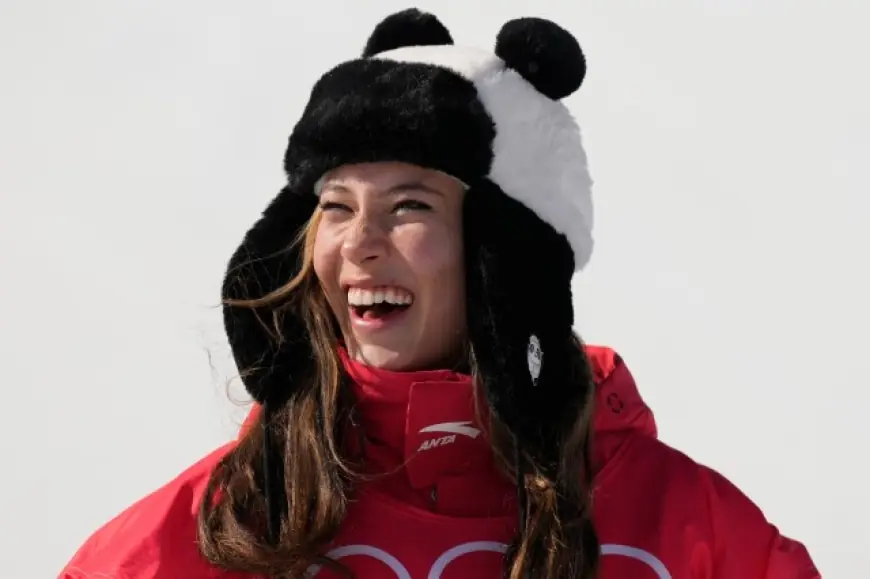
Eileen Gu arrives at the Milano Cortina Winter Olympics as one of the faces of the Games and one of freestyle skiing’s defining athletes—yet her message in the final days before opening ceremony has been notably simple: she feels freer, more self-driven, and no longer motivated by outside expectations. For a 22-year-old already carrying two Olympic gold medals and a global celebrity profile, the shift is being framed as less about chasing history and more about rediscovering why she skis.
A renewed approach before Milano Cortina
In interviews this week, Gu described entering the 2026 Olympics with what she calls a lighter, more personal motivation—doing what she genuinely wants, not what she feels pressured to do. That attitude change matters because she’s not just returning as a medal favorite; she’s returning to the same spotlight intensity she navigated in Beijing, with additional expectations layered on top.
The freestyle events are set for Livigno, and Gu has hinted that she could bring new elements to her runs if conditions feel safe. The emphasis has consistently been on discretion and control—pushing limits only when she’s confident the risk is worth it.
From Beijing medals to a World Cup milestone
Gu’s Olympic résumé is already rare: in Beijing in 2022 she won gold in big air and halfpipe, plus a silver in slopestyle, becoming the first freestyle skier to win three medals at a single Winter Games. Since then, she has continued to build a World Cup record that keeps her in conversation as one of the most successful athletes in the discipline’s modern era.
A recent marker came on Jan. 17, 2026 (ET), when she won the Laax Open slopestyle event in Switzerland despite a mid-event crash, a victory that also marked her 20th career World Cup win. The number matters less as a trivia point and more as evidence of how she keeps raising her baseline: even a messy day can still end with her on top.
Managing health and risk after recent setbacks
Gu’s path to the Olympics has included health management that hasn’t always been visible in competition results. In the past year, she dealt with an injury sustained while training in New Zealand (public details were limited), and she also missed portions of the season at various points as she prioritized recovery and Olympic preparation.
The theme heading into Milano Cortina has been caution without retreat. In freestyle skiing—where spin counts, amplitude, and landing precision decide medals—small physical limitations can quickly become dangerous. Gu’s emphasis on only unveiling new tricks when she feels it is safe aligns with how elite skiers approach the biggest stage: peak difficulty is valuable, but staying upright is non-negotiable.
The commercial spotlight that follows her everywhere
Gu’s influence extends far beyond competition start lists. She has been highlighted in recent business coverage as one of the highest-paid female athletes, with the overwhelming share of her earnings tied to endorsement deals rather than prize money. That imbalance is common in Olympic sports, but her scale is uncommon: she occupies a space where athletic results, fashion visibility, and mainstream celebrity attention all reinforce each other.
Her public identity remains part of the story as well. Born in the United States and competing for China since her teens, she has repeatedly described her career as connected to heritage, representation, and bridging cultures—an approach that has made her both celebrated and criticized. At this point, the debate is less new than the reality it reflects: she competes with extraordinary scrutiny, and she has learned to operate inside it.
What to watch once competition begins
Gu’s biggest competitive questions are practical and measurable: how clean her landings are under Olympic pressure, how difficult her planned content is relative to the field, and whether conditions in Livigno support the kind of amplitude and speed that reward high-difficulty runs.
A few key tells will show up quickly:
-
Run composition: whether she opts for safer, high-execution lines or pushes difficulty early
-
Consistency across rounds: whether she builds scores steadily or swings for a single peak run
-
Field progression: whether rivals raise the technical ceiling enough to force her hand
If her renewed mindset translates the way her team hopes, the story of these Games won’t be “Can she prove it again?” It will be whether a freer, less burdened version of Gu can be even more dangerous than the one the world met in 2022.
Sources consulted: Reuters, Olympics.com, ESPN, People