




















Chappell Roan in February 2026: From Awards-Week Shock Fashion to a High-Pressure Festival Run Across Oceania

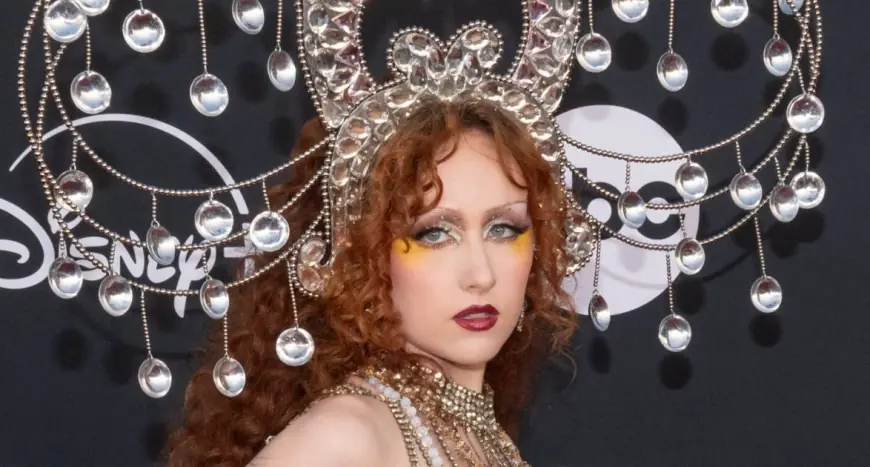
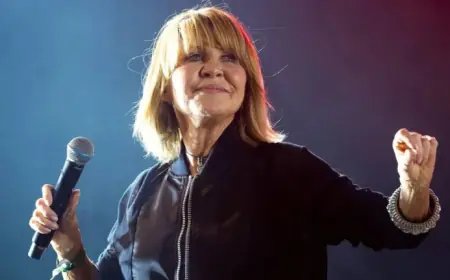
Chappell Roan is entering February 2026 with the rare kind of momentum that blends music, image, and live demand into one continuous headline. In the past few days, she has been a central figure of awards-week conversation after a daring red-carpet look at the Grammy Awards, while also launching into a tightly packed run of major festival dates that begins February 5, 2026 ET and stretches across Australia and New Zealand through mid-month.
The newest development is the convergence itself: a pop star whose biggest week of visibility is happening at the exact moment she is expected to deliver nightly, high-intensity performances in front of large crowds. That combination can supercharge a career, but it also raises the stakes for every decision, every appearance, and every onstage moment.
What happened: an awards-week image that dominated the conversation
Roan’s Grammys appearance earlier this week triggered the kind of cultural reaction that spills beyond music fandom. The look was engineered to be provocative without crossing broadcast standards, using illusion and body art to create a near-nude effect while staying within the rules. The immediate result was predictable: viral debate, fashion analysis, and a surge in curiosity from people who may not have been following her music closely.
This matters because Roan does not treat visuals as decoration. Her aesthetic has always been part of her identity as an artist, built around theatricality, camp, and deliberate self-mythmaking. When she swings big on a carpet like this, it functions as marketing, narrative control, and a signal to fans that she is not sanding down her edges for mainstream comfort.
The February engine: a festival schedule designed to convert attention into fandom
While awards-week buzz has been peaking, Roan has also been moving into a major live window tied to a traveling festival series in Oceania. The key dates in local time zones fall between February 5 and February 15, which translates into a February 5, 2026 ET launch and a rapid cadence of performances over the following days.
The schedule is not just about ticket sales. Festival sets are conversion machines. They place an artist in front of a mixed audience, many of whom came for other acts, and demand a fast, high-impact show that turns casual listeners into fans. For a performer whose brand is built on spectacle and communal energy, this is fertile ground.
The tradeoff is physical and psychological load. When a star is trending for image and controversy, every show becomes both a concert and a referendum. The pressure is not only to sound good, but to keep the narrative pointed in the direction she wants.
Behind the headline: what Roan is really optimizing for
Context
Modern pop success is measured in moments as much as in albums. A single image can drive discovery, and discovery can turn into streaming and ticket demand in hours, not months.
Incentives
Roan’s incentive is to control the terms of attention. By making bold choices, she reduces the space for others to define her as a generic breakout. For promoters and festivals, the incentive is clear: an artist who reliably generates conversation also generates crowds, and crowds become the proof that turns a rising star into a top-line booking.
Stakeholders
Fans get a shared language of costumes, choreography, and in-jokes that make the community feel cohesive. Industry decision-makers get data points: how quickly a name sells, how loud the crowd is, and whether the spotlight grows or turns volatile. Roan’s team has to balance amplification with sustainability, because an overcooked hype cycle can burn out both artist and audience.
Second-order effects
When image becomes the headline, it can raise expectations for every future appearance. The benefit is staying impossible to ignore. The risk is that critics try to reduce the work to costumes and controversy. The long-term win is making sure the songs still feel like the center of gravity when the visuals fade.
What we still don’t know
Several missing pieces will determine whether this February run becomes a stepping stone or a strain point:
-
Whether awards-week attention converts into durable listening, not just curiosity clicks
-
How Roan paces herself across a dense travel and performance schedule
-
Whether the next release or announcement expands her musical lane or reinforces the maximalist pop identity that is working right now
-
How she and her team handle backlash cycles that can flare when visibility spikes
What happens next: five realistic scenarios with triggers
-
A bigger mainstream breakthrough single
Trigger: a follow-up track lands that is instantly singable while still feeling unmistakably hers. -
Festival footage becomes the next growth wave
Trigger: multiple standout live moments circulate and prove she can command huge mixed crowds. -
A deliberate step back to avoid overexposure
Trigger: fewer public appearances and tighter narrative control after the festival run ends. -
A backlash flare-up that tests the brand
Trigger: another polarizing visual moment that shifts focus from music to cultural argument. -
A new era announcement that reframes the attention
Trigger: a clearly defined project rollout that turns the current frenzy into the opening chapter of a larger plan.
Roan’s February 2026 surge is not just about popularity. It is about leverage: using a peak spotlight to lock in a larger audience, prove live dominance, and define her career on her own terms before the industry tries to do it for her.