

























Lindsey Vonn injury update: ACL rupture, Olympic race plans, and Picabo Street’s perspective

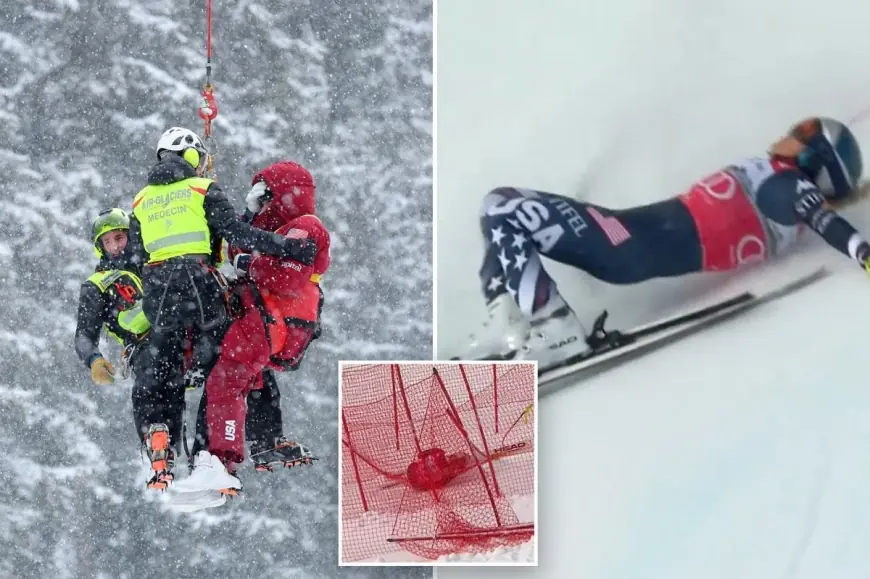
Lindsey Vonn’s Olympic comeback has taken a sharp turn after a high-speed crash left her with a complete ACL rupture just days before the Milano Cortina 2026 Winter Games begin. Vonn, 41, has remained adamant that she intends to race, sharing training footage while wearing a supportive brace and describing her knee as stable as she manages pain, swelling, and recovery work.
At the same time, Picabo Street — a former Olympic champion with her own history of racing soon after a major training fall — has been pulled into the conversation as both a point of comparison and a voice of experience around the mental challenge of returning to the start gate.
The crash and the diagnosis
Vonn’s injury stems from a downhill crash at Crans-Montana, Switzerland in late January. She later confirmed a complete ACL rupture and noted additional damage, including bone bruising and meniscus involvement. The combination typically requires careful assessment of stability and function even before any decision about racing, given the demands of downhill speed, edge pressure, and abrupt force through the knee.
Despite that, Vonn has framed her approach as a day-by-day evaluation. She has emphasized that she will lean on medical guidance, how the knee responds to training loads, and how it feels under speed — the one test that can’t be fully simulated in the gym.
What she’s doing now to try to race
In the first week of February, Vonn posted video of intense strength and plyometric work — including squats and box-jump-style movements — while wearing a brace. The point of these sessions is not just fitness. For an alpine skier, the ability to absorb impact, stabilize through the turn, and trust the knee at high velocity is as psychological as it is physical.
The question is whether she can create enough functional stability to safely handle Olympic courses without the knee buckling, swelling increasing after runs, or pain altering technique in a way that raises crash risk.
Lindsey Vonn injury update
As of Thursday, Feb. 5, 2026 (ET), Vonn has not withdrawn from the Olympic downhill. A women’s downhill training session in Cortina was canceled Thursday due to heavy snowfall, effectively buying her an extra day without on-snow stress. She is expected to attempt training when conditions allow, with her participation and intensity likely to be the clearest indicator of whether racing is realistic.
Even if she starts, the practical challenge is cumulative load: downhill training, inspection, and race-day demands stack quickly. A knee that feels manageable on one run can flare up after repeated impacts and turns.
How Picabo Street fits into this story
Picabo Street’s name has surfaced because she understands the specific fear and focus required to race soon after a violent crash. Street won Olympic gold in super-G after a significant training fall at a prior Games, and she has spoken openly about the mental compartmentalization needed to shut out doubt and commit fully to the course.
Street is also involved in Olympic coverage at Milano Cortina, positioned to provide on-hill insight into course setup, snow conditions, and decision points — the exact variables that matter most when a racer is dealing with compromised physical confidence.
What’s at stake for Vonn and the field
Downhill is unforgiving even for fully healthy athletes. A racer who is even slightly off in timing or pressure management can be punished instantly. That makes Vonn’s situation unusually high-risk, high-reward: if she can control the knee and ski cleanly, she remains one of the most experienced big-event performers in the sport. If the knee limits her ability to commit, the margin for error disappears.
From a competition perspective, her presence also changes the race dynamic. Training times and start lists shape strategy, especially on a course where visibility, snow texture, and ruts can evolve quickly.
Key dates to watch
| Milestone | Date (ET) | What it indicates |
|---|---|---|
| Confirmation of ACL rupture | Late Jan / early Feb 2026 | Establishes severity and baseline risk |
| Training cancellation due to snow | Thu, Feb. 5, 2026 | Gives extra recovery time, delays on-snow test |
| Next downhill training opportunity | Fri, Feb. 6, 2026 | Most important signal for viability and confidence |
| Women’s downhill race | Sun, Feb. 8, 2026 | The first true make-or-break moment |
What to look for in the next 48 hours
Three signs will likely determine where this goes. First: whether Vonn can complete training runs without visible guarding or instability. Second: whether the knee reacts overnight with swelling or pain that alters the next day’s plan. Third: how she describes trust — not just comfort — because downhill demands total commitment.
Street’s role in the conversation is a reminder that elite racers can sometimes do extraordinary things after crashes. But the physical reality remains: a torn ACL is not a routine knock, and every decision now will be weighed against safety, long-term health, and the narrow window of an Olympic downhill.
Sources consulted: Reuters, Olympics.com, NBC Olympics, Biography.com