
























Peter Attia’s Epstein fallout: contributor role questioned as interview rerun pulled and partners step back

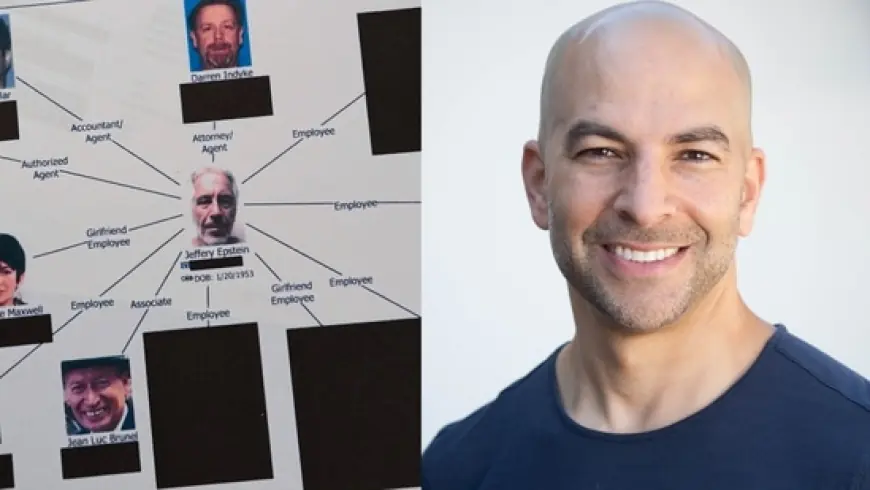
The physician and longevity entrepreneur Peter Attia is facing escalating professional fallout after newly publicized email exchanges with Jeffrey Epstein resurfaced in a recent federal document release. The controversy has quickly moved from online outrage to concrete consequences: a newly announced on-air contributor role is under review, a high-profile TV interview rerun was removed from the schedule, and multiple corporate partners have begun distancing themselves.
Attia has apologized for the tone and content of some messages and has denied witnessing or participating in illegal activity. No criminal allegations against Attia have been announced in connection with the disclosures.
What the emails put back into view
The renewed scrutiny centers on messages between Attia and Epstein that continued years after Epstein’s 2008 conviction. The communications include language Attia later described as embarrassing and indefensible, as well as exchanges that critics argue show a level of familiarity inconsistent with the public understanding of Epstein’s history at the time.
The document release itself does not automatically establish wrongdoing by everyone mentioned in it. Still, the volume and tone of the Attia messages have driven the backlash, especially given his prominence as a health authority figure and the “trust” branding that underpins much of the longevity industry.
The apology: what he admitted and what he denied
Attia issued a public apology on Monday, February 2, 2026 (ET), expressing regret for maintaining contact and for the content of some emails. He characterized portions of the correspondence as tasteless and said he was ashamed of how it reads now.
At the same time, he drew a clear boundary around criminal conduct. He said he never observed illegal acts, never participated in wrongdoing, and has rejected claims circulating online that he attended criminal gatherings. The apology has done little to slow criticism from those who argue that continued association itself is disqualifying for someone operating in medicine and public-facing health advice.
The contributor announcement that amplified the stakes
The timing has been central to the story. Attia had just been introduced as one of a new slate of paid contributors for a major U.S. news operation on Tuesday, January 27, 2026 (ET). The announcement placed him into a higher-trust journalistic environment, where reputational screening is often more conservative than in the wellness marketplace.
Within days, the Epstein email disclosures drove immediate questions about whether the contributor relationship would continue, be paused, or be quietly narrowed. As of Thursday, February 5, 2026 (ET), no definitive public statement has clarified his long-term status, leaving a gap between internal deliberations and public certainty.
The pulled segment: a tangible programming change
The most visible operational consequence has been a programming decision: a rerun of a long-form interview segment featuring Attia was removed from the schedule. The segment had originally aired months earlier, but it was slated to rerun during the high-audience weekend of Sunday, February 8, 2026 (ET), opposite Super Bowl coverage.
Pulling a scheduled rerun is not a formal disciplinary action on its own, but it is a measurable risk-control move—reducing the profile of Attia content while questions are unresolved. It also signals how quickly editorial decisions can shift when reputational issues collide with major event programming.
Corporate departures: brands move to limit exposure
Business relationships have also begun to change, turning the controversy into a broader test of “association risk” in consumer health.
Two developments have stood out so far:
-
A protein snack brand where Attia held a senior science role confirmed he stepped down in early February.
-
A sleep-technology company removed him from a public-facing list of scientific advisors, and a supplements company also dropped an advisory affiliation.
None of these moves alone proves wrongdoing; they reflect commercial decision-making under scrutiny, where brands often prioritize distance and simplicity over extended explanations.
Key dates and updates
| Date (ET) | What happened | Why it matters |
|---|---|---|
| Tue, Jan. 27, 2026 | Attia publicly announced as a paid contributor | Elevated visibility and trust expectations |
| Fri, Jan. 30, 2026 | New Epstein-related materials circulated widely | Triggered rapid backlash and scrutiny |
| Mon, Feb. 2, 2026 | Attia issues apology; denies illegal conduct | Set his core defense and admission of poor judgment |
| Tue–Wed, Feb. 3–4, 2026 | Rerun of prior interview pulled; partners begin distancing | Real-world consequences beyond online outrage |
| Thu, Feb. 5, 2026 | Status at the news operation remains unclear publicly | Keeps pressure on leadership to clarify next steps |
What to watch next
The next updates are likely to come from three directions: (1) whether the news operation clarifies Attia’s contributor status (continued, paused, or ended), (2) whether additional partners quietly remove affiliations, and (3) whether Attia provides more detail about the relationship timeline beyond his apology.
For now, the story is moving on two tracks at once: a reputational reckoning about judgment and proximity, and a practical cascade of institutional decisions designed to minimize risk during a high-visibility week.
Sources consulted: Reuters, CBS News, Variety, People Magazine