
























Mark McMorris sidelined from Olympic big air after training crash in Livigno

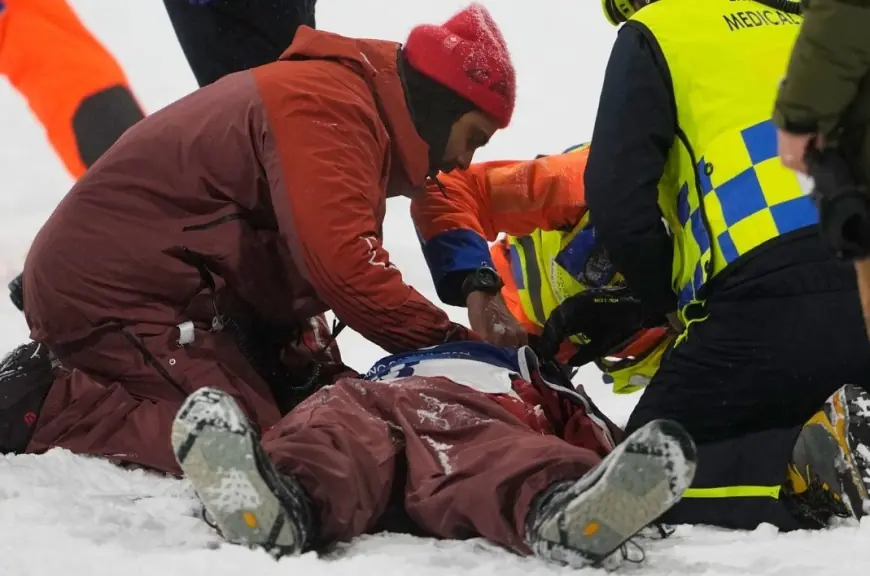
Canadian snowboard star Mark McMorris is out of the men’s big air event at the 2026 Winter Olympics after a heavy crash during a training run in Livigno, Italy. McMorris said he hit his head and will focus on getting healthy for slopestyle later in the Games, a major shift for a medal contender who arrived aiming to compete in multiple freestyle snowboard disciplines.
The incident has also put a spotlight on how quickly Olympic fields can change: a single training crash can reshape qualification lists, broadcast schedules, and Canada’s medal outlook in a sport where risk is part of the job.
What happened in the crash
The crash occurred Wednesday, Feb. 4, 2026 (ET), during a nighttime big air training session in Livigno. Officials described it as a “heavy crash” following a run. As a precaution, McMorris was assisted off the hill and taken to a hospital for evaluation with medical staff from Canada’s team setup.
McMorris later shared that he hit his head. Public updates did not confirm a specific diagnosis beyond the head injury description and precautionary evaluation. By Thursday morning, Feb. 5 (ET), he had been released from the hospital and returned to the Olympic Village, with the team indicating medical staff would continue monitoring him.
Why he’s skipping big air, and what that means
McMorris withdrew from big air qualifying on Thursday, Feb. 5, 2026 (ET). The decision was framed as precautionary and strategic: prioritize recovery and preserve the chance to compete in slopestyle rather than push through an event immediately after a head impact.
That choice matters because big air is often the most “all-or-nothing” discipline on the freestyle snowboard slate. Athletes typically need to attempt high-rotation tricks with limited room for conservative adjustments. After a head hit, even minor symptoms can worsen under speed, light, and impact—conditions that are unavoidable in big air.
From a competitive perspective, McMorris’ withdrawal removes one of Canada’s most proven big-event performers from a discipline where he has been a frequent podium threat. It also reshapes the field for the final and can open the door for alternates or last-minute call-ups to enter qualifying.
Slopestyle remains the target
McMorris’ immediate focus is now slopestyle, scheduled for later in the Games in Livigno. The key date on the calendar is Sunday, Feb. 16, 2026 (ET), when the slopestyle competition is set to be held.
Whether he can compete will depend on how he progresses over the next several days: symptom-free activity, normal balance and reaction time, and the ability to tolerate repeated training runs without setback. With head injuries, teams typically avoid rushing timelines, and the most important indicator is how an athlete responds when intensity ramps up.
McMorris has a long history of returning from serious setbacks, including major injuries earlier in his career. Still, head impacts are treated differently than orthopedic injuries because the risk isn’t just performance—it’s long-term health.
How this affects Canada’s Olympic picture
Canada entered Milano Cortina 2026 expecting freestyle snowboard to be a core medal pipeline. McMorris’ big air withdrawal narrows those pathways in one discipline, but it doesn’t eliminate Canada’s chances in the broader freestyle program. Canada still has depth across men’s and women’s events, and slopestyle remains one of the best opportunities—if McMorris is cleared and able to ride to his standard.
The larger takeaway is how fragile medal planning can be in action sports. A country can have multiple podium-capable athletes, yet a single crash in training can change the expected outcomes instantly. That volatility is part of why teams value depth and why qualification rounds can feel like finals: every run carries real consequences.
Where to watch in Canada on CBC Gem
For viewers searching how to follow McMorris, the big air and slopestyle sessions, and Canada’s broader Olympic schedule, CBC Gem is the primary streaming home for Olympic coverage in Canada. The platform offers live streams and replays, with an event guide that helps viewers find specific sessions by sport and start time.
A practical tip for avoiding confusion: events are listed by local venue time and can also be displayed in North American time zones depending on device settings. If you’re planning around McMorris’ potential slopestyle return, use the sport-specific schedule listing and set reminders, since session timing can shift with weather and course operations.
Sources consulted: Canadian Olympic Committee, Canada Snowboard, Associated Press, Reuters