

























Northern Lights Dazzle Unexpected Regions Amid Solar Storms

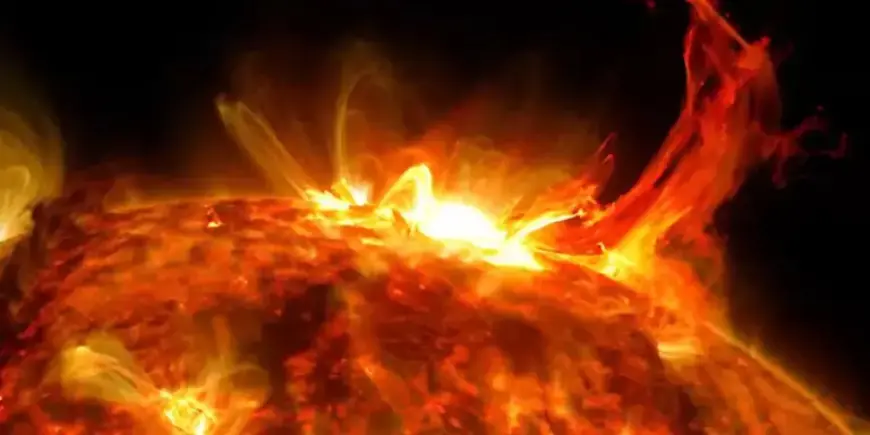
Recent solar storms have captivated audiences as northern lights appear in regions where they are rarely seen. This natural phenomenon originates 93 million miles away, from our sun, which sometimes emits bursts of energy known as solar flares or coronal mass ejections. These massive clouds of charged particles travel towards Earth.
Understanding Solar Storms and Their Impact
When these particles collide with Earth’s magnetic field, they create what is known as a geomagnetic storm. Most of the time, these events pose no significant threat. However, stronger storms can illuminate the night sky with breathtaking auroras, commonly referred to as northern lights. They can also disrupt satellites, interfere with GPS systems, and place stress on electrical grids.
The KP Index Explained
Scientists utilize the KP Index to measure the intensity of these storms. The scale ranges from 0 to 9:
- 0-2: Quiet skies
- 3-5: Minor activity
- 6: Auroras visible in the upper Midwest
- 7-8: Auroras can extend to southern states like St. Louis and parts of Tennessee
- 9: Extreme storms, potential visibility as far south as Sarasota
Typically, a KP rating of at least 6 is needed for good visibility of auroras in the upper Midwest, including cities like Chicago, Milwaukee, and Minneapolis. For views in more southern locations, a KP of 7 or higher is generally required.
Rare Sightings in Unexpected Places
To witness the northern lights as far south as Sarasota, an extreme geomagnetic storm, rated between 8 and 9 on the KP scale, is necessary. Such events are uncommon, though they have occurred in the past. For instance, in May 2024, a powerful solar storm led to sightings of auroras as far down as Key West.
Future Solar Activity
The sun operates on an 11-year cycle and is currently in an active phase. According to NASA and NOAA, elevated solar activity is expected to continue through 2026. Meteorologists advise that when a solar storm is announced, checking the KP Index can provide insights into the potential visibility of auroras.
If the KP scale hits 9, residents on the Sun Coast may get the unique chance to witness this extraordinary spectacle.