

























Steve Bannon Back in the Spotlight as Epstein-Related Releases Collide With His 2026 Political Megaphone

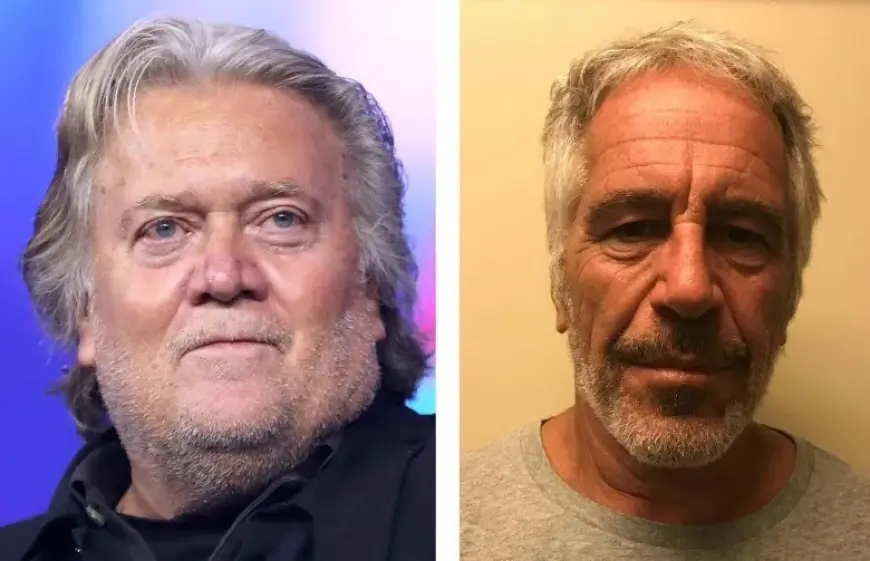
Steve Bannon has re-emerged at the center of a familiar American drama: a polarizing political operator with a large daily audience, fresh controversy from newly public materials tied to Jeffrey Epstein, and a track record of legal trouble that keeps turning biography into headline fuel.
In early February 2026, renewed attention on Bannon is being driven less by a single new policy move and more by the collision of three ongoing storylines: newly released Epstein-related records that include Bannon-linked material, Bannon’s continued role as a high-volume messenger for the populist right, and the unresolved reputational fallout from prior court cases.
What’s happening now: why Steve Bannon is trending again
The immediate spark has been the latest wave of Epstein-file disclosures, which has produced fresh clips and excerpts that place Bannon in the orbit of Epstein-era communications and media maneuvering. One newly surfaced video shows Bannon interviewing Epstein, a stark reminder that Epstein cultivated relationships and access across elite and political circles even after his legal exposure was widely known.
Separately, text-message excerpts circulating from the same broader disclosure wave have triggered international blowback after messages attributed to Bannon became entangled with a dispute involving Australian political advertising claims. The key point for the current news cycle is not just what the documents contain, but how quickly they create secondary scandals in other countries and institutions once names appear.
These releases have landed while Bannon continues to broadcast daily, keeping him an unusually powerful node for narrative amplification. When a controversy touches him, it does not stay confined to court filings or archival material; it gets processed in real time, reframed as a political weapon, and pushed back out to an audience primed for conflict.
A quick refresher: who Steve Bannon is
Bannon is a former senior adviser and strategist in Donald Trump’s 2017 White House who later built a sustained media presence as a populist nationalist commentator and organizer. For supporters, he is a movement strategist who says out loud what others will not. For critics, he is an accelerant who blurs activism, propaganda, and grievance-driven fundraising.
That split is durable because it matches his method: he treats politics as information warfare, where winning attention and setting the agenda can matter as much as legislation.
Behind the headline: the incentives driving this moment
Bannon’s incentives are straightforward: attention, leverage, and agenda control. Controversy is rarely a cost in his ecosystem; it is often a distribution engine. When documents surface that would be reputationally damaging for a conventional public figure, Bannon’s lane offers a different playbook: deny, counterpunch, reframe as a coordinated attack, and use the outrage to deepen loyalty.
The incentives for everyone around him are equally clear:
-
Political opponents want to attach him to scandal because it weakens the broader coalition he influences.
-
Allies often prefer to keep him as a messaging asset while distancing themselves from the messiest associations.
-
Media ecosystems profit from the spectacle because Bannon reliably generates conflict, and conflict reliably generates clicks and airtime.
-
Institutions touched by the Epstein disclosures want clean separation and quick containment, because the brand risk can outlast the news cycle.
The second-order effect is that Epstein-related releases are not just about Epstein. They function as a recurring reputational minefield that can damage people regardless of whether any new criminal allegation is being made about them. Once your name appears, the debate becomes about judgment, proximity, and credibility.
What we still do not know
This is the part the public rarely gets in real time: what is complete, what is partial, and what is being selectively highlighted.
Key missing pieces include:
-
Whether additional Bannon-related materials are still unreleased or heavily redacted
-
The full context around any newly circulated messages and how they were authenticated
-
Whether future releases will add substantive new information or simply extend the outrage cycle
-
How much of the online conversation is driven by verified documents versus recycled claims and edited clips
Because the Epstein topic is so conspiracy-prone, the information environment is unusually contaminated. That makes it easier for false claims to ride alongside real documents, and harder for ordinary viewers to separate proof from provocation.
Legal and reputational backdrop: why Bannon is unusually exposed
Bannon is not entering this moment with a neutral reputation. His past legal history, including a contempt of Congress conviction and later guilty plea in a border-wall fundraising case in New York, means he is already defined for many Americans as someone comfortable operating at the edge of legal and ethical norms.
That context matters because it changes how any new controversy lands. For some, new Epstein-linked material reads as confirmation of long-held suspicions. For others, it reads as another attempt to smear a movement figure. The prior record ensures the debate is not starting from zero.
What happens next: realistic scenarios and triggers
-
More document drops deepen the story if additional video, messages, or metadata surface with clearer provenance and context.
-
The controversy fades if releases slow and no new, specific revelations emerge that change the underlying factual picture.
-
Political weaponization escalates if Bannon’s critics successfully tie the Epstein disclosures to broader questions about elite access and double standards.
-
Internal movement friction grows if allies decide the brand damage is no longer worth the messaging upside.
-
A new legal front opens only if a release contains evidence that meets prosecutable thresholds, which is a much higher bar than viral outrage.
Why it matters
Bannon’s renewed spotlight is a window into how modern political influence works: daily media reach, a base trained to distrust mainstream narratives, and controversy that can be turned into proof of persecution. The Epstein-file releases are powerful not only because of what they contain, but because they keep forcing public figures to relitigate their past associations under the harshest possible lighting.
In 2026, Steve Bannon remains what he has been for years: a high-amplification political actor who can convert attention into leverage, and who is therefore uniquely vulnerable when new material drops that the internet can use to rewrite the story around him.