

























Bad Bunny Grammys night ends with historic Album of the Year win

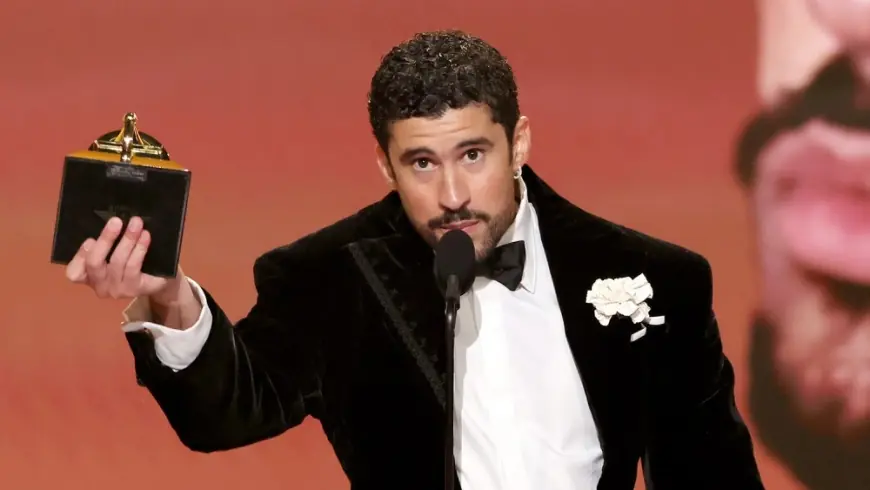
Bad Bunny capped the 2026 awards ceremony in Los Angeles on Sunday, February 1, 2026, with an Album of the Year win for Debí Tirar Más Fotos—a result that set a milestone for Spanish-language music on the Grammys’ biggest stage. His victory, paired with additional wins across genre categories, turned the night into a broad statement about how mainstream pop recognition is shifting.
Bad Bunny Grammys: the Album of the Year moment
The final award of the night went to Debí Tirar Más Fotos, with Bad Bunny taking the stage to accept in a bilingual speech that moved between Spanish and English. He highlighted Puerto Rico directly, invoking a well-known local phrase about the island’s small size to stress that its impact is far larger than its dimensions. He also dedicated the honor to people who leave their homeland to pursue their dreams.
The win was notable not just for the headline category, but for the arc: he had previously been in the Album of the Year field with Un Verano Sin Ti, and the 2026 result completed a long-running narrative about global Spanish-language dominance translating into the Grammys’ top prize.
Why this win is historic
Debí Tirar Más Fotos became the first all–Spanish-language album to win Album of the Year. Beyond the “first,” the moment matters because it signals a different kind of center of gravity: a Spanish-language project didn’t need to be framed as a crossover outlier to take the ceremony’s highest award.
It also reflects the way Bad Bunny’s work has increasingly been treated as pop’s core conversation—built on reggaetón and Latin urban foundations, but presented as major-album artistry rather than a niche lane. The Academy’s top category is often a proxy for what the institution believes defines the year in music, and this choice was unusually explicit.
A night shaped by music and politics
Immigration emerged as a consistent theme in onstage remarks throughout the telecast. Bad Bunny himself addressed the issue early in the night after winning in the Latin urban field, delivering a pointed message criticizing immigration enforcement and emphasizing the humanity of migrants. His comments landed amid other speeches that leaned into the same subject, giving the ceremony a clearer political through-line than many recent years.
That context mattered because it framed his later Album of the Year speech: the night’s headline winner wasn’t only collecting trophies, but also using a high-visibility platform to connect his story—Puerto Rico, diaspora, and language—to broader national debates.
Key takeaways
-
Bad Bunny won Album of the Year for Debí Tirar Más Fotos, a first for an all–Spanish-language album.
-
He also took home Best Música Urbana Album and Best Global Music Performance (“EoO”).
-
Immigration became a recurring theme in speeches, including Bad Bunny’s own remarks.
What he won, and what he didn’t
Bad Bunny’s 2026 night included three wins: Album of the Year and Best Música Urbana Album for Debí Tirar Más Fotos, plus Best Global Music Performance for “EoO.” He also landed major-field nominations beyond the album category, including Record of the Year and Song of the Year nominations tied to “DtMF,” underscoring the project’s reach across the Grammys’ most competitive lanes.
Even without sweeping every category, the overall result read as a decisive endorsement: top prize plus category wins that reflect both his home genres and his global positioning.
What comes next
In the near term, the Album of the Year win will likely shape everything around the album’s lifecycle—tour framing, festival bookings, and award-season visibility that often extends well past the ceremony itself. It may also influence how labels and artists position Spanish-language releases for general-field consideration going forward, now that the most symbolic barrier has been broken.
For Bad Bunny, the bigger implication is leverage: the Grammys’ top award tends to become a permanent credential, and in his case it arrives alongside a public narrative he has consistently pushed—Spanish-first music as mainstream, not adjacent.
Sources consulted: The Recording Academy, Associated Press, The Guardian, Vogue