

























China Unveils Strategy to Challenge US Dollar Dominance: Will It Succeed?

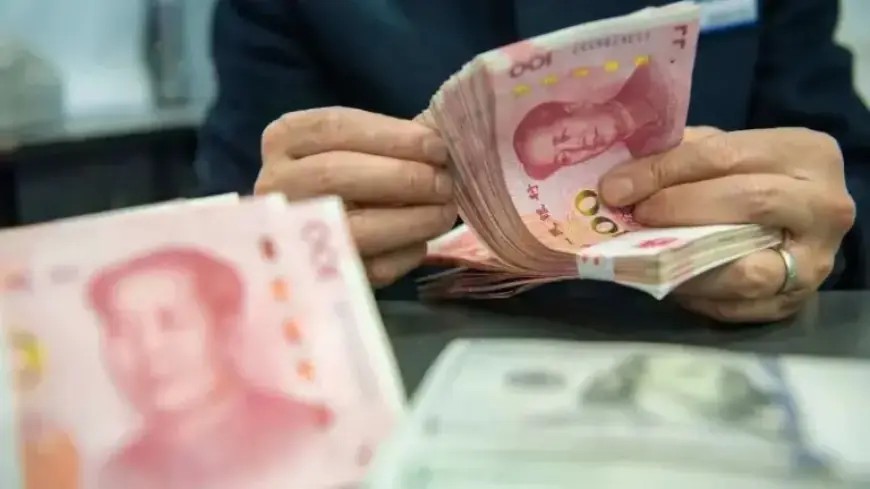
China is strategically positioning itself to challenge the long-standing dominance of the US dollar in global finance. Amid ongoing geopolitical shifts, particularly influenced by the economic policies of former President Donald Trump, the dollar has recently experienced significant declines.
Geopolitical Climate and Economic Policies
The dollar has fallen to its lowest levels in four years, prompting investors to seek shelter in safe-haven assets like gold, which has surged to record highs exceeding $5,500 per ounce. These developments provide China with an opportunity to promote its currency, the renminbi, as a compelling alternative.
In remarks made public by China’s Communist Party journal, Qiushi, President Xi Jinping outlined a vision to enhance the renminbi’s role as a global reserve currency. This commentary highlighted the need for a “strong currency” to facilitate international trade and foreign exchange.
China’s Currency Aspirations
China has invested over a decade into integrating the renminbi into global markets. Growing skepticism toward US economic policies, accompanied by a trend known as “de-dollarization,” has recently provided momentum for these ambitions.
- The imposition of tariffs by the Trump administration has shaken confidence in the US economy.
- Changes in leadership at the Federal Reserve have created further uncertainty.
- Investors have been shifting away from the dollar since last year.
European Central Bank President Christine Lagarde has suggested that the euro could take on a more significant role in international finance, emphasizing the shifting dynamics in currency use.
Challenges in Renminbi Adoption
The path to greater renminbi usage is complex. Dinny McMahon, head of markets research at Trivium China, noted the difficulty of establishing the renminbi as a preferred currency in the face of historical dollar dominance. The US dollar has been key in international transactions for over 80 years, particularly since the Bretton Woods Agreement solidified its position as the global standard.
The International Monetary Fund recognizes several major reserve currencies, including the euro and Japanese yen. However, the renminbi currently represents only about 2% of global reserves, leaving substantial room for growth.
Efforts to Bolster the Renminbi
China has taken critical steps to make the renminbi more attractive to international investors. This includes enhancing access to Chinese securities, such as stocks and bonds, while simplifying cross-border payment processes.
- Strengthened trade relations with developing economies have also supported the renminbi’s appeal.
- Utilization of the renminbi in trade settlements rose sharply following sanctions imposed on Russia.
Last summer, Pan Gongsheng, head of China’s central bank, described the renminbi as a leading trade finance currency and called for a diversified multi-polar currency system, challenging the existing dollar hegemony. However, experts caution that China’s strict controls over capital flows could hinder widespread adoption of the renminbi.
Future Prospects and Global Landscape
Despite these advancements, a complete transition to a renminbi-centric global financial system remains distant. Data from the IMF indicate that the US dollar commands about 57% of foreign exchange reserves, while the euro holds approximately 20%. In contrast, the renminbi’s share is merely around 2%.
China has not explicitly sought to replace the dollar but aims to elevate its currency’s international standing. As experts note, while Beijing may not envision the renminbi reaching the same level of acceptance as the dollar or euro, they recognize a unique moment to gain traction.