























Ghislaine Maxwell and Casey Wasserman: Newly Released Emails Trigger LA 2028 Scrutiny as Maxwell Keeps Fighting Her Conviction

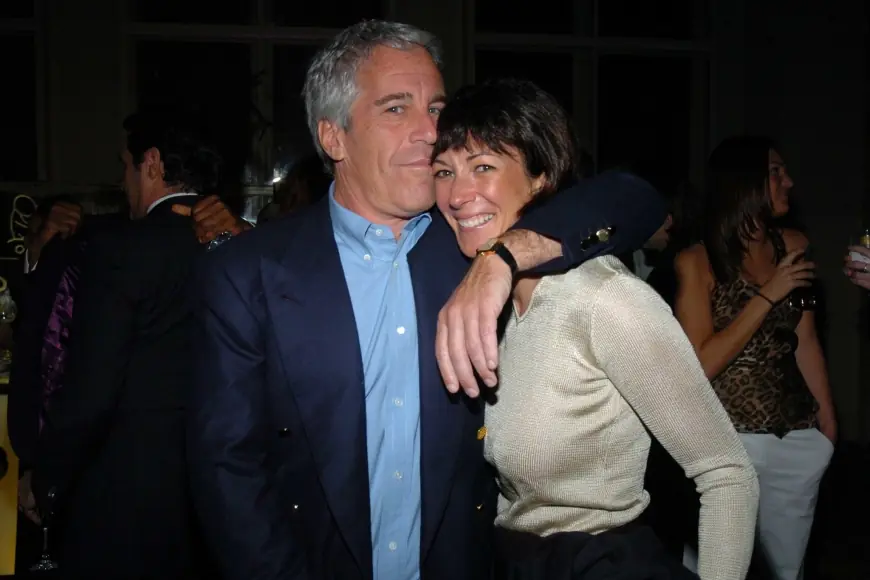
A fresh burst of attention around Ghislaine Maxwell has spilled into the sports world after newly released records surfaced past email exchanges between Maxwell and Casey Wasserman, the chair of the Los Angeles 2028 Olympic and Paralympic organizing committee. The emails date back to the early 2000s, but their public release in recent days has created an immediate political and reputational problem for LA 2028: the Games are still years away, yet the organizing effort is already dealing with an avoidable distraction tied to one of the most notorious criminal cases of the past decade.
Wasserman has issued an apology and said he deeply regrets the correspondence. He has also said he never had a personal or business relationship with Jeffrey Epstein. The controversy has intensified as local officials and commentators question whether LA 2028 can afford leadership turmoil while it is trying to lock in security planning, venue coordination, and public trust.
Casey Wasserman, Maxwell emails, and the LA 2028 Olympics: what happened
The core event is straightforward. Records released in late January and early February 2026 included email exchanges between Wasserman and Maxwell from around 2003. Once those messages became public, Wasserman responded with a statement expressing regret and apologizing for the past communication.
The political temperature rose again on Tuesday, February 3, 2026 (ET), when a prominent Los Angeles County official publicly called for Wasserman to step down from his LA 2028 leadership role. That demand does not automatically change governance, but it raises the stakes: LA 2028 now has to manage a credibility test at the exact moment it needs steady relationships with city and county partners.
Who is Ghislaine Maxwell, and where her legal fight stands in 2026
Maxwell is serving a 20-year federal prison sentence for sex trafficking-related crimes following her 2021 conviction in New York. Even with her direct appeal path narrowed, she has continued to pursue post-conviction legal strategies.
In late 2025, Maxwell filed a petition seeking to undo or revisit her conviction and sentence, arguing that new information and broader circumstances warrant relief. Separately, the Supreme Court declined to take up her appeal in October 2025, leaving lower court rulings in place. The practical effect is that Maxwell remains incarcerated, but her legal team is still working the remaining lanes available after the normal appeal process.
Behind the headline: why this is blowing up now
The timing is the story.
For years, the Maxwell case has produced periodic waves of document releases, filings, and renewed political interest. When a new batch of material becomes public, it tends to trigger a secondary effect: people search the names of anyone mentioned, connected, or adjacent, and then pressure campaigns form quickly, often before institutions have time to respond.
Wasserman’s incentives are clear. LA 2028 needs stable leadership that can reassure partners, sponsors, and public agencies. His apology aims to close the loop and prevent a lingering drip of controversy. But the incentive on the other side is just as strong: critics benefit from signaling zero tolerance for anything that even resembles proximity to the Epstein and Maxwell orbit. For politicians, calling for resignation can be a low-cost way to align with public disgust and demand accountability, regardless of whether the underlying conduct was criminal or merely embarrassing.
Stakeholders include LA 2028 staff, public safety agencies planning for 2028, the city and county governments coordinating logistics, sponsors wary of brand risk, and the broader Olympic movement that wants the Games to be about sport rather than scandal.
Second-order effects are where this gets real. If LA 2028 leadership becomes unstable, it can complicate coordination with law enforcement, venue owners, transit agencies, and federal partners. Even if nothing changes formally, the internal cost of managing the distraction is significant: time, attention, and political capital get diverted from planning work that has hard deadlines.
What we still do not know
Several key details remain unclear or contested in the public conversation:
-
The full scope and tone of the email exchanges beyond what has circulated in summaries and excerpts
-
Whether additional communications exist that have not yet been released
-
How LA 2028’s governance structure would handle a leadership transition, if one were forced
-
Whether the resignation pressure broadens from local officials to major institutional partners
It also remains important to separate two questions that often get blurred online: whether a person exchanged messages with Maxwell years ago, and whether that implies knowledge of or involvement in crimes. Those are not the same claim, but in a fast-moving outrage cycle they are frequently treated as if they are.
What happens next: realistic scenarios and triggers
-
LA 2028 closes ranks and keeps Wasserman in place if sponsors and government partners signal they can move forward without disruption.
-
LA 2028 restructures leadership, adding new governance checks or visible oversight, if the political pressure becomes a recurring operational burden.
-
A resignation or role change happens if additional releases introduce new information that makes the controversy harder to contain.
-
The story fades if no new material emerges and the next news cycle shifts attention, but it can re-ignite instantly with any future document dump.
Why it matters
This episode is not just celebrity scandal drifted into sports. The 2028 Olympics require public trust, intense multi-agency coordination, and a leadership team that can keep the focus on delivery. When Maxwell-related records pull an Olympic chair into the spotlight, the risk is not only reputational. It is managerial: distraction becomes delay, delay becomes cost, and cost becomes political conflict.
For now, the facts are that Maxwell remains imprisoned and still litigating, while Wasserman is facing real local pressure after apologizing for past correspondence that has abruptly returned to the present.