

















Bill Gates, Melinda Gates, Eyes Wide Shut, and the Rothschild Family: Why These Names Keep Colliding Online and What’s Actually Driving the Story

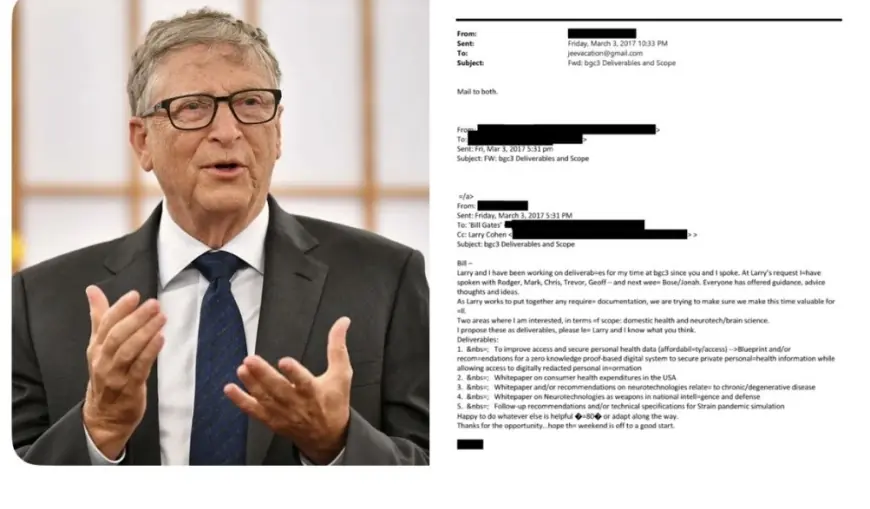
A familiar cluster of keywords is surging again: Bill Gates, Melinda Gates, Eyes Wide Shut, and the Rothschild family. The pattern is predictable: a real-world headline involving a famous billionaire or philanthropic institution hits the news cycle, and online rumor networks quickly stitch it to a grab bag of pop-culture “proofs,” most commonly the masked-party imagery of Eyes Wide Shut and long-running myths about the Rothschild family.
This latest spike is being fueled by two overlapping currents: renewed discussion of Bill Gates’s past association with Jeffrey Epstein, and renewed interest in how conspiracy narratives recruit cultural symbols to make their claims feel cinematic and “hidden in plain sight.”
What happened: the real-world trigger behind the renewed chatter
In recent days, Melinda French Gates has publicly addressed painful details connected to her former marriage resurfacing in connection with newly released Epstein-related materials. While the underlying legal and documentary context is complex, the public takeaway has been simple: the topic is back, and the personal stakes are being voiced directly.
At the same time, Bill Gates has been visible in his familiar lanes: philanthropy and forward-looking policy arguments, including public writing about innovation, health, and technology. That contrast — intimate personal fallout versus public institutional messaging — creates a high-friction environment where rumor thrives.
When attention spikes, so does opportunistic narrative-building.
Why Eyes Wide Shut gets pulled in: symbolism is easier than evidence
Eyes Wide Shut has become a kind of universal mood board for “secret elite” storytelling. The film’s masked ritual imagery is highly memeable, and it’s ambiguous enough that viewers can project almost anything onto it. That ambiguity is exactly what makes it valuable to conspiratorial framing: it feels like a coded message even when it’s simply a piece of fiction.
There’s also a concrete production detail that gets repeatedly repackaged: parts of Eyes Wide Shut were filmed at a grand estate that had historical ties to the Rothschild family. That fact is routinely treated online as a smoking gun rather than what it is — a location choice for a film seeking a particular aesthetic.
Aesthetics travel faster than context. A still image of masks and candles will always outcompete a paragraph explaining provenance and timelines.
Why the Rothschild family appears in these narratives: a centuries-old template
The Rothschild family occupies a unique place in conspiracy culture because it offers a ready-made villain archetype: wealthy, private, historically prominent, and easy to misunderstand. Over generations, that has turned into a recurring shorthand for “shadow power,” often wrapped in insinuations that echo classic antisemitic tropes.
That matters because this isn’t just sloppy internet speculation. It’s a narrative structure with real-world harm: it redirects public anger away from specific, verifiable actions and toward a generalized, often prejudiced story about a hidden group controlling events.
When people search “Rothschild family” alongside modern celebrities or philanthropists, it’s often less about new information and more about an old template being reused.
Behind the headline: incentives, stakeholders, and why this mashup keeps working
Context: The Gates name sits at the intersection of money, global health, politics-adjacent policy, and technology — all areas that attract distrust in polarized times. Add the Epstein topic, and you get a powerful emotional accelerant.
Incentives:
-
For rumor accounts, tying a current headline to a recognizable film supplies instant “meaning,” even without proof.
-
For social platforms, emotionally charged content tends to perform well because it triggers replies, quote-posts, and outrage sharing.
-
For audiences, conspiracy stories provide a sense of control: a simple explanation for complicated systems.
Stakeholders:
-
Bill Gates and Melinda French Gates, whose reputations and personal histories become raw material for speculation.
-
Philanthropic institutions and partners, which can be pressured by perception even when operations continue normally.
-
The general public, which may lose clarity on what is confirmed versus what is narrative glue.
-
Communities historically targeted by conspiracy myths, who bear the cost when old tropes reappear in modern packaging.
Second-order effects: Once these links take hold, legitimate questions can get drowned out. Serious scrutiny becomes harder because it gets mixed with sensational claims, and people with real concerns may disengage rather than be associated with fringe narratives.
What we still don’t know: the missing pieces people should watch for
There are several gaps that matter more than any film-location trivia:
-
The exact scope, provenance, and legal context of the newly released Epstein-related materials being discussed
-
What is newly substantiated versus re-circulated or reframed
-
Whether any institutions connected to Gates face concrete operational consequences or only reputational noise
-
Whether the renewed attention produces any verified accountability steps, or simply another viral cycle
If a claim relies on montage logic — masks, mansions, family names, and insinuation — it’s a signal that the story is being constructed for emotional impact rather than factual clarity.
What happens next: realistic scenarios and triggers
-
Brief spike, then fade: interest drops once the attention cycle moves on, unless a new verified document release extends the timeline.
-
Reputation-management phase: expect more direct, carefully worded public remarks designed to separate confirmed facts from insinuations.
-
Platform moderation flashpoints: conspiracy clusters can trigger takedowns or demonetization, which sometimes fuels a secondary “censorship” narrative.
-
Institutional insulation: philanthropic work continues, but partners may quietly reassess risk and communications strategy.
-
Persistent long-tail myth: even if debunked, the Eyes Wide Shut and Rothschild motifs remain reusable and will likely resurface with the next catalyst.
The bigger significance is not that a movie secretly explains modern headlines. It’s that modern attention systems reward stories that feel like revelations. When real, painful topics re-enter the public conversation, the most responsible next step is separating what is confirmed, what is claimed, and what is simply cinematic language being used to manufacture certainty.