Joe Montana and Bill Walsh get fresh spotlight in “Rise of the 49ers”

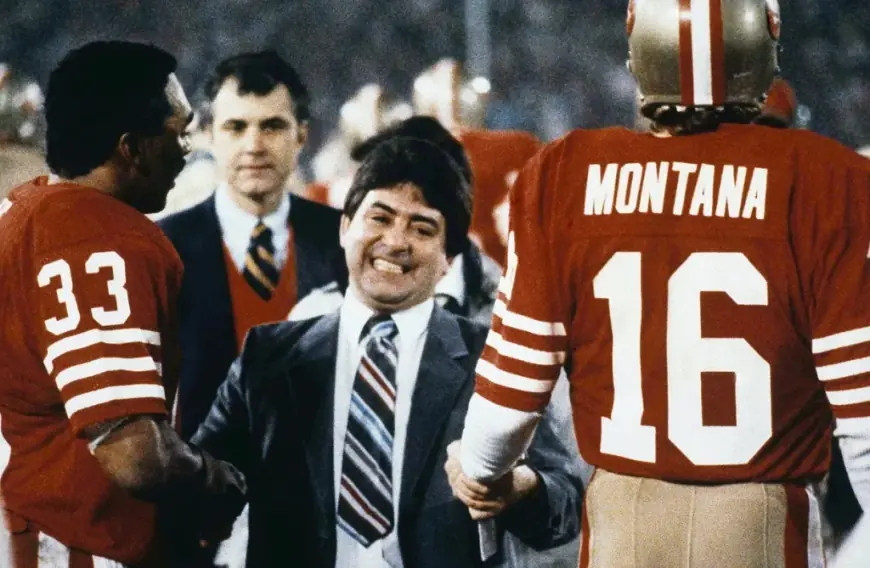
A new four-part docuseries, “Rise of the 49ers,” has pushed the franchise’s 1980s transformation back into the national conversation, with Joe Montana and Bill Walsh framed as the pairing that changed not only a team’s fortunes, but the way modern pro football looks. The series aired across Sunday, Feb. 1, 2026, and Monday, Feb. 2, 2026 (ET), arriving at a moment when nostalgia for dynasties is having a resurgence—and when debates about who “invented” today’s passing game never really stop.
The hook is simple: the San Francisco 49ers were a struggling outfit in the 1970s, then became a cultural force in the 1980s. The show’s bet is that even fans who know the ending still want to watch how it happened from the inside.
A four-part look at a fast rise
“Rise of the 49ers” retraces the climb from organizational chaos to dominance, using interviews, rare archival material, and behind-the-scenes recordings to recreate the feeling of a team becoming convinced—sometimes against evidence—that it could be the standard-bearer.
Episode rollout (ET):
| Episodes | Air date (ET) | Focus |
|---|---|---|
| 1–2 | Feb. 1, 2026 | From irrelevance to belief |
| 3–4 | Feb. 2, 2026 | Titles, tension, and legacy |
The series is also shaped by a modern narrator-producer lens, with Tom Brady positioned as a lifelong fan reflecting on what the team meant to a kid growing up near Candlestick Park.
Bill Walsh as the emotional engine
Walsh is treated as the center of gravity: the obsessive teacher, the restless innovator, and the man whose standards could exhaust everyone—including himself. The docuseries leans into his contradictions: a coach who preached calm precision, yet carried a constant edge about proving he belonged.
The most compelling sections are the ones that show process. Meetings, practice clips, and sideline moments make it easier to understand why Walsh’s “system” was more than a playbook. It was an organizational mindset—details, repetition, roles, accountability—designed to outlast any one season.
Even for viewers familiar with the “West Coast offense” mythology, the series emphasizes a less glamorous truth: the genius was in refusing shortcuts. It wasn’t only about clever routes. It was about building an environment where quarterbacks could make fast, correct decisions again and again.
Joe Montana as the face of the change
Montana’s story in the series is not just a highlight reel. It’s presented as a test case for what Walsh wanted: poise under chaos, precision without panic, and an ability to make the same play look different based on timing and leverage.
Rather than portraying him as a lone hero, the docuseries repeatedly returns to the idea that Montana’s greatness was inseparable from the structure around him—especially the protection schemes, the receivers who understood spacing, and the defense that gave the offense breathing room when games got tight.
That framing naturally brings in other pillars of the era—Jerry Rice, Steve Young, and Ronnie Lott—not as side characters, but as proof that the “rise” wasn’t one magical season. It was an assembly of elite habits.
The moments it replays—and the ones it rushes
The docuseries revisits the expected set pieces, but it’s strongest when it slows down to show how decisions were made and how pressure felt inside the building.
Key moments it returns to:
-
The team’s early belief shift after ownership changes under Eddie DeBartolo Jr.
-
The buildup and aftermath of “The Catch,” treated as both football play and franchise turning point
-
The internal cost of winning: exhaustion, ego management, and the strain of being “the standard”
Some early reactions have also pointed to what the series does less of: late-era context, certain rivalry chapters, and deeper exploration of how the dynasty’s power shifted across the early 1990s. That choice keeps the narrative tight, but it can leave longtime fans wanting a fuller map of how the “Gold Rush” years evolved after the first wave of championships.
Why the 49ers story is landing again in 2026
Dynasty stories hit differently when today’s sports culture is fragmented—fandom split across short clips, debates, and constant comparison. “Rise of the 49ers” offers an antidote: a reminder that dominance is usually a grind, not a montage.
It also reframes the Walsh–Montana partnership as a template that modern football still lives inside. A lot of today’s offensive talk—quick game, spacing, timing, controlling chaos—sounds familiar because it was built on foundations that teams like the 49ers helped normalize.
In that sense, the docuseries isn’t just a history lesson. It’s a mirror: a way to understand why the league still values coaches who teach systems and quarterbacks who can run them with discipline, even when the sport looks faster and louder than it did in the 1980s.
Sources consulted: San Francisco Chronicle; People; AMC Networks; TV Guide