






















Grammys 2026 Ozzy Osbourne tribute spotlights “War Pigs” and “Changes”

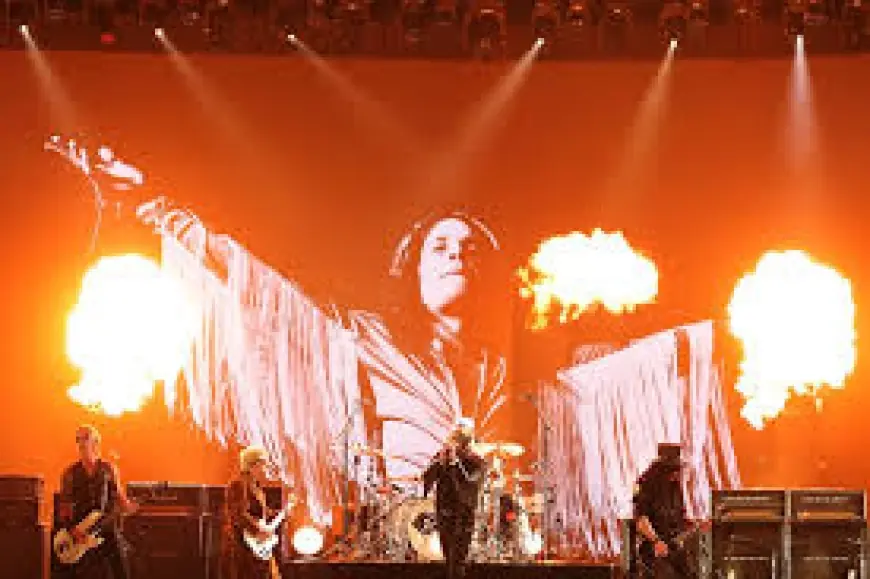
The 2026 Grammy Awards put a heavy-metal exclamation point on its In Memoriam segment with an all-star performance honoring Ozzy Osbourne, pairing a Black Sabbath classic with a lineup that bridged generations. The moment landed as both a celebration of Ozzy’s outsized influence and a reminder of how deeply his songs still sit in the mainstream music bloodstream.
Separate from the tribute performance itself, Yungblud’s own Ozzy-linked spotlight added another layer: a Grammy win tied to a live rendition of “Changes,” reinforcing that Ozzy’s catalog is being reinterpreted in real time by younger artists, not just preserved as history.
The all-star “War Pigs” performance
The tribute centerpiece was a charged rendition of Black Sabbath’s “War Pigs,” delivered by a group built for maximum cross-audience impact: Post Malone on vocals, Slash on guitar, Duff McKagan on bass, Chad Smith on drums, and Andrew Watt in a key guitar/producer role. The arrangement leaned faithful rather than reinventive—big riff, big swing, and enough volume to make the moment feel like a concert interruption inside an awards show.
The staging choices kept it focused on the song and the players, letting the performance do the work instead of leaning on elaborate production tricks. That restraint mattered: “War Pigs” is already theatrical, and the simplest way to honor it is to play it hard and clean.
Key moments that defined the tribute
-
A tight, riff-forward opening that immediately signaled “this is Sabbath”
-
Slash and Watt trading emphasis between grit and precision
-
Post Malone leaning into the song’s bite rather than smoothing it out
-
A crowd reaction that felt more like a rock show than an awards interlude
Where Yungblud fits into the night
A big point of confusion online has been whether Yungblud performed during the televised tribute. He did not appear as part of the “War Pigs” lineup.
His connection came through a separate honor: Yungblud won Best Rock Performance for “Changes (Live From Villa Park / Back to the Beginning),” a performance recorded earlier at a tribute setting and released as a live track. That means his Grammy moment was tied to a pre-existing live recording, not a fresh on-stage performance at the ceremony.
During his acceptance, he framed the win as a dedication to Ozzy and to people chasing music from bedrooms and small local scenes—an emotional through-line that matched the night’s larger tone of remembrance.
When Ozzy Osbourne died and how
Ozzy Osbourne died on July 22, 2025, at age 76. Publicly documented medical details list an acute myocardial infarction (heart attack) and out-of-hospital cardiac arrest, with coronary artery disease and Parkinson’s disease with autonomic dysfunction cited as associated factors.
That context has shaped how tributes are framed: not as an unexpected loss at a young age, but as the closing of a long, complicated health chapter for an artist who had been publicly navigating serious medical issues while still remaining culturally central.
The Osbourne family in the spotlight
The performance hit harder because the Osbourne family was visibly present in the room. Sharon Osbourne attended alongside Kelly Osbourne and Jack Osbourne, and the appearance of Ozzy’s daughter Aimee Osbourne—who is far less frequently seen at major red-carpet events—drew attention as well.
Camera cuts during the tribute highlighted grief and pride in equal measure, and the family’s presence reinforced that this wasn’t a distant industry salute; it was personal. For a show that often moves quickly from spectacle to spectacle, the tribute carved out a rare moment where the room’s mood genuinely shifted.
Why the tribute landed now
Two things made this segment land as a “big deal” rather than a routine memorial:
First, song choice. “War Pigs” is an unmistakable statement of Ozzy’s Black Sabbath-era power—heavy, political, and built to shake an arena. Pairing the broader memorial framing with such an aggressive track signaled that the show wasn’t treating metal as a side note.
Second, the week-to-week resurgence of Ozzy’s music in public conversation has been real. Between the ongoing reappraisal of his legacy, the continued pull of signature songs like “Crazy Train” and “Iron Man,” and modern artists leaning into “Changes” as an emotional centerpiece, the Grammys leaned into what’s already happening: Ozzy’s work is being re-sung, re-played, and re-owned by new voices.
With the tribute now circulating widely, the next question isn’t whether Ozzy remains influential—it’s which artist is brave enough to tackle the next “impossible” song from his catalog on a major stage.
Sources consulted: The Recording Academy; Associated Press; The Guardian; Pitchfork