

























Gold price today rebounds near $4,777 after brutal selloff, volatility stays high

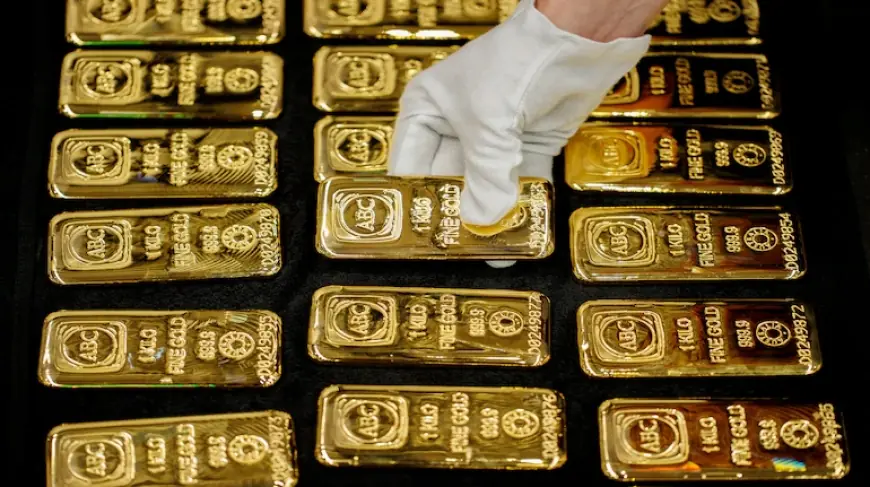
Gold bounced on Tuesday after a violent two-session slump that shook precious-metals markets and forced many leveraged traders to cut exposure. The recovery has been sharp enough to calm some of the “free fall” talk, but the bigger story remains the same: price swings are still unusually wide, and gold is trading far below the late-January peak that capped a historic run.
As of Tuesday evening, buyers were stepping back in around the mid-$4,700s, helped by short-covering and a market that is gradually adjusting to higher collateral demands in futures trading.
Gold price today in USD
As of 7:10 p.m. ET on Tuesday, February 3, 2026, spot gold (XAU/USD) was $4,776.77 per ounce, up 2.50% on the day, after trading in a wide range between $4,660.10 and $4,796.63.
| Snapshot | Level | Move | Time (ET) |
|---|---|---|---|
| Spot gold (XAU/USD) | $4,776.77/oz | +2.50% | 7:10 p.m. Feb 3 |
| Day’s range (spot) | $4,660.10–$4,796.63 | — | Feb 3 session |
| Prior close (spot) | $4,660.10/oz | — | Reference |
| 52-week range (spot) | $2,771.69–$5,595.46 | — | Reference |
The numbers underline why gold is still the market to watch right now: even on an “up” day, the intraday spread is large enough to whipsaw positions.
Why gold is moving so violently
The current turbulence is being driven more by positioning and collateral mechanics than by a sudden collapse in physical demand.
A major U.S. futures exchange raised minimum performance-bond (margin) requirements for gold-related contracts late last week, with increases broadly in the mid-single-digit percent range for front-month positions. When margin requirements rise into a falling market, many traders either post additional cash or reduce risk, and the fastest way to reduce risk is to sell. That dynamic can create self-feeding drops—especially when multiple markets (gold, silver, and broader risk assets) are sliding at the same time.
Tuesday’s rebound fits the other half of that pattern: once forced selling eases, the market often snaps back as shorts take profits and value-focused buyers test levels.
The dollar and rates are still a headwind
Gold’s longer-run direction often hinges on the tug-of-war between inflation hedging and interest-rate expectations. Over the past several sessions, traders have been repricing the path of U.S. monetary policy, and the U.S. dollar has been firmer than it was during parts of January’s rally.
A stronger dollar can weigh on gold because the metal is priced in dollars, raising the effective cost for many non-U.S. buyers. Higher expected rates can also pressure gold because bullion does not pay interest, so its opportunity cost rises when yields look more attractive.
That doesn’t mean gold must fall every time the dollar rises—but in high-volatility environments, currency and rate moves can amplify positioning-driven swings.
How far gold is from the peak
Even with Tuesday’s bounce, gold remains well below the late-January high embedded in the 52-week range. With the peak near $5,595 per ounce and spot now around $4,777, gold is down roughly $818 from the high—about 14.6%.
That perspective matters because it frames the rebound correctly: this is a recovery attempt inside a broader drawdown, not yet a return to the prior trend.
It also helps explain why sentiment is split. Some traders view the break as a classic leverage flush that can set up a healthier base. Others see it as a warning that the rally became crowded and vulnerable to policy-driven repricing.
What to watch next
Three practical signposts will tell traders whether this stabilizes or re-accelerates:
-
Intraday range compression
If daily high-to-low swings narrow, it’s often a sign that liquidation pressure has eased and two-way liquidity is returning. -
Follow-through after margin adjustments
The market is still digesting higher collateral requirements. If prices can hold while traders adjust, it reduces the odds of another forced wave of selling. -
Direction of the dollar and yields
Gold can rally in a firm-dollar environment, but it usually requires strong independent demand. If the dollar continues to strengthen sharply, it can cap rebounds.
For now, “gold price today” is best understood as a battle between bargain-hunting and risk controls. Tuesday’s move shows buyers are willing to step back in, but the size of the swings says the market is still healing.
Sources consulted: CME Group; Investing.com; Federal Reserve Economic Data; Yahoo Finance