
























Melania movie opens strong at the box office, but reviews are brutal and polarized

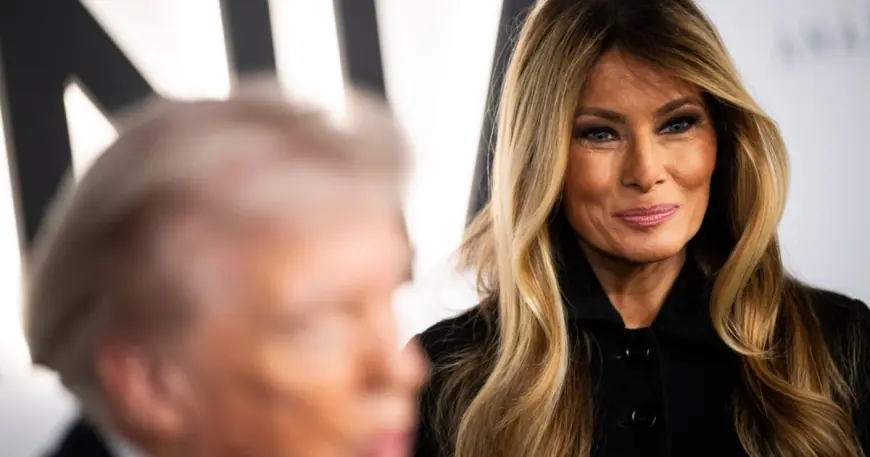
The new Melania movie, an authorized documentary centered on Melania Trump, has landed in theaters with a surprisingly solid opening weekend—and an even louder argument about what viewers are really paying to see. Released on Friday, Jan. 30, 2026 (ET) after a high-profile premiere the night before, the film is posting documentary-sized ticket sales while drawing overwhelmingly negative critical notices and unusually divided audience reactions.
The result is a familiar modern pattern: a numbers story (box office, ratings, “gap” discourse) as much as a movie story.
Melania movie: what it is and why it’s in theaters
The documentary is positioned as an “intimate chronicle” of Melania Trump returning to the White House and navigating public life, with glossy access to meetings, travel, and behind-the-scenes moments. It premiered at the John F. Kennedy Center for the Performing Arts on Thursday, Jan. 29, 2026 (ET), then expanded widely the next day.
A key detail shaping both the rollout and the conversation: it’s an authorized project, meaning it arrives with cooperation and image control rather than a skeptical outside lens. That creative choice helps explain why some viewers are treating it like a message piece, while critics have described it as evasive—more mood-board than biography.
Box office: big for a documentary, modest in the wider market
In North America, the film opened in roughly 1,700–1,800 theaters and grossed about $7.1 million over its first weekend—strong by documentary standards and enough to push it into the upper tier of the weekend chart. Internationally, early totals are comparatively small so far, though the title is playing in multiple markets.
In the U.K. and Ireland, the opening was much softer: it played in 155 cinemas and earned about £33,000 across the weekend, with a low per-theater average—an early sign the audience is highly concentrated geographically and culturally.
Here’s where the main public numbers sit as of Sunday, Feb. 1, 2026 (ET):
| Metric | Figure (approx.) | What it suggests |
|---|---|---|
| Opening weekend (U.S./Canada) | $7.16M | Strong documentary debut |
| Theaters (U.S./Canada) | 1,778 | Wide release, not “limited” |
| Worldwide total | $7.1M | Early overseas traction is limited |
| Opening weekend (U.K./Ireland) | £33K | Demand appears niche |
Reviews and the “gap” over ratings
Critically, the film is getting hammered. On one major review-aggregation site, the critic score is in the single digits (around 6%), reflecting broad agreement that the film offers little new insight and avoids hard questions.
At the same time, the audience score is extremely high on that same style of platform—creating one of the largest visible gaps between critics and users in recent memory. That split is being interpreted in two competing ways:
-
Political signaling: some ticket-buyers appear motivated by support for Donald Trump or sympathy for Melania Trump rather than interest in documentary craft.
-
Ratings turbulence: unusually sharp swings—both negative and positive—suggest organized pile-ons and counter-pile-ons, making the raw audience number hard to treat as a pure measure of satisfaction.
In other words: the ratings story is real, but the meaning is messy.
Where to watch: theaters now, streaming later
Right now, the film is primarily a theatrical play. Showtimes are concentrated in larger metro areas but broad enough that most major cities have multiple daily screenings. For “movie near me” searches, the practical answer is to check local listings and look for matinee pricing—early attendance appears uneven, with some locations reporting nearly empty screenings while a few politically energized pockets sell significantly better.
A streaming release is expected within a few weeks of the theatrical launch (often three to four weeks for this kind of rollout), though the exact date has not been publicly locked in everywhere.
How it compares to other political documentaries
The film’s biggest comparison point isn’t another campaign doc—it’s personality-driven access projects like Michelle Obama’s Becoming, which leaned into a clear narrative arc and emotional openness. By contrast, this documentary is being described—by both fans and skeptics—as style-forward: wardrobe, staging, atmospherics, and carefully chosen moments that minimize conflict.
That approach can still sell tickets, especially in a politically saturated moment. The open question is durability: whether the film holds beyond opening-week curiosity, and whether the streaming phase expands interest or simply amplifies polarization.
Sources consulted: The Numbers; The New Yorker; Los Angeles Times; Rotten Tomatoes