






















Conservatives Mark Harper Victory Anniversary, Discuss Future Strategies

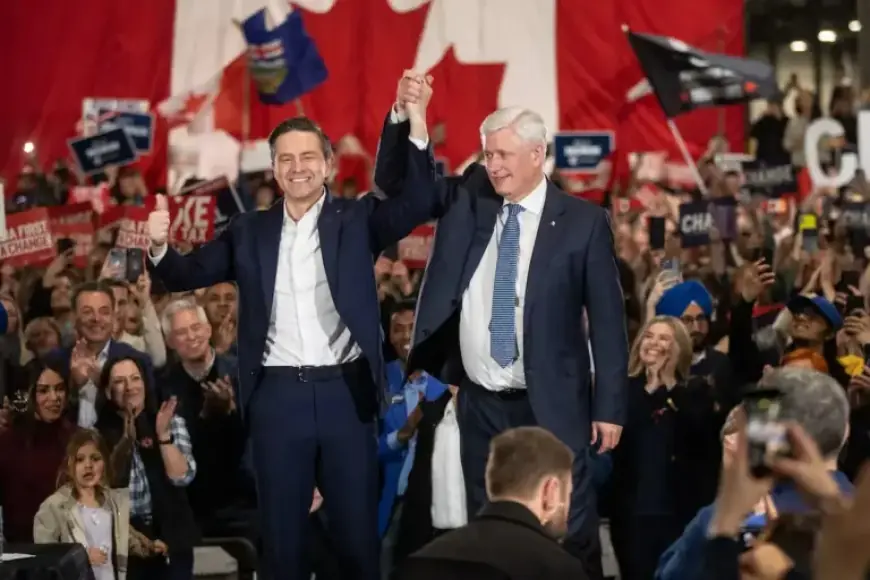
The Conservative Party of Canada recently observed a significant milestone while assessing its future strategies. A three-day convention in Calgary coincided with the 20th anniversary of former Prime Minister Stephen Harper’s first electoral victory. This event highlighted the leadership of Pierre Poilievre, who faces challenges as he seeks to navigate the complexities of modern Canadian politics.
Conservatives Honor Harper’s Legacy
The Calgary convention marked a momentous occasion for the Conservative Party, as it reflected on Harper’s impactful leadership. Poilievre garnered 87.4% support during his leadership review, surpassing the approval Harper received in 2004 after losing an election. This raises important questions regarding Poilievre’s ability to lead the party back to victory.
- Event Duration: Three-day convention followed by a week of commemorative activities.
- Leadership Support: Poilievre received 87.4% approval; Harper had lower approval post-2004.
Challenges Ahead for Poilievre
Former Conservative cabinet minister Jason Kenney emphasized the need for Poilievre to reconnect with traditional supporters. Many party members feel that Poilievre has distanced himself from key provincial and business leaders, which could hinder his prospects in future elections.
In conversations, Kenney suggested Poilievre must demonstrate more gravitas, particularly regarding the influence of U.S. President Donald Trump. Kenney criticized Poilievre for not directly addressing Trump in his speeches, urging him to acknowledge the realities of modern political challenges.
Engaging Younger Voters
Pierre Poilievre aims to resonate with younger voters, an essential demographic for future success. He emphasized his commitment to fighting for families and individuals facing daily challenges. Young delegates, like 22-year-old Mirco Peters, expressed hope for the party’s future and recognized that collective effort is crucial for victory.
- Key Demographic: Young voters identified as critical for future Conservative success.
- Delegate Feedback: The energy from party MPs attracted younger supporters.
Internal Party Dynamics
Despite progress, the Conservative Party must navigate internal tensions stemming from historical divisions. Currently, relationships among conservative leaders, including Ontario’s Doug Ford, indicate a need for unity to strengthen the party’s chances in upcoming elections.
Past experiences from the merger of the Progressive Conservatives and the Canadian Alliance still influence party dynamics. Some members lack direct experience from those formative years, while the overarching goal remains the same: creating a viable alternative to the ruling Liberals.
Evaluating the Political Landscape
As leaders assess the political landscape, past victories and losses serve as critical reminders. Harper’s 2006 win was achieved under different circumstances; the political right was united, while the left faced internal strife. Currently, Mark Carney’s Liberals present a formidable challenge.
- Election Context: Harper won a minority government in 2006 with 36% of the vote.
- Current Landscape: Poilievre’s Conservatives achieved 41% of the popular vote in a recent election, falling short against Carney’s minority government.
Former cabinet minister Tony Clement noted that Harper’s reflective process after 2004 led to a successful strategy in 2006. He suggests that Poilievre is undergoing similar introspection as he aims to reshape his approach to modern conservative principles.
Looking Forward
The Conservative Party’s recent events highlight a critical juncture. While the legacy of Harper shapes current strategies, the need for unity and a clear vision for the future remains essential. As the party moves forward, a balanced approach that honors the past while addressing contemporary issues will be crucial for success.