






















Hailey Buzbee and Tyler Thomas: What We Know So Far About the Perry County, Ohio Names Circulating Online

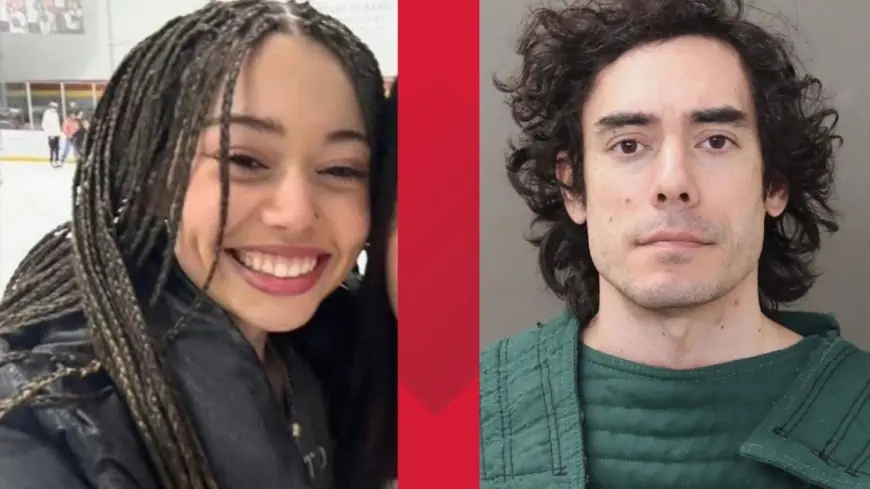
Search interest surged on February 2, 2026, ET, around the names Hailey Buzbee and Tyler Thomas, often paired with “Perry County Ohio” and “Indiana.” The pattern suggests a developing local story that has spilled beyond its original community, with people trying to determine whether there is an active investigation, a missing-person situation, a court case, or a public-safety alert tied to those names.
At this stage, the most important point is caution: fast-moving name searches often outpace confirmed public information. When details are incomplete, the information vacuum tends to fill with rumor, misidentification, and copy-pasted claims that sound precise but are not verified.
Why these names are trending now
When a person’s name starts trending alongside a county and a neighboring state, it usually reflects one of a few scenarios:
-
A reported incident that drew law enforcement or emergency response and prompted community sharing
-
A public request for tips, identification, or whereabouts
-
A court-related update that became searchable due to a recent hearing or filing
-
A high-emotion story spreading through local networks, sometimes before an official statement is widely seen
The inclusion of “Perry County Ohio” and “Indiana” in the same cluster can indicate cross-state ties: residence, travel, family connections, employment, or investigative jurisdiction. It can also reflect the way online search behavior works: people add locations they have heard secondhand to narrow results.
What’s behind the headline: incentives, stakeholders, and information gaps
The incentives that drive rapid amplification are straightforward. People want clarity, especially if they believe a situation involves safety, a vulnerable person, or a serious allegation. Community members also want to help, and sharing a name feels like doing something tangible.
But the incentives can pull in the wrong direction, too. A partial detail can go viral because it is emotionally compelling, not because it is accurate. Once a name is attached to a narrative, the person involved, and sometimes unrelated people with the same name, can be swept into a public spotlight with no due process.
Key stakeholders include:
-
The individuals named, who may be directly involved, indirectly connected, or wrongly identified
-
Families and friends, who may be seeking help or trying to contain misinformation
-
Local law enforcement and courts, who must protect investigations and privacy while responding to public pressure
-
Employers, schools, and community institutions that may be fielding questions and reputational spillover
-
The broader public, who needs trustworthy updates to avoid amplifying harm
The biggest missing piece in a story like this is usually the same: a single, authoritative, current statement that clarifies what is confirmed, what is alleged, and what is not known.
What we still don’t know
Because name-based search spikes often start before a clean public record is easily accessible, several essential questions remain open in stories like this:
-
Is there an active investigation, and if so, what is its scope
-
Are either of the named individuals considered missing, endangered, a witness, a suspect, or a victim
-
Are there court proceedings that would explain the sudden rise in searches
-
Is there a risk of mistaken identity due to common names or similar spellings
-
What is the time window: something that happened today, in recent days, or earlier and resurfacing
Until those points are clearly established, it is easy for a single unverified claim to be repeated as fact.
How to think about “Perry County, Ohio” and “Indiana” in the same story
Cross-state threads are common in real-world cases. Perry County is a smaller community context, and stories can travel quickly within local networks. Add a second state, and it often means one of the following:
-
Someone lives in one state but works or visits the other
-
Family members are based across state lines
-
A vehicle, phone ping, or last-known location involves travel routes
-
Different agencies are coordinating, even if the core incident is local
The practical implication is that updates may not come from one single channel, and timelines can be confusing if people are tracking fragments from multiple jurisdictions.
Second-order effects: what happens when names trend before facts settle
When an unfolding situation becomes a name search phenomenon, consequences can be immediate:
-
Harassment and doxxing risks rise, especially if people speculate publicly
-
Innocent individuals with similar names can be targeted
-
Witnesses may be influenced by what they read, complicating testimony
-
Families may face overwhelming messages, both helpful and harmful
-
Law enforcement can receive large volumes of low-quality tips, slowing triage
This is why responsible communication matters. “Wait for confirmation” can feel unsatisfying, but it prevents accidental harm.
What happens next: realistic scenarios and the triggers to watch
-
An official clarification is released
Trigger: a public statement confirms the nature of the case and the roles of the individuals named. -
A request for public assistance appears
Trigger: authorities ask for tips, sightings, or identification, usually signaling urgency or a missing-person angle. -
Court activity becomes the organizing timeline
Trigger: a filing, hearing, or arrest record provides structure, dates, and clear allegations. -
The story de-escalates after misidentification is corrected
Trigger: the community realizes the trending narrative was based on confusion or reused content. -
A multi-jurisdiction investigation is acknowledged
Trigger: coordination between Ohio and Indiana agencies becomes explicit, indicating broader scope.
Why it matters
When a story is still taking shape, the public’s demand for answers can collide with the slow, careful pace of verification. The names “Hailey Buzbee” and “Tyler Thomas” trending alongside “Perry County Ohio” and “Indiana” is a signal that people believe something significant is happening. The next decisive step is separating confirmed information from momentum-driven rumor, because in local cases, accuracy is not just a journalistic virtue. It is a safety issue.