
























Full Moon February 2026: Snow Moon peaks, but still looks full tonight

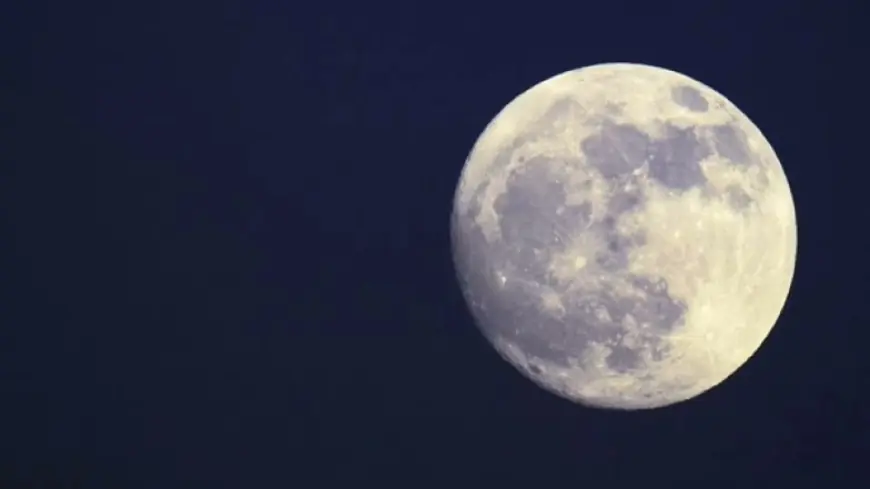
If you’re looking up “full moon tonight” or “is tonight a full moon,” the answer depends on whether you mean the exact moment of full phase or what the Moon looks like in the sky. The February 2026 full moon — commonly called the Snow Moon — reached peak illumination on Sunday, February 1, and it will still appear essentially full on Monday night, February 2, for most casual skywatchers.
That timing also sets up a strong “moon tonight” viewing window: the Moon rises around sunset in many locations, climbs higher as the evening goes on, and stays bright well into the night.
Full moon February 2026: peak time
The Snow Moon’s official peak occurred at 5:09 p.m. ET on Sunday, February 1, 2026. That “peak” is the precise moment the Moon is opposite the Sun and fully illuminated from Earth’s perspective.
Because the full phase is a moment, not a full-night event, it’s normal for the Moon to still look full the night before and the night after the peak. So if you missed the best-timestamped moment on Sunday, you haven’t missed the best-looking Moon.
Is it a full moon tonight?
For “is today a full moon” and “is it a full moon” on Monday, February 2: technically no — the Moon has already passed exact full and is now just past peak (a very bright waning gibbous). Visually, though, it’s close enough that most people will describe it as a full moon when they see it rising and dominating the sky.
If you’re trying to be precise: tonight’s Moon is “post-full,” but the difference is subtle without careful comparison photos from night to night.
What moon is tonight: the Snow Moon
“Snow Moon” is the common name for February’s full moon, tied to mid-winter conditions in the Northern Hemisphere. It’s one of the best-known traditional full-moon names because it lines up with a time of year when nights are long and cold, and the Moon can look especially bright and crisp against winter skies.
You may also see February’s full moon referred to by other traditional names in different cultures, but “Snow Moon” is the one most often used in general public calendars.
February 2026 moon dates to know
Here are the key phase milestones around the February full moon in Eastern Time:
| Event | Date (2026) | Time (ET) | What it means for viewing |
|---|---|---|---|
| Full Moon (Snow Moon) | Feb 1 | 5:09 p.m. | Brightest “official” moment; looks full at night |
| Third Quarter | Feb 9 | 7:43 a.m. | Moon appears half-lit; later rises in the night |
| New Moon | Feb 17 | 7:01 a.m. | Darkest nights; best for stars and galaxies |
| First Quarter | Feb 24 | 7:27 a.m. | Moon appears half-lit; prominent in evening |
If you’re asking “when is the next full moon,” the next one after the Snow Moon arrives on Tuesday, March 3, 2026, around 6:38 a.m. ET (often called the Worm Moon). Since that peak is in the morning, the Moon will look brightest and most “full” on the nights around it.
What planet is next to the Moon tonight?
This one trips people up because the brightest “neighbor” near the Moon often isn’t a planet at all.
On the nights immediately following the February full moon, the Moon’s path carries it near Regulus, a bright star in the constellation Leo. If you see a bright point close to the Moon tonight, there’s a strong chance it’s a star rather than a planet. In some regions, the Moon can even pass directly in front of Regulus for a short time, making the star appear to blink out and return.
If the bright object you’re noticing is much farther from the Moon — and especially if it’s the brightest “star” in the evening sky — it may be Jupiter, which is a standout planet in the evening during this stretch of winter. But “next to” is doing a lot of work: planet-Moon pairings change quickly, and the exact look depends on your location and the time you’re outside.
A reliable way to confirm: check whether the bright point twinkles. Stars often twinkle noticeably; planets usually shine more steadily.
Sources consulted: NASA; timeanddate; The Old Farmer’s Almanac; Space.com