
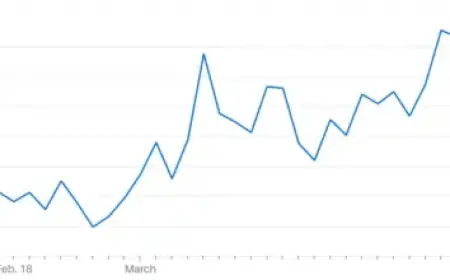
























Disney stock rises after earnings beat as streaming profits improve and buybacks expand


Disney stock (DIS) was higher in early Monday trading after the company posted fiscal first-quarter results that topped expectations on revenue and adjusted earnings. Investors focused on a clearer profit inflection in streaming, steady growth in the theme-parks-and-cruise business, and a larger capital-return plan, even as reported net profit slipped from a year earlier.
As of 8:56 a.m. ET on February 2, 2026, DIS traded around $112.80, up roughly $1.25 (about 1.1%) from the prior close.
Where DIS stock stands today
DIS opened modestly higher and traded within a relatively tight range early in the session, reflecting a “good news, but not perfect” earnings reaction: better operating momentum in key areas, offset by cost pressures and continued questions about growth in U.S. parks as travel patterns shift.
DIS snapshot (approx.)
| Metric | Level |
|---|---|
| Price (8:56 a.m. ET) | $112.80 |
| Move vs. prior close | +$1.25 (+1.1%) |
| Day range | $110.99 – $112.95 |
| 52-week range | $80.10 – $124.69 |
| Market cap (approx.) | $200B |
Earnings: revenue up, net profit down
For the quarter ended in late December 2025, Disney reported revenue of about $26.0 billion, ahead of consensus estimates. Adjusted earnings per share were about $1.63, also above expectations. Reported net income dipped to roughly $2.48 billion, down from the prior year, reflecting higher costs and a few one-time or episodic impacts.
The market’s read-through was straightforward: top-line growth held up, but the company is still spending to support big franchise releases and broader content investment, which can weigh on reported profit in individual quarters.
Streaming profitability is the headline catalyst
The most important driver of the stock move was improved profitability in the direct-to-consumer segment. Operating profit in streaming rose sharply year over year, signaling that the business is progressing from “scale at any cost” to “scale with margin,” a transition investors have demanded across the media industry.
Two additional nuances mattered:
-
Disney has been shifting how it discusses streaming performance, emphasizing profitability and revenue trends over pure subscriber-count headlines.
-
The company’s streaming gains arrived while legacy TV remains under pressure, which makes any durable improvement in streaming economics more valuable to the overall story.
Parks and cruises remain the stabilizer
The experiences business (theme parks, resorts, and cruises) again posted solid growth, with segment revenue around $10 billion. Disney also pointed to continued strength in per-guest spending, a metric that has helped cushion the impact of more uneven attendance patterns.
At the same time, management flagged that growth in U.S. parks could be more modest in the near term as international visitation remains softer than in prior periods. Investors are balancing that caution against upcoming capacity and itinerary expansion, including a major new ship entering service in 2026.
Capital returns and the next “watch items”
Disney reiterated plans for $7 billion in share repurchases and outlined expectations for double-digit adjusted earnings growth for fiscal 2026 alongside roughly $19 billion in operating cash flow. Those targets are central to the near-term bull case: if streaming stays profitable and experiences hold up, buybacks become a meaningful tailwind for per-share results.
What to watch next:
-
Any new detail on CEO succession timing and the eventual leadership transition.
-
Evidence that streaming profits can persist without sacrificing audience scale.
-
Signals on U.S. park demand and international travel recovery.
-
The pace of buybacks relative to free cash flow through the year.
Sources consulted: The Walt Disney Company Investor Relations; Financial Times; Barron’s; MarketWatch