
























Gasparilla 2026 Turns Tampa Into a Cold-Weather Pirate Carnival, and the Parade’s Biggest Story Was Crowd Control, Not Costumes

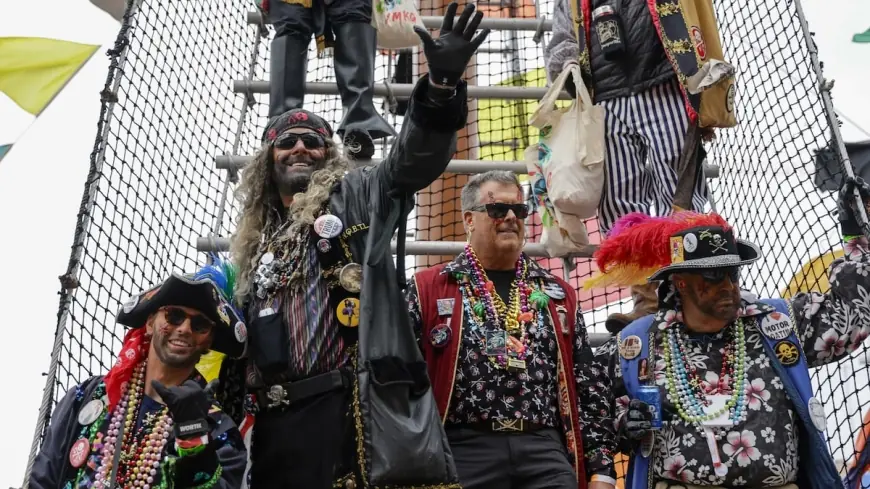
Gasparilla 2026 delivered what it always promises—pirates, beads, and a citywide party—but the defining theme this year was how Tampa managed a massive, mobile crowd in unusually chilly conditions. The marquee Gasparilla Parade of Pirates ran Saturday, January 31, 2026, starting at 2:00 p.m. ET, following the late-morning pirate “invasion” window that drew boats and spectators into downtown’s waterfront corridor.
For anyone searching “Gasparilla Tampa” or “Gasparilla parade 2026,” the practical answer is that the event went forward on schedule, with the city’s biggest challenges concentrated in traffic flow, alcohol boundary enforcement, and keeping the route safe and passable when the weather wasn’t cooperating.
What happened at Gasparilla Parade 2026
The day’s rhythm was built around two anchor moments:
-
The “invasion” arrival window ran roughly 11:30 a.m. to 1:00 p.m. ET near the waterfront by Tampa Convention Center, pulling crowds early and packing sightlines long before the parade began.
-
The Gasparilla Parade of Pirates stepped off at 2:00 p.m. ET, traveling a long route that begins near Bay to Bay and Bayshore Boulevard before finishing downtown.
Live entertainment programming also ran through the day, concentrating foot traffic around Curtis Hixon Waterfront Park and MacDill Park, which effectively created multiple “mini-downtowns” of activity rather than a single parade-only crowd.
Behind the headline: why Gasparilla is as much a logistics exercise as a festival
Gasparilla isn’t just a parade—it’s Tampa stress-testing itself in public.
Context: The festival has grown into a signature civic brand, and each year it pulls in a mix of locals, regional visitors, and first-timers who plan their entire weekend around a single parade route.
Incentives:
-
City leaders want a safe, repeatable “big event” that reinforces tourism and civic identity.
-
The organizing tradition anchored by Ye Mystic Krewe of Gasparilla wants spectacle and continuity—enough pageantry to keep the mythology alive.
-
Businesses near the route want volume, but not chaos that deters customers next year.
Stakeholders: Residents along the corridor, small businesses, law enforcement, transit systems, and the hospitality sector all have real money and reputation tied to whether the day feels “rowdy-fun” or “out of control.”
This year’s colder, unsettled weather didn’t stop the party, but it changed behavior: people clustered tighter, moved less predictably, and sought sheltered gathering points—exactly the pattern that makes crowd management harder.
The rules people cared about: wet zones, road closures, and getting in and out
Search interest spikes every year around three issues: where you can drink, where you can park, and how to escape when it’s over.
Gasparilla 2026 again leaned heavily on designated “wet zones” along the route and at key parks, paired with enforcement outside those boundaries. The message was simple: the party is allowed in specific places, and policed more tightly elsewhere.
Traffic and parking were the other pressure point. With long stretches of the route locked down and large crowds arriving hours early, the best outcomes tended to go to people who used transit connectors—especially the TECO Line Streetcar System—or staged their arrival and exit through Ybor City rather than trying to brute-force parking near the densest parts of the corridor. Local bus support from Hillsborough Area Regional Transit also shaped how quickly downtown cleared after the last floats passed.
What we still don’t know
Even after the parade is over, several details determine how the city judges “success”:
-
The final count of incidents requiring medical or law enforcement response, and whether any hotspots emerged consistently along the route
-
How effectively wet-zone boundaries reduced disorder versus simply relocating it
-
Whether the cold-weather conditions contributed to more crowd compression and minor injuries
-
The economic picture: which businesses saw a boost, and which saw disruption without payoff
These aren’t small questions. They shape permitting, staffing, and policy decisions for next year.
What happens next: the next Gasparilla 2026 milestones
Gasparilla is a season, not a single Saturday. Two “next steps” already matter for planning:
-
The Children’s Gasparilla Parade ran Saturday, January 24, 2026, earlier in the season and remains the family-focused counterweight to the main parade’s adult energy.
-
The season continues with the Outbound Voyage event on Saturday, February 28, 2026, ET—one more chance for organizers to prove the city can stage big waterfront crowds smoothly.
Why it matters
Gasparilla’s real impact isn’t limited to one day’s photos. It affects how Tampa markets itself, how it manages public space, and how comfortable residents remain with large-scale street closures becoming a normal feature of the city’s identity.
If you’re planning for next year, the lesson from Gasparilla 2026 is clear: the “best” experience is less about finding the perfect costume spot and more about planning your movement—arrival time, transit choice, and exit route—like it’s part of the event itself.