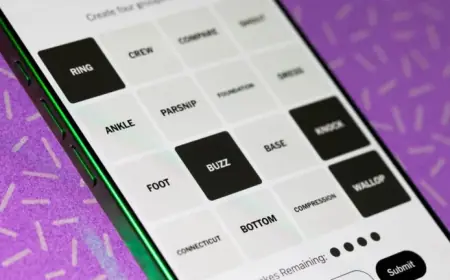
























NYT Connections stays at the center of the daily word-game rush

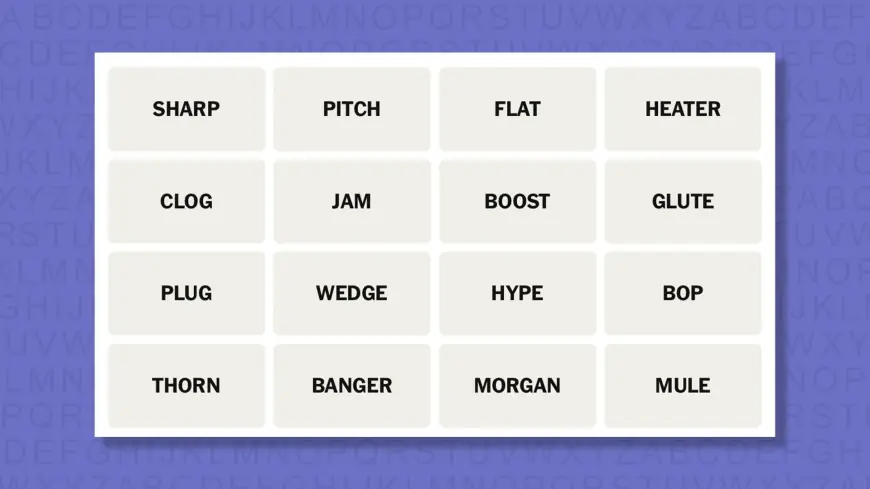
NYT Connections hit another spike of attention Sunday as players chased game No. 966 and a familiar ritual played out across group chats: compare grids, debate categories, protect streaks, and argue about what counts as a spoiler. The puzzle’s daily reset and color-coded difficulty have turned a quick morning diversion into a recurring pop-culture appointment—one that now comes with its own ecosystem of hints, archives, and strategy talk.
The immediate hook this weekend was simple: a new puzzle at midnight local time means “today” is not the same day everywhere, and that time-zone overlap keeps the conversation—and the demand for help—running almost nonstop.
A global “midnight drop” keeps it trending
The game refreshes at midnight in the player’s local time zone, which creates a rolling wave of play. Early solvers finish while others are still hours away from seeing the same grid, so discussions often pivot to “hint-only” language: broad category descriptions, one-word nudges, or warnings about tricky overlaps.
That staggered release is also why “live” chatter can feel constant. In practical terms, there is always a large group somewhere in the middle of the same puzzle, which keeps the daily conversation from dying out after breakfast in any single region.
NYT Connections keeps fueling the spoiler economy
The biggest trend around the puzzle right now is the growth of “help without ruin” content: gentle hints for players who want a nudge, full solutions for players protecting streaks, and post-game breakdowns that explain why a category worked.
Game No. 966 is a good example of why this balancing act matters. Even when a board looks straightforward, many grids include decoy relationships—words that fit multiple plausible themes. That design choice is part of the appeal: it rewards pattern recognition, punishes rushing, and invites debates over whether a connection was “fair” or “too cute.”
As the audience has grown, so has the etiquette debate. Some players prefer category-only hints; others see the full word lists as harmless once the day ends. The result is an informal spoiler culture that’s become almost as recognizable as the game itself.
What makes the puzzle hard, even when it looks easy
Connections is built on a simple premise—sort 16 items into four groups of four—but the difficulty is often psychological. Most mistakes come from locking onto the first “good enough” pattern and then forcing the rest of the grid to fit.
Common traps include:
-
Overlapping meanings: a word that can plausibly belong to two themes (music vs. slang vs. sports).
-
Category shape-shifting: themes that hinge on wordplay (letter changes, prefixes, homophones) rather than definitions.
-
The “one-away” illusion: three words clearly fit a category and the fourth is just plausible enough to bait a guess.
That’s also why the color system resonates. Players intuitively understand that the purple set is supposed to be the trickiest—even if, on some days, the “easy” categories hide the most tempting decoys.
Archives and replay are changing how people practice
Another major driver of engagement is replay. With access to past puzzles, players don’t just complete the day’s grid and move on—they grind older boards, track performance, and learn the puzzle’s recurring patterns.
That shift changes the game’s culture in two ways. First, it turns a daily habit into a skill-building loop: the more you replay, the more you recognize classic category types (synonyms, common phrases, wordplay constructions). Second, it deepens the community aspect, because people can discuss older puzzles without waiting for the next midnight reset.
Replay has also pushed new kinds of conversation: “What was the hardest month?” “Which purple category was the cruelest?” “How often do certain themes repeat?” Those questions treat the game less like a single daily moment and more like a catalog of design choices.
What to watch next
Connections is unlikely to cool off soon, but a few things could shape its next phase: how aggressively the archive and stat-tracking features expand, whether puzzle construction leans further into wordplay-heavy categories, and how much the broader hints-and-solutions ecosystem keeps growing.
Key takeaways for players heading into the next week:
-
If you keep missing by one word, slow down and test alternate homes for your “obvious” picks.
-
When the purple set feels impossible, look for a rule, not a theme (letters, prefixes, added words).
-
If you’re protecting a streak, decide your spoiler line in advance—hint-only, category-only, or full solution.
Sources consulted: The New York Times Games, TechRadar, The Atlantic, Yahoo News