























Full moon February 2026 Snow Moon peaks Feb. 1, lighting up winter skies

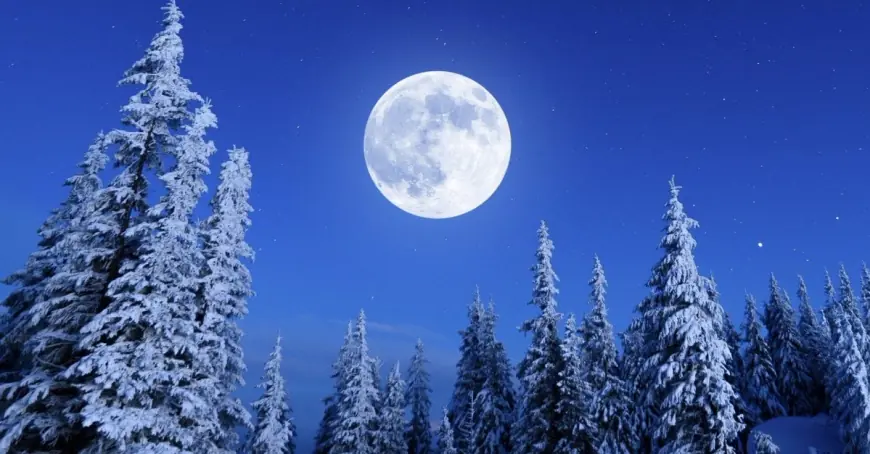
The full moon February 2026 Snow Moon reaches peak illumination on Sunday, February 1, 2026, at 5:09 p.m. ET, setting up a bright lunar show that’s easy to catch soon after local sunset. While the exact “full” moment happens in late afternoon for the U.S. East Coast, the Moon will look essentially full to the eye both Saturday night (Jan. 31) and Sunday night (Feb. 1)—prime windows for skywatchers, photographers, and anyone stepping outside on a cold evening.
Full moon February 2026 Snow Moon timing and peak
Astronomical “full moon” is a precise instant when the Moon sits opposite the Sun in Earth’s sky. This time, that moment lands at 5:09 p.m. ET on Feb. 1, meaning the Moon will already be rising for many locations as dusk arrives, then climbing higher through the evening.
Key takeaways
-
Peak time: Feb. 1, 2026, 5:09 p.m. ET
-
Best viewing: After sunset on Feb. 1 (and also the night before), when the Moon is higher and the sky is darker
-
What you’ll notice: A bright, round disk that can look golden or orange near the horizon, then whiter as it rises
Why it’s called the Snow Moon
“Snow Moon” is a traditional nickname for February’s full moon in the Northern Hemisphere, tied to midwinter conditions when snowfall has often been historically heavy. The name shows up in long-running seasonal almanac traditions and overlaps with other older names that reflect winter hardship, cold, and scarce food in many regions.
In modern usage, the nickname is more cultural than scientific—but it remains one of the most widely recognized monthly moon names, and it tends to resonate because February frequently delivers the kind of weather that makes a bright, clear night feel extra vivid.
What you’ll actually see in the sky
A full moon is bright enough to wash out many faint stars, so the “wow” factor comes from the Moon itself and the way it changes the look of the landscape. If the air is clear, expect sharp shadows and strong contrast on snow cover, rooftops, and bare trees.
Skywatchers may notice the Moon sitting in front of relatively subtle star patterns—February’s full moon often appears against the backdrop of winter constellations, and this one is positioned near Cancer, with brighter neighboring star groups nearby. If you have binoculars, try scanning around the Moon for star clusters once it climbs a bit higher, but don’t be surprised if the Moon’s glare makes faint targets tough.
Best ways to watch and photograph it
You don’t need special equipment. The simplest plan is also the best: step outside 30–90 minutes after sunset and look east, where the Moon will be rising and brightening the sky.
For photos:
-
Phone cameras: Tap to expose for the Moon (not the sky). If your phone offers a “moon” or “night” mode, test both—many night modes over-brighten the Moon into a white blob.
-
DSLR or mirrorless: Use a telephoto lens if you want lunar detail. Start with a fast shutter (the Moon is brighter than it looks), low ISO, and adjust from there.
-
Composition tip: If you want a dramatic “big Moon” look, shoot near moonrise with a foreground subject (trees, skyline, a ridgeline). The Moon’s apparent size illusion is strongest near the horizon.
What’s next on the 2026 sky calendar
February’s full moon also serves as a runway to the next major lunar phase and a notable eclipse event later in the month. The new moon on February 17, 2026 aligns with an annular solar eclipse (a “ring of fire” eclipse) visible along a limited track, with partial visibility over broader surrounding regions.
Looking a bit further out, March brings a headline-grabbing lunar event: a total lunar eclipse in March 2026, when the Moon can darken dramatically and take on copper-red tones during totality. That one is more schedule-sensitive than a full moon—timing, geography, and local sky conditions matter far more—so eclipse watchers typically plan ahead.
Sources consulted: NASA, Time and Date, The Old Farmer’s Almanac, Space.com, Royal Museums Greenwich, National Weather Service