





















Witness the Moon Illuminate Beside Jupiter in Tonight’s Winter Sky

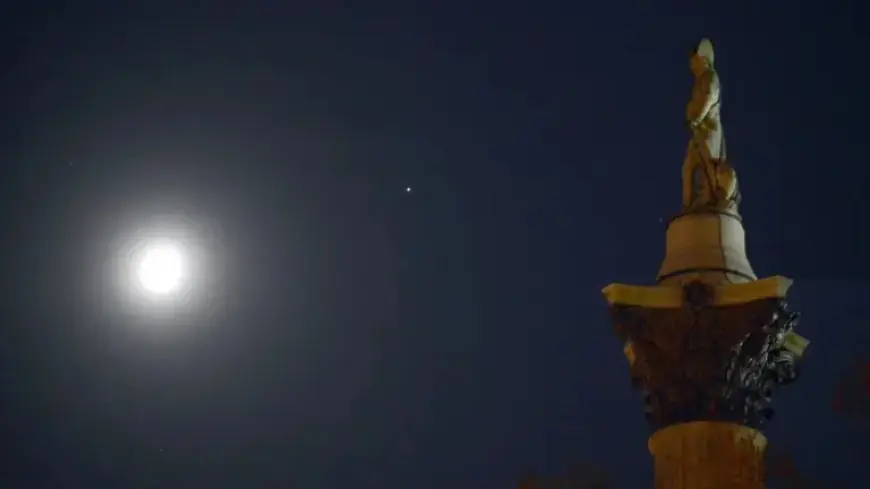
On January 30, stargazers can witness a stunning sight in the winter sky. The near-full moon will appear prominently beside the planet Jupiter. This event occurs in the constellation Gemini, where both celestial bodies will illuminate the evening sky.
Viewing Tips for the Moon and Jupiter
As sunset approaches, look to the east. The moon will shine bright and will be located just under 5 degrees from Jupiter. To visualize this distance, try holding out your three middle fingers at arm’s length. Jupiter will present itself as a bright “evening star,” positioned to the lower right of the lunar disk.
Key Details of the Event
- Date: January 30
- Moon Phase: 97% lit, nearing full moon on February 1
- Jupiter’s Position: Less than 5 degrees from the moon
- Notable Stars: Castor and Pollux will twinkle near Jupiter
- Best Viewing Time: Post-sunset until dawn on January 31
Jupiter reached opposition on January 10, making it particularly bright in the current winter sky. Through a pair of 10X50 binoculars, observers can enjoy the view of the moon’s dark lunar seas and craters. Bright ejecta rays, formed by past asteroid impacts, will also be visible.
Using Telescopes for Enhanced Viewing
A telescope with at least a 6-inch aperture will provide even greater detail. Users will be able to see Jupiter’s swirling cloud bands and its four largest moons: Io, Europa, Ganymede, and Callisto. On January 30, these moons will align closely with Jupiter to its right.
Final Thoughts
The moon and Jupiter will reach their highest points in the sky as night progresses. They will gradually set on the western horizon as dawn approaches on January 31. For those looking to explore the night sky further, consider using a high-quality telescope.
Filmogaz.com offers guides for both telescope selection and tips for observing celestial events like this. Be ready to experience this captivating astronomical display as the moon glows beside Jupiter!