
























Major Snowstorms Persist Despite Global Warming: Here’s Why


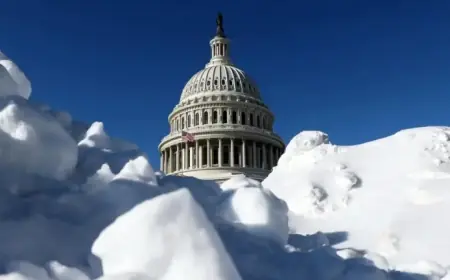
A significant winter storm recently impacted large regions of the United States, leaving over one million residents without power. At least 50 fatalities have been reported alongside massive disruptions, including the cancellation of tens of thousands of flights. Economic damages from this storm are projected to exceed $100 billion.
Record Snowfall and Coverage
New York City experienced its largest single-day snowfall since February 2021, accumulating 29 centimeters (11.4 inches). Philadelphia recorded 24 centimeters (9.3 inches) of snow, surpassing the total snowfall for the previous winter. As of last Monday, 56 percent of the contiguous United States was covered in snow, marking one of the highest snow coverage levels in the last two decades according to AccuWeather.
The Polar Vortex Explained
Understanding the polar vortex is crucial to comprehending recent weather phenomena. This atmospheric feature consists of strong winds circulating the Arctic, located 16 to 50 kilometers (10 to 30 miles) above the Earth’s surface in the stratosphere. Typically, these winds create a barrier that confines the cold air near the North Pole.
However, when the polar vortex becomes weak, it allows bursts of cold air to move southwards into areas such as North America, Europe, and Asia. This results in extreme cold weather despite ongoing global warming.
Connection Between Polar Vortex and Jet Stream
The polar vortex differs from the polar jet stream, which operates in lower atmospheric levels, approximately 5 to 9 miles above the Earth’s surface. The jet stream is essential for daily winter weather patterns. A stable polar vortex keeps the jet stream smooth and confined. Conversely, a weakened polar vortex can distort the jet stream, leading to uncharacteristic warm and cold air interactions.
Climate Change Impact
Climate change is causing the Arctic to warm at a more rapid pace than other regions. This phenomenon, known as Arctic amplification, results in sea ice retreating and exposing darker land and ocean surfaces that absorb more heat. Such changes can lead to persistent high-pressure systems, creating blocking patterns that distort the jet stream and encourage extreme weather conditions.
According to meteorologist Paul Pastelok, the current warming in the Arctic is notable, contributing to increased blocking patterns and more pronounced jet stream fluctuations globally. These variations might also lead to sudden stratospheric warming events, disrupting the polar vortex further and enabling cold air outbreaks.
Cold Outbreak Trends
Despite the dramatic nature of recent weather events, the overall frequency and intensity of cold snaps in North America are decreasing on average. Winters are milder compared to the mid-20th century, and extremely cold events are becoming less common. However, when cold spells do occur, they can overwhelm unprepared infrastructures and populations.
Conclusion
The relationship between climate change and the polar vortex remains an area of active research and debate. While cold snaps are becoming less frequent, the complexities of a warming climate mean that severe weather is still possible. Events like the current winter storm serve as reminders of the intricate ways climate change manifests in our weather patterns.