
























Gold price today and the outlook: weekend snapshot after a historic plunge

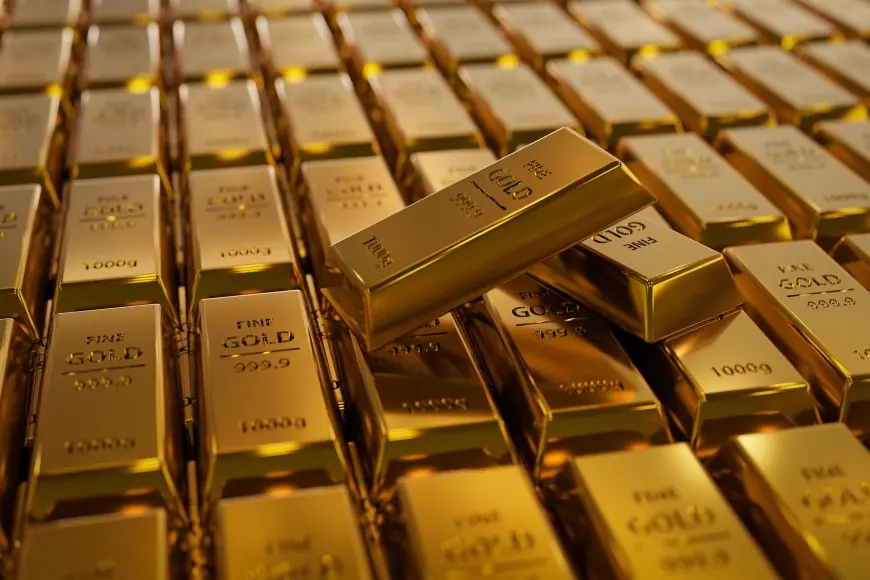
“Gody” is commonly a typo for gold, and the timing matters: Saturday, January 31, 2026 (ET) is a weekend, so most widely watched benchmarks reflect the last full U.S. trading session (Friday, January 30, ET) rather than a continuously updating cash market.
The big story isn’t a few dollars up or down — it’s the violent reset that hit precious metals into the Friday close. Gold had been racing higher earlier in the week, then reversed sharply in a single session as positioning unwound and the U.S. dollar strengthened.
Where gold is “today” in ET terms
Using the latest widely circulated readings from late Friday (ET), spot gold was roughly in the high-$4,800s to around $4,900 per ounce, down sharply from the week’s record-area highs near the mid-$5,000s.
Because different feeds update at different times (and may reference slightly different spot conventions), you’ll see small discrepancies. But the direction and scale are consistent: gold dropped around 9%–13% in one day, which is exceptionally large for this market.
Here’s the cleanest way to think about “today”:
-
Spot gold (XAU/USD): roughly $4,850–$4,920/oz on the latest Friday updates (ET)
-
Key context: earlier-week highs were near $5,600/oz, so the market gave back a large chunk of gains fast
-
What changed: risk sentiment shifted, the U.S. dollar rebounded, and profit-taking turned into forced selling for some participants
What drove the crash, in plain terms
Gold didn’t fall because the world suddenly became “safe.” It fell because expectations shifted quickly and the market had become crowded after a steep run.
Several forces can stack on top of each other in a move like this:
-
A stronger U.S. dollar: Gold is priced in dollars, so a rising dollar often pressures demand outside the U.S. and can cool momentum traders.
-
Rate expectations: Gold doesn’t pay interest. When the market believes rates may stay higher (or policy will be steadier and less inflationary than feared), gold can lose some of its “must-own” urgency.
-
Positioning and leverage: When a rally becomes parabolic, even a modest catalyst can trigger stop-losses, margin calls, and rapid de-risking — turning “profit-taking” into a cascade.
Silver, which is usually more volatile than gold, also slid hard during the same window — reinforcing the idea that this was a broad precious-metals de-leveraging event, not a slow fundamental repricing.
The “future” outlook: what can be said without guessing
After a shock move, the most honest outlook is conditional: what happens next depends on whether the forces that powered the rally return, and whether volatility settles enough for longer-term buyers to step back in.
Near-term (days to weeks)
Gold’s next phase is often defined by two questions:
-
Does the market stabilize above the panic low? A higher low can signal that forced selling has faded.
-
Do rebounds get sold quickly? If rallies keep failing, it suggests sellers are using strength to exit rather than new buyers building positions.
Expect wide ranges to remain possible until the market digests the break.
Medium-term (months)
Two broad narratives now compete:
-
Supportive case: persistent geopolitical uncertainty, concerns around debt, and renewed risk aversion can keep gold elevated versus historical norms, even after a correction.
-
Cooling case: if some major geopolitical or macro risks fade through 2026 and the dollar remains firm, gold can struggle to revisit record highs quickly.
Market strategists are split, but a common thread is this: gold may stay historically high even if it doesn’t immediately return to its peak, because many of the structural motivations (risk hedging, reserve diversification, macro uncertainty) don’t disappear overnight.
Late 2026 and beyond
Some large-bank outlooks lean constructive into late 2026 — with targets clustered around the $5,000/oz region — while others argue that a meaningful portion of today’s “risk premium” could fade by the end of 2026 if key global flashpoints cool and policy uncertainty diminishes.
That spread in views is a signal by itself: the market is no longer in a simple, one-way momentum regime.
How to track gold going forward without getting whipsawed
If you’re watching “today and the future,” focus less on a single print and more on a small dashboard of signals:
-
Dollar trend (especially sharp rebounds)
-
U.S. rate expectations
-
Volatility (are daily ranges shrinking?)
-
Gold vs. silver behavior (silver often leads risk-on/risk-off extremes)
If you want, tell me your country/currency (or if you’re pricing in USD only), and whether you care about spot, futures, or physical retail pricing — those can differ materially right after a move this large.