
























John Leguizamo joins open-letter push after Odessa A’zion exits Deep Cuts

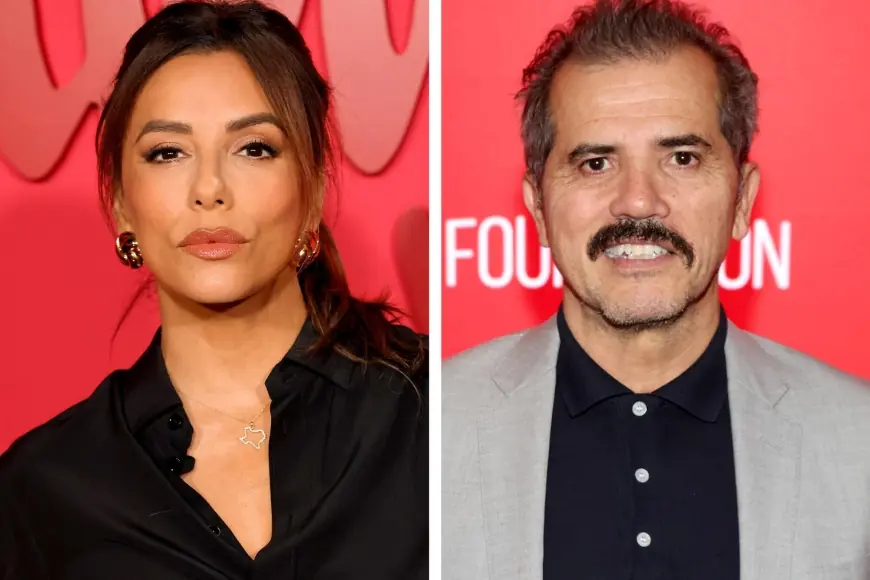
John Leguizamo became one of the most prominent names backing a new open letter from more than 100 Latino actors and creatives after Odessa A’zion stepped away from Deep Cuts, a high-profile adaptation now facing renewed scrutiny over casting and representation. The move, which unfolded across January 29–30, 2026, has quickly shifted the conversation from one actor’s exit to wider questions about who gets auditions, who gets offers, and how studios handle culturally specific characters.
The controversy centers on Deep Cuts—both the Deep Cuts book and the Deep Cuts movie—based on author Holly Brickley’s novel, with Sean Durkin set to write and direct. The film is in active pre-production, with production expected to begin in February 2026.
How the Odessa A’zion exit unfolded
The casting flashpoint ignited after Odessa A’zion was announced for the role of Zoe Gutierrez, a character described in the novel as half-Mexican and half-Jewish. Online pushback focused on the gap between the character’s heritage and the actor’s background, and the intensity rose quickly enough that A’zion publicly withdrew from the project late Wednesday, January 28, in a series of posts.
By Thursday, January 29 (around 1:51 p.m. ET), the exit was being treated as definitive, with the project expected to continue and recast. In the hours that followed, the public discussion broadened—less about a single casting choice and more about how a role tied to a Latina identity could reach an “exclusive offer” stage without a widely visible audition process for Latina performers.
The episode also produced a second, parallel debate: some commentary argued the character’s Jewish identity is not separable from the role and should remain central as the film searches for a new actor to play Zoe.
John Leguizamo and the open letter
By Friday, January 30, the next step arrived: an open letter signed by more than 100 Latino artists and creatives calling for “accountability,” “intentionality,” and “equity” in casting and storytelling. The signatories include Leguizamo and Eva Longoria, alongside a large group spanning actors, musicians, and other creators.
The letter’s core point is structural rather than personal: it frames the uproar as evidence of a recurring industry pattern where Latino talent is overlooked even when Latino identity is central to a character. It also praises A’zion for stepping aside while pressing studios and decision-makers on how the situation occurred in the first place.
A related claim has also circulated in the aftermath: that Latinas were not broadly auditioned or that the role did not appear widely on standard casting channels because it was already effectively spoken for. Not all details of the casting timeline are publicly documented, and it remains unclear what the full audition process looked like behind the scenes.
Inside the Deep Cuts book and its characters
In the Deep Cuts book, the story is driven by music, ambition, and a long-running personal and creative relationship between two young adults: Joey (Joe) Morrow and Eileen Percy Marks (Percy). The narrative begins around 2000 and moves through the 2000s across scenes in Berkeley, Brooklyn, and beyond.
“Percy and Zoe” become a key reference point for readers discussing the book, because Zoe Gutierrez isn’t just a side character—her identity, relationships, and presence shape the emotional geometry around the leads. That’s one reason the casting debate turned so intense: fans argued the adaptation shouldn’t flatten or sidestep who Zoe is on the page.
The adaptation’s job, now, is balancing fidelity to the novel’s character identities with the realities of film packaging and scheduling—without defaulting to the same old shortcuts that the open letter is criticizing.
What’s known about the film’s roadmap
The Deep Cuts movie is being developed as a 2000s-set romance and coming-of-age story. The current announced lead cast includes Cailee Spaeny and Drew Starkey as the central pair. The project also has a notable music component: Grammy-winning producer and songwriter Blake Mills is attached to create original music.
The film’s earlier development history matters here, too. A previous iteration had different lead attachments, but the version moving toward a February 2026 production start is now anchored by Spaeny and Starkey, with Durkin writing/directing.
With Zoe now open for recasting, the next concrete milestone will be the new casting announcement—and whether that choice is accompanied by clear signals that the production is treating representation as part of the creative process, not a late-stage problem to manage.
Key takeaways
-
Odessa A’zion exited the project after backlash over playing Zoe Gutierrez, a character described as half-Mexican and half-Jewish in the novel.
-
More than 100 Latino creatives, including Eva Longoria and John Leguizamo, signed an open letter pressing Hollywood for casting equity and accountability.
-
Deep Cuts is still moving toward a February 2026 production start, with the Zoe role expected to be recast as the adaptation advances.
Why this moment is bigger than one role
The open letter lands in an industry environment where representation is frequently quantified—and those figures are now being used as leverage in public debates. UCLA’s 2025 Hollywood Diversity Report found Latinos held only about 1% of leading roles in a major sample of theatrical English-language films released in 2024, despite Latinos representing roughly one-fifth of the U.S. population. The numbers have become a shorthand for why casting disputes like this don’t fade quietly anymore.
What happens next is less about social-media volume and more about process: who gets to audition, who gets to be considered early, and whether culturally specific roles are treated as requiring culturally informed casting from the outset. For Deep Cuts, the immediate test will be the recast of Zoe—and whether the production’s next public steps match the equity language now attached to the project.
Sources consulted: Los Angeles Times; Entertainment Weekly; TheWrap; Columbia University School of the Arts; UCLA Hollywood Diversity Report