






















The Wrecking Crew 2026 Arrives With Momoa and Bautista, Turning a Streaming Buddy-Cop Throwback Into the Winter’s Loudest Action Bet

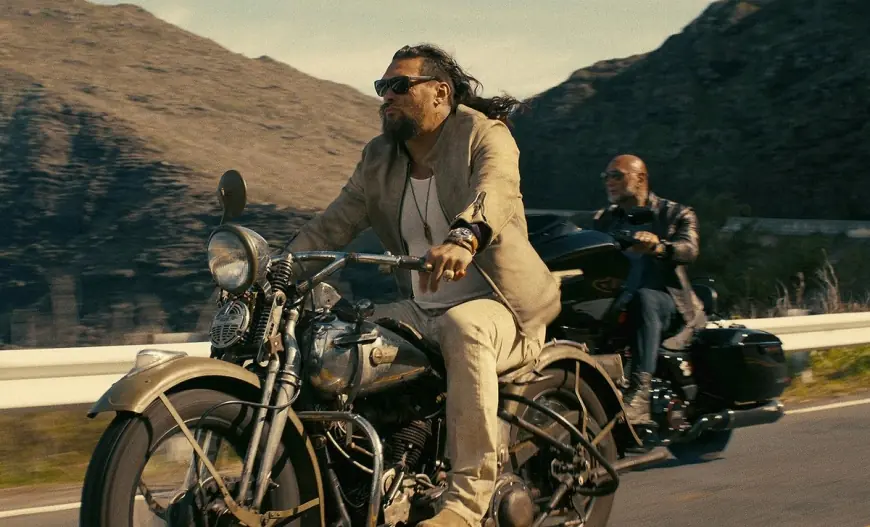
The Wrecking Crew 2026 has officially landed, pairing Jason Momoa and Dave Bautista in an R-rated buddy-cop action comedy that aims to revive the swagger of late-20th-century crowd-pleasers while fitting neatly into the modern, streaming-first release machine. The film debuted for at-home viewing on Wednesday, January 28, 2026 ET, following a New York City premiere on Thursday, January 15, 2026 ET.
On paper, it’s a familiar setup built for speed: two estranged half-brothers reunite in Hawaii after their father’s death and stumble into a conspiracy that drags them from family grief into a gauntlet of criminal violence and crooked power. In practice, the movie is also a strategic flex by everyone involved, a test of whether star-driven action can still feel like an event when it arrives on a couch instead of a big screen.
The Wrecking Crew 2026 release: what it is and who’s in it
The film is directed by Ángel Manuel Soto and written by Jonathan Tropper. Momoa and Bautista lead an ensemble that includes Claes Bang, Temuera Morrison, Jacob Batalon, Frankie Adams, Miyavi, Stephen Root, and Morena Baccarin.
The story leans hard into contrast: Momoa plays the loose-cannon energy, Bautista plays discipline and restraint, and the comedy comes from watching both men attempt to out-stubborn each other while bullets and family secrets fly. The runtime is about two hours, which signals exactly what it wants to be: not prestige minimalism, but a full meal of set pieces, banter, and escalation.
Behind the headline: why this movie is more than “two stars, one team-up”
The Wrecking Crew is a case study in how action stardom is being re-priced in 2026.
The incentives for the streaming era are different. Instead of opening-weekend box office, the goal is subscriber engagement, rewatchability, and the kind of headline pairing that cuts through infinite scrolling. Putting Momoa and Bautista together is the marketing hook, but it’s also risk management: if the plot is familiar, the stars are the differentiator.
For Momoa, the upside is obvious. He’s long been strongest when a role allows charisma, mischief, and physicality to coexist, especially in stories that treat place as character. For Bautista, the appeal is different. He’s spent years proving range and selecting projects that push beyond the “big guy” box. A mainstream action comedy lets him keep credibility while still doing a broad, accessible crowd-pleaser.
For the director, the movie is a pressure test. A streaming-exclusive action release lives or dies on clarity: the fight scenes must read cleanly, the pace must stay aggressive, and the emotional beats must be simple enough to land between explosions.
Stakeholders: who wins if The Wrecking Crew becomes a hit
A successful run delivers leverage to multiple corners of the industry:
-
The distributor and platform get proof that star-led originals can still feel “must-watch”
-
The cast gains negotiating power for future franchise work and broader creative control
-
The creative team earns credibility for bigger budgets and more ambitious action packages
-
The Hawaii-set storytelling angle benefits if audiences respond to place-driven action, which can influence what gets greenlit next
There’s also a second-order effect that’s easy to miss: when a streaming action movie pops, it encourages more talent to choose streaming-first deals over theatrical uncertainty, reshaping what kinds of action projects even get made.
What we still don’t know
Even with the release out, the key questions are business questions:
-
How many households actually started the film, and how many finished it
-
Whether the platform views it as a one-off event or the start of a repeatable franchise template
-
How international performance compares to domestic interest
-
Whether the creative team can convert “fun team-up” energy into a larger story world without losing simplicity
Public rankings and social chatter can hint at momentum, but the hard metrics that decide sequels and spin-offs are still largely private.
What happens next: realistic scenarios and triggers
-
A sequel fast-tracks into development
Trigger: strong completion rates and repeat viewing, plus clear evidence that the pairing is the product. -
The film becomes a franchise without becoming a sequel
Trigger: the platform prefers a shared template, new pairings, similar tone, same creative pipeline. -
A theatrical-style “event window” gets tested for future entries
Trigger: the platform decides the next installment needs a limited big-screen run to amplify prestige and conversation. -
The movie remains a popular one-off
Trigger: solid viewership but not enough sustained engagement to justify another large spend. -
The long-tail outcome becomes the real win
Trigger: the film turns into a reliable comfort-watch that boosts retention over months, not days.
Why it matters
The Wrecking Crew 2026 isn’t just another action comedy. It’s a referendum on a modern entertainment reality: audiences still love the buddy-cop rhythm, but distribution has changed what “success” looks like. If this film sticks, it strengthens the argument that streaming can manufacture event action with the right stars, the right pace, and a clear promise. If it doesn’t, it reinforces the fear that even big names can get lost in the algorithm unless the movie offers something viewers can’t ignore.