Nicki Minaj Trump moment goes viral after surprise Washington appearance, “Gold Card” photo, and citizenship claims

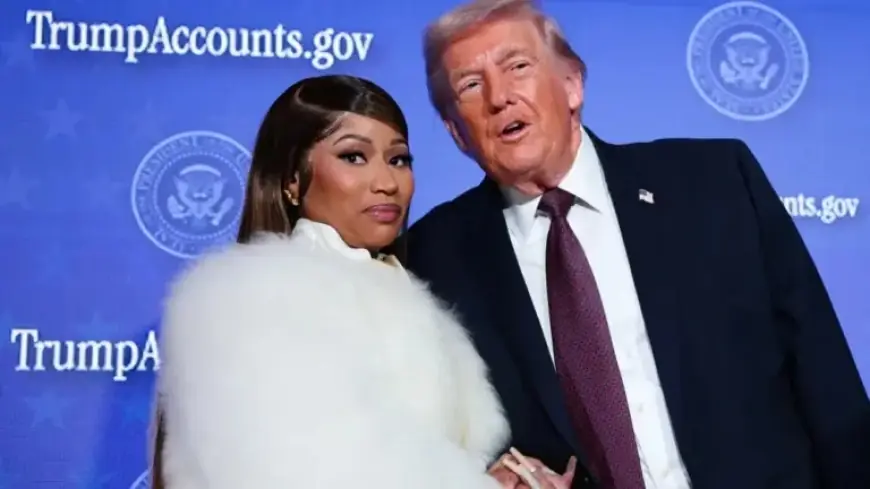
Nicki Minaj’s relationship with President Donald Trump jolted into the center of the political and entertainment conversation this week after the rapper appeared alongside him at a Washington event, praised him as her “number one fan,” and then posted an image of what she called a Trump “Gold Card” while suggesting her US citizenship paperwork is being finalized.
The burst of attention is not just celebrity chatter. It lands at the intersection of two controversial administration efforts: a new government-backed child investment program promoted as a wealth-building “starter account,” and a pay-to-play style immigration offering that critics argue resembles a fast lane for the wealthy.
Nicki Minaj Trump: what happened in Washington and why it spread so fast
On Wednesday, Jan 28, 2026 ET, Minaj appeared onstage with Trump during a Treasury-hosted event promoting “Trump Accounts,” a new policy initiative aimed at creating tax-advantaged investment accounts for children. In brief remarks, Minaj praised Trump, said criticism of him does not deter her, and framed her support as unwavering.
Shortly after, Minaj posted an image of a “Gold Card” bearing Trump branding and wrote that she was “finalizing” citizenship paperwork. She also said the card was obtained “free of charge,” a detail that amplified the controversy because the program is widely described as requiring a large payment.
The administration’s own social media channels amplified the moment, turning a single appearance into a multi-platform political advertisement with celebrity star power.
What is the Trump Accounts program Minaj promoted
Trump Accounts are designed as tax-advantaged investment accounts for US citizens under 18. The program’s marketing pitch is simple: give children a head start in the market early enough that compounding can do the heavy lifting.
Key mechanics being promoted publicly include:
-
A one-time $1,000 Treasury contribution for eligible children born between Jan 1, 2025 and Dec 31, 2028
-
Eligibility tied to US citizenship and a Social Security number
-
Funds invested in broad, low-fee US equity index funds
-
Money generally locked until age 18, with limited exceptions
-
Additional contributions allowed from parents and others, subject to annual caps and rules
Minaj said she plans to contribute between $150,000 and $300,000 to support accounts tied to the initiative, positioning her role as both endorser and donor.
What is the Trump “Gold Card,” and why Minaj’s claim is a flashpoint
The “Gold Card” is the administration’s branded immigration offering marketed as an expedited pathway to US residency for applicants who clear background screening and make a large financial contribution. Publicly available program descriptions have attached a $15,000 processing fee and a $1 million “gift” or contribution requirement for individual applicants.
That’s why Minaj’s “free of charge” claim matters: it raises questions about whether celebrities or politically useful figures receive preferential treatment inside a program that is otherwise marketed as a premium product for wealthy applicants.
The broader controversy is structural. A high-price residency track invites accusations of two-tier immigration: long waits and strict scrutiny for most, fast processing for those who can pay. Supporters argue it can raise revenue and attract capital. Critics argue it corrodes fairness and invites legal challenges about executive authority and equal treatment.
Behind the headline: incentives, stakeholders, and why both sides wanted this moment
This was a mutually beneficial appearance.
For the Trump team, a globally known musician provides what policy announcements often lack: cultural reach. A celebrity endorsement can convert a complicated program into a shareable clip, especially with a simple message like “this helps babies” or “this builds wealth.”
For Minaj, the incentives are more personal and more brand-driven. Aligning with political power can deliver access, influence, and attention. Linking that attention to immigration status and citizenship talk also reframes her public narrative from “celebrity politics” to “personal story,” which tends to travel further online.
Stakeholders include:
-
Parents evaluating whether the child-account program is meaningful help or political theater
-
Immigrant communities and advocates worried about the symbolism of a premium residency lane
-
Legal and policy actors watching whether the Gold Card survives court scrutiny
-
Minaj’s fanbase, which is now split between celebration, confusion, and backlash
-
Political strategists who see celebrity validation as a lever over low-information audiences
What we still don’t know
Several key details remain unclear or unverified publicly:
-
Whether Minaj’s claim of receiving a Gold Card without payment reflects an exemption, a misunderstanding, or something else
-
Whether her citizenship timeline has changed in any official way, beyond her own statements
-
How the administration defines eligibility and “substantial benefit” under the Gold Card framework
-
Whether Minaj will continue appearing in official promotion for Trump Accounts or treat this as a one-off
What happens next: scenarios and triggers to watch
-
A short-lived viral cycle that fades quickly
Trigger: no further appearances, no official clarification, attention shifts to the next political fight. -
A sustained celebrity-politics partnership
Trigger: repeat events, coordinated messaging, or new donor commitments tied to the child-account program. -
A legal and ethics backlash centered on the Gold Card
Trigger: lawsuits, oversight inquiries, or evidence of inconsistent treatment for applicants. -
A broader pop-culture split over “political fandom”
Trigger: more artists take explicit sides, prompting boycotts, counter-boycotts, and escalating polarization.
The Nicki Minaj Trump episode is less about a single endorsement and more about how politics is marketed in 2026: policy wrapped in celebrity, viral clips standing in for details, and a public left to sort out what’s real, what’s messaging, and what the rules actually are.