

























Senate Democrats’ Government Shutdown Threat Puts DHS Funding and ICE Rules at Center of High-Stakes Deadline

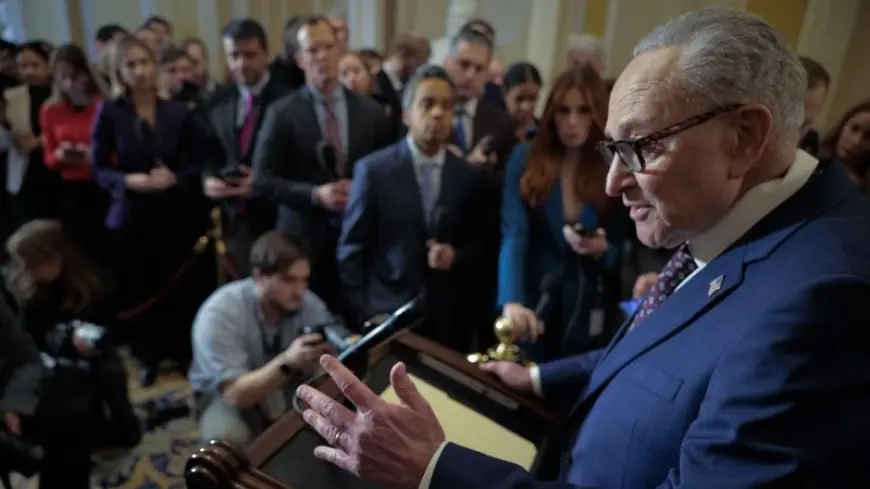
Senate Democrats are escalating the risk of a partial US government shutdown by threatening to block a major funding package unless it includes new legal limits on immigration enforcement operations. With stopgap funding set to lapse at midnight ET between Friday, January 30, 2026 and Saturday, January 31, 2026, the standoff is now colliding with the Senate’s procedural reality: even if a majority wants to move forward, any big spending package must clear a 60-vote threshold to advance.
A key procedural vote is expected Thursday, January 29, 2026 ET. If Democrats hold together and Republicans do not accept changes, the government could enter a partial shutdown early Saturday.
What Senate Democrats Are Demanding in the DHS Fight
Democrats are tying Homeland Security funding to a set of guardrails aimed at Immigration and Customs Enforcement and other Homeland Security enforcement arms. The demands, as described by Democratic leaders this week, cluster into three buckets:
-
Limits on enforcement operations, including tighter warrant standards and stronger coordination requirements with state and local law enforcement
-
A uniform federal code of conduct and clearer accountability mechanisms, including independent reviews of alleged misconduct and stricter use-of-force standards
-
Transparency and identification rules, including restrictions on face coverings, wider use of body cameras, and visible identification for agents
Democrats argue the changes are necessary to restore public trust after two fatal shootings of US citizens during immigration enforcement operations in Minneapolis in recent weeks, including one last weekend. Republicans and the White House reject linking those policy changes to a must-pass funding deadline.
Behind the Headline: Why This Shutdown Threat Is Happening Now
This is not simply a budget dispute. It is a collision between policy leverage and time pressure.
Democrats’ incentive is twofold. First, they are responding to a highly charged incident cycle that has sharpened public scrutiny of immigration enforcement tactics. Second, they see the funding deadline as one of the few moments when they can force statutory constraints onto an executive enforcement surge. In a polarized Senate, normal legislation can stall for months. A funding cliff compresses negotiations into days.
Republicans’ incentive is also straightforward: avoid setting a precedent that enforcement rules can be rewritten under deadline duress. Accepting policy conditions now could invite similar tactics on other priorities later. The White House’s position reinforces that logic by pushing to separate funding from reforms, treating the changes as a “regular order” debate rather than a shutdown trigger.
The result is classic brinkmanship: both sides believe yielding now would weaken them later, even if a shutdown is politically risky.
What’s Actually in the Funding Package
The immediate flashpoint is Homeland Security, but the vehicle is broader. The Senate is considering a multi-department package that includes Homeland Security alongside other major agencies such as Defense and Transportation. That structure matters because it turns a targeted dispute into a wider hostage situation: members who want to keep Defense fully funded, keep transportation moving, and protect other departmental operations may still see their priorities stalled if the Homeland Security piece remains unresolved.
Democrats are also signaling a possible off-ramp: move forward on the non-DHS components while splitting off Homeland Security for a separate vote or rewriting that portion. Republicans argue that separating bills late in the process is procedurally difficult and politically destabilizing, especially this close to the deadline.
Who Gets Hit First if There’s a Partial Shutdown
A partial shutdown does not stop everything, and essential functions continue. But it creates immediate operational friction:
-
Federal workers in affected agencies can face furloughs or delayed work, while contractors and grantees often feel payment disruptions faster
-
Program offices slow, approvals stall, and backlogs grow, which can take weeks to unwind even after funding resumes
-
Public-facing impacts can vary by agency: some services remain open but degrade through staffing shortages, while others pause non-essential activity
-
Political costs build quickly if disruptions touch travel, disaster response capacity, or visible enforcement and security operations
Even when core security functions continue, the knock-on effects can include overtime strain, operational confusion about what is funded, and a short-term morale hit that makes agencies less nimble during a crisis.
What We Still Don’t Know
Several missing pieces will decide whether this becomes a short weekend shutdown scare or a longer disruption:
-
Whether Senate Democratic leaders can keep their caucus unified if pressure rises to protect non-DHS agencies from collateral damage
-
Whether Republicans can offer a narrower compromise that Democrats can credibly claim as real enforcement restraint, not just symbolic funding for equipment
-
Whether the Senate can practically separate the DHS bill without triggering a chain of new votes and timing problems in the House
-
Whether negotiators pursue a very short stopgap patch for DHS only, buying time while keeping other agencies funded
What Happens Next: Scenarios and Triggers to Watch
Here are realistic pathways over the next 48 hours, with the triggers that would push each outcome:
-
A last-minute compromise on DHS guardrails
Trigger: Republicans and the White House accept limited statutory changes that address identification, body cameras, and oversight without broader constraints on operations. -
A split-package strategy
Trigger: Senate leaders agree to move the non-DHS pieces while isolating DHS for a separate vote, allowing both sides to claim they protected key agencies. -
A short, tactical stopgap for DHS
Trigger: negotiators decide the policy fight needs more time but want to avoid a shutdown; a narrow extension keeps DHS funded while talks continue. -
A brief partial shutdown beginning early Saturday, January 31, 2026 ET
Trigger: Democrats block the package and no procedural workaround is reached before the deadline. -
A longer shutdown standoff
Trigger: both sides decide the political upside of holding firm outweighs the short-term blame, and negotiations harden into a broader referendum on immigration enforcement.
Why it matters is simple: this fight is redefining what “must-pass” really means in today’s Senate. If immigration enforcement rules can be reshaped through a funding deadline, that becomes a template. If they cannot, it signals the White House and Senate Republicans can keep enforcement policy on a separate track even under maximum pressure. Either way, the result will echo far beyond this week’s deadline.