























Pauline Hanson movie sparks cancellations row as Holly Valance revives “Kiss Kiss” for a polarizing new anthem

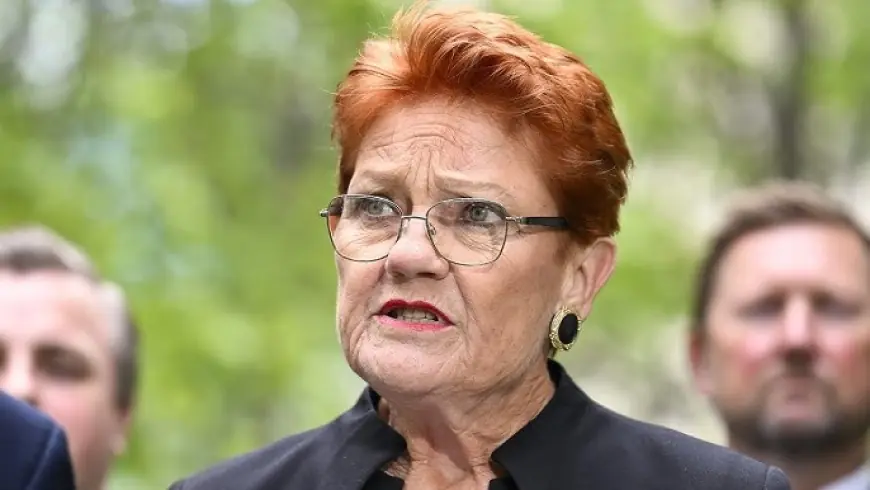
The pauline hanson movie at the center of Australia’s latest culture-war clash is a new animated satire titled A Super Progressive Movie, and its rollout has already been disrupted by abrupt cinema cancellations, reinstated sessions, and a soundtrack stunt that’s pulling even more attention. In late January 2026, multiple scheduled screenings in Melbourne and Hobart were pulled at short notice, prompting Pauline Hanson to accuse “progressive” activists of trying to shut down the film. Shortly after, some sessions were put back on sale, turning the release into a live test of free-speech messaging versus venue risk management.
Fueling the moment is a companion track tied to the film: a reworked version of Holly Valance’s 2002 hit “Kiss Kiss,” repackaged as a political jab and marketed as a Pauline Hanson song for the campaign-style promotion around the movie. The track has climbed a paid-download ranking in Australia, while also drawing criticism for targeting transgender people and “woke” culture in its satire.
Further specifics were not immediately available about how many venues are still reviewing whether they will host additional sessions.
A Super Progressive Movie becomes a lightning rod before it even settles into theaters
Hanson and the film’s backers have framed A Super Progressive Movie as an M-rated animated parody of “cancel culture” and identity politics, positioning it as a blunt, intentionally provocative comedy rather than a conventional political documentary. The cancellations gave that pitch extra oxygen: supporters pointed to pulled screenings as proof of the film’s argument, while critics said the content crosses from satire into harmful stereotyping.
Ticketing for some sessions has been notably high-priced for a standard cinema run, adding another layer to the debate over whether the project is primarily a political messaging vehicle, a commercial entertainment release, or both. Hanson has described sold-out sessions and strong audience reactions at earlier screenings, though those claims sit alongside the practical reality that the film’s availability has been uneven from city to city.
The reason for the change has not been stated publicly by every venue involved, leaving the public to infer whether decisions were driven by security concerns, complaints, internal policy, or commercial calculation.
Holly Valance and the “Kiss Kiss” reboot: a charting gimmick with real-world backlash
The most searchable hook around the film is the music tie-in: holly valance has returned to her signature “Kiss Kiss” branding with a new version built to promote Hanson’s movie and politics. Marketed under variations of “kiss kiss pauline hanson” and “holly valance pauline hanson song,” the release leans on familiarity—an instantly recognizable chorus line and era-specific nostalgia—while swapping the original pop sheen for punchline-first messaging.
Supporters have celebrated the track’s rapid rise on a paid-download chart as proof that Hanson’s base can mobilize attention quickly. Critics, including LGBTQ+ advocates, have condemned it for mocking trans identity and stoking stigma under the cover of satire. That split reaction has made the song less a conventional comeback single and more a political artifact—shared as a statement, not just a tune.
Some specifics have not been publicly clarified, including how much of the song’s traction reflects concentrated purchases by supporters versus broad listening across mainstream audiences.
How cancellations and “number one” claims happen in practice
In the film world, screenings are typically booked through agreements between distributors, event organizers, and venues, with contracts that often include provisions for safety, reputational risk, and operational disruptions. If a venue anticipates protests, staff shortages, or heightened security needs, it can reassess whether hosting a session is feasible—even when tickets have already sold. Reinstatements can happen just as quickly when circumstances change, when additional security planning is put in place, or when organizers shift the event format.
Music chart spikes for politically charged tracks can follow a similar mechanism: paid-download rankings can be moved sharply by coordinated buying, because a motivated audience can generate a visible surge without needing months of steady mainstream consumption. That doesn’t make the demand “fake,” but it does mean a short, intense burst can look bigger than longer-term listening patterns.
This is why the same release can simultaneously be described as “chart-topping” and still fail to behave like a traditional pop hit in day-to-day listening culture.
Who is affected and what to watch next
The stakeholder impact is immediate for at least two groups. Venue staff and local audiences are caught in the middle of a political dispute that can turn a normal movie night into a security and staffing challenge. Transgender communities and LGBTQ+ Australians, meanwhile, face a surge of public rhetoric that can translate into real harm—more harassment, more stigma, and a louder mainstreaming of jokes that target identity rather than ideas.
There are political consequences too. Hanson’s supporters see the controversy as energizing proof that their message is being “suppressed,” while opponents argue that distributing inflammatory material through entertainment channels normalizes prejudice and escalates social division. For Holly Valance, the collaboration repositions her public profile away from pop nostalgia and toward overt political alignment, with reputational upside among some audiences and real backlash among others.
In the days ahead, the next verifiable milestone will be whether the reinstated late-January and early-February cinema sessions proceed without further cancellations, and whether additional venues take the film on for wider release or keep distance as the controversy grows.