

























Jose Mourinho and Andreas Schjelderup Turned a Champions League Night Into a Defining Benfica Moment

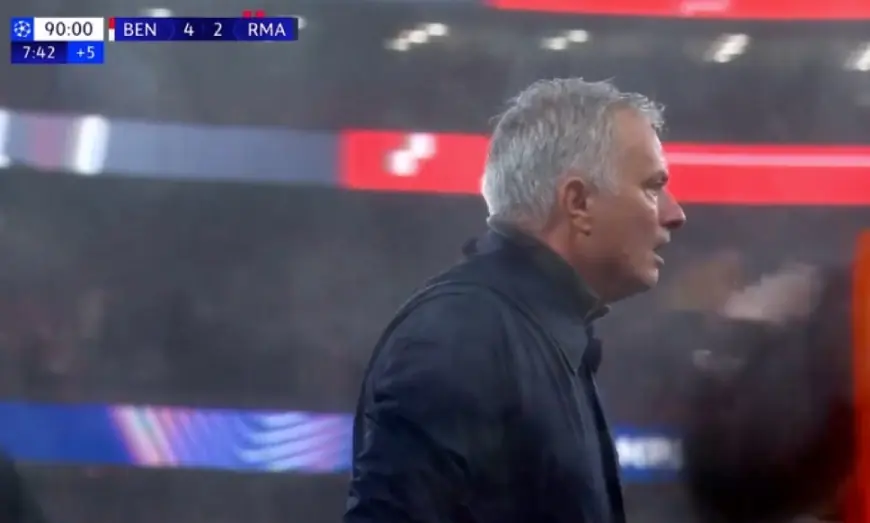
Jose Mourinho’s second act at Benfica produced the kind of spectacle only his teams seem able to generate: cold-blooded counterattacks, late-game gamesmanship, and a final twist that rewrote the standings in real time. On Wednesday, January 28, 2026 ET, Benfica beat Real Madrid 4–2 in the Champions League league phase finale, a result that dragged Madrid into the playoff round and pulled Benfica over the line into the last qualification spot on goal difference.
The face of the performance was 21-year-old winger Andreas Schjelderup, who scored twice and looked like the player Benfica envisioned when it invested in his ceiling. The signature image, though, belonged to Mourinho: a coach famous for managing risk who still found a way to gamble at the death.
What happened: Schjelderup’s brace and Mourinho’s late math
Benfica’s win wasn’t just a statement result; it was a problem-solving exercise under pressure. Benfica needed a specific margin to survive the league phase, and the match turned into a race against the clock and the table.
Schjelderup equalized after Madrid went ahead, then struck again early in the second half to restore Benfica’s cushion. A Benfica penalty in first-half stoppage time helped build the lead, and Madrid’s two goals kept the night tight enough that Benfica’s qualification still hung on a single moment.
That moment arrived in the 98th minute when Benfica’s goalkeeper, Anatoliy Trubin, came forward for a set piece and headed in the fourth goal. The stadium erupted because everyone understood what it meant instantly: Benfica were in, and another club dropped out.
Two late Madrid red cards added chaos to the final minutes, but the underlying drama was sporting arithmetic. Mourinho’s team kept playing as if the standings were on the pitch with them, because they effectively were.
Jose Mourinho and Andreas Schjelderup: a partnership built on tension and opportunity
Mourinho’s management style has always created a sharp bargain for attackers: freedom is earned through work without the ball. Schjelderup’s night against Madrid looked like the payoff for buying into that deal.
His two goals were not showy solo runs. They were end products of a Mourinho blueprint: defend compactly, break with speed, finish with minimal touches. It is the kind of structure that can make young attackers look decisive fast, but it also demands repeatable discipline, especially in Europe where one lazy recovery run can erase a lead.
For Schjelderup, the timing is enormous. January is not just Champions League month; it is transfer window month. A player who looks expendable one week can look untouchable the next, and big European nights have a way of inflating both confidence and market interest. Benfica now have leverage either way: keep the in-form winger for the playoff push, or entertain offers that reflect a much higher perception than the one that existed before this match.
Behind the headline: why this game mattered beyond one result
This was a Mourinho showcase in incentives.
Benfica’s incentive was survival and momentum. Qualifying buys money, prestige, and a higher ceiling for the season’s narrative. It also protects the club from a familiar danger: drifting domestically while Europe slips away.
Madrid’s incentive was the opposite: avoid extra fixtures. The playoff round adds two high-intensity games to an already punishing calendar, creating knock-on effects for injuries, rotation, and league form.
For Mourinho personally, beating Madrid carries reputational weight that no tactics board can explain. It is one thing to qualify; it is another to do it by handing your former club a more complicated path.
Second-order effects are already obvious. Benfica’s late qualification reshapes the playoff bracket dynamics, and it changes how Benfica’s squad is evaluated internally. A team that barely squeezes through can still become dangerous if it finds a defining identity at the right time, and this match gave them exactly that.
What we still don’t know
Several key pieces remain unresolved as of Thursday, January 29, 2026 ET:
Benfica’s playoff opponent and how the draw breaks in February
Whether Benfica treat Schjelderup as non-negotiable in the January window
How Mourinho balances domestic priorities with the added European workload
Whether this match becomes a launchpad or a one-night peak for Schjelderup’s role
What happens next: realistic scenarios to watch
Benfica keep Schjelderup and build the playoff plan around his form
Trigger: Mourinho prioritizes continuity and believes the winger’s confidence is now an asset worth protecting
Benfica sell from strength
Trigger: a bid arrives that matches Benfica’s valuation and finances a broader squad upgrade before the playoff ties
Mourinho shifts into full tournament mode
Trigger: domestic breathing room allows heavier rotation in league matches to keep key players fresh for Europe
Schjelderup becomes the tactical litmus test
Trigger: opponents start targeting Benfica’s transition game, forcing him to prove he can influence matches when space disappears
For Mourinho and Schjelderup, the story is no longer hypothetical. One delivered the calculation; the other delivered the goals. Now Benfica have to decide whether that combination is a moment to monetize, or a moment to chase deeper into Europe.