

























Tesla Profits Drop, Yet Investors Remain Unfazed

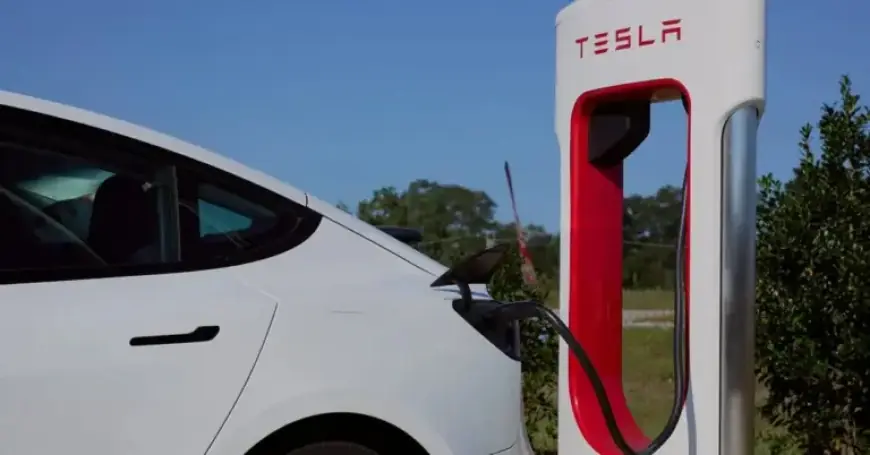
Tesla’s recent financial report indicates a significant decline in annual profits. As competition rises from established automakers and newcomers, the electric vehicle (EV) market landscape is shifting dramatically. Notably, BYD, a Chinese manufacturer, has overtaken Tesla as the largest EV producer globally. Additionally, Volkswagen now boasts higher electric vehicle sales than Tesla in Europe.
Tesla’s Financial Overview
In 2025, Tesla’s net profit reached $3.8 billion, a decrease from $7.1 billion the previous year. This marks the second consecutive annual profit drop. During the fourth quarter, profits fell to $840 million, significantly down from $2.1 billion year-over-year.
Investor Response to Profit Decline
Despite the profit downturn, investors remain largely unfazed. Tesla shares are currently trading near record highs. This resilience stems from shareholders’ belief in CEO Elon Musk’s vision for dominating the self-driving taxi and robotics markets. Musk announced plans to introduce humanoid robots by year-end, ahead of launching the Cybercab, a fully autonomous vehicle set to begin production in April.
Competition and Market Dynamics
Tesla’s market capitalisation is approximately $1.36 trillion, driven by the potential to deploy millions of self-driving cars quickly. Waymo, a subsidiary of Alphabet, currently leads in the driverless taxi sector, operating in multiple U.S. cities. Tasha Keeney, an analyst at Ark Invest, noted that despite Waymo’s extensive commercial miles, Tesla’s production capabilities remain unmatched.
Challenges Affecting Sales
The past year hasn’t been without challenges for Tesla. Sales dropped to 1.64 million cars worldwide, down from nearly 1.8 million in 2024. In the U.S. market, Tesla sold about 589,000 vehicles, reflecting a 7% decrease, according to Cox Automotive. Factors contributing to these declines include the elimination of key tax credits for electric vehicles and intensified competition from traditional automakers.
- Honda, BMW, and Volvo plan to launch new EV models that may outpace Tesla’s offerings in charging speed and range.
- The Cybertruck, recently released, sold approximately 20,000 units in the U.S., nearly 50% less than its 2024 figures, according to Cox data.
- New, lower-priced variants of the Model 3 and Model Y were introduced with starting prices around $37,000, likely resulting in slimmer profit margins.
Looking Forward
Analysts suggest that Tesla must demonstrate concrete progress in autonomous driving technology to maintain investor support. Barclays analysts emphasize that significant advancements in Robotaxis, Full Self-Driving (FSD), and Optimus robots are crucial for future stock performance. Additionally, Tesla might face growing scrutiny over Musk’s political affiliations, which may alienate certain consumer segments.
As Tesla navigates these challenges, its ability to adapt and innovate will be vital in securing its position in a rapidly evolving electric vehicle market.