Handcuffed Last Pair Standing UK Sparks Debate After Suffolk Millionaire Calls Show ‘Life Changing’

The Channel 4 social experiment handcuffed last pair standing has become a lightning rod for conversation as a wealthy contestant from Suffolk described his time on the programme as “life changing. ” The show’s design — forcing strangers with opposing beliefs to remain physically attached — and a £100, 000 prize for the final surviving pair have drawn attention to both its confrontational format and its human consequences.
Handcuffed Last Pair Standing: How The Format Works
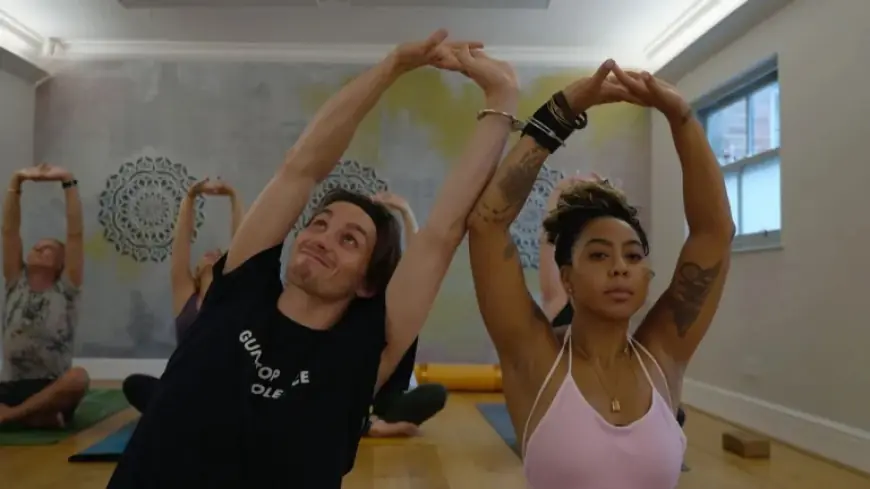
The series pairs two strangers who differ sharply in beliefs and lifestyle and requires them to remain handcuffed together 24/7 while they continue their everyday lives. Pairs live at their respective homes, work, sleep and shower while chained to one another, and contestants may only request a temporary extended chain in the particular circumstance repeatedly flagged by the host as a need to go for a number two. An emergency key box sits on site and can be smashed by either participant to terminate the pairing; the final couple left standing wins a prize of £100, 000.
Suffolk Contestant’s Experience And Immediate Impact
One of the show’s notable participants is Anthony Saxon Kearsley, director of Auto Couture LTD in Elmsett, near Hadleigh. He has described his stint on the programme — a two-week pairing with a stranger — as “life changing. ” Kearsley, a businessman who worked in the motor trade and built a bespoke chauffeur operation that has included contracts with the late Queen and various film stars and celebrities, said sharing a handcuff with his partner was a “privilege” and called her “fabulous. “
Kearsley owns an extensive £4 million classic car collection of more than 67 cars, principally Rolls-Royce and Bentley models. On the show he was paired with Tilly Martin, a north London cleaner who works three jobs and regularly swears. He said the experience altered his outlook on homelessness and moved him emotionally: “It totally changed my opinion, and it got to me emotionally. ” The contrast between their backgrounds underpins the programme’s intent to place people from different social and economic positions in prolonged contact.
Why The Format Is Stirring Ethical Questions
The programme’s producers frame the experiment as an opportunity to take people out of their social bubbles and force them to confront opposing viewpoints on issues ranging from class and wealth to political views, environmentalism and work ethic. Critics and viewers have noted that Channel 4 has a history of provocative, boundary-pushing formats that aim to reveal human behaviour under stress, and this latest series amplifies that approach by literalizing the link between two very different lives.
The enforced intimacy of performing private acts while connected to a stranger — including hygiene and bodily functions — has been highlighted repeatedly in coverage of the format, and the presence of an emergency key box underscores that escape is possible but dramatic. The stakes of the competition and the explicit shock value of the conceit are central to why the series has generated strong reactions.
What Changed And What Comes Next
Producers present the show as a social experiment designed to provoke empathy and understanding by exposing participants to the realities of other people’s lives. For some contestants, the experience has reportedly prompted personal change; for others the pressure results in conflict and an early exit by smashing the emergency key. The series continues to prompt debate over the balance between compelling television and ethical responsibility, and viewers are watching to see whether the format leads to meaningful dialogue or merely spectacle.
As discussions about the programme’s merits proceed, the documented reactions of participants like Anthony Saxon Kearsley — who publicly described the pairing as transformative — remain a central part of the conversation about what such reality formats reveal and what they can change in the lives they touch.