
























Fulton County Elections Office Searched by FBI as Federal Investigation Draws National Attention

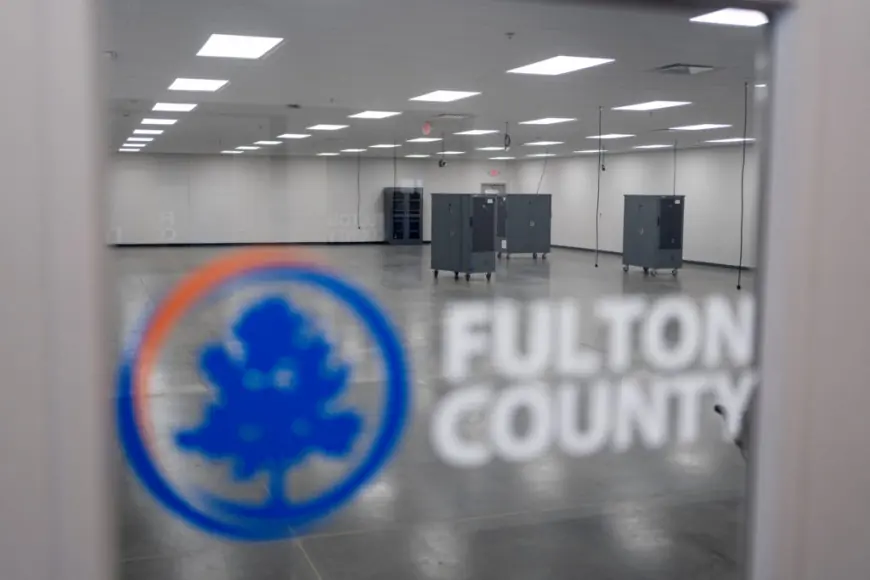
Fulton County is back at the center of U.S. election scrutiny after FBI agents executed a court-authorized search warrant at the county’s main elections office near Atlanta on Wednesday, Jan. 28, 2026 ET. Federal officials confirmed the action but did not disclose what the warrant sought, immediately triggering questions about scope, evidence handling, and what—if anything—could follow for county operations and public trust.
Further specifics were not immediately available.
What happened at the Fulton County elections office
Federal agents carried out the search at the Fulton County Election Hub and Operations Center in Union City, just south of Atlanta. The FBI described the activity as a court-authorized law enforcement action and declined to provide additional details while the matter remains active.
County election officials referred inquiries to broader county communications staff, and federal prosecutors did not immediately provide a public explanation of the warrant’s purpose. Some specifics have not been publicly clarified, including whether the search focused on records, equipment, individuals, or a specific time period.
The timing has added sensitivity because Fulton County has been a focal point for political disputes over the 2020 presidential election and its aftermath, and any federal action involving election administration tends to amplify partisan narratives—even before the facts are fully known.
Why Fulton County remains a flashpoint years after the 2020 election
Fulton County, home to Atlanta and one of Georgia’s most populous counties, became a national symbol during the 2020 election due to its decisive role in statewide results and the intensity of claims made about ballot handling and election administration. Courts and election officials repeatedly rejected allegations that widespread fraud changed outcomes, but political attention on Georgia has remained high.
That backdrop is still shaping events. In recent weeks, state and federal efforts tied to election records and oversight have continued to surface, including renewed pressure from election regulators and litigation activity related to access to election documents. Separately, the high-profile state prosecution that once alleged a broad scheme to overturn Georgia’s 2020 results ended after a court disqualified the district attorney’s office over an ethics dispute, and the case was later dismissed—an outcome that continues to reverberate in state politics and in legal battles over fees and accountability.
The reason for the federal search on Jan. 28 has not been stated publicly.
How a search warrant in an elections facility typically works
A search warrant is a court order that allows law enforcement to enter a location and seize specific items described in the warrant, based on a judge’s finding of probable cause. In practice, investigators generally try to narrow what they take—documents, digital devices, logs, or other materials—because broad seizures can create legal risk and operational disruption. If sensitive records are involved, protocols often include chain-of-custody documentation and, in some cases, special handling procedures for materials that could be privileged or protected under election administration rules.
In an elections setting, authorities must also consider continuity of operations. Election offices manage voter registration data, ballot logistics, and administrative systems that can affect routine services even outside election season. A search can be designed to minimize impact, but the outcome depends on what investigators are seeking and how much of the facility’s infrastructure is involved.
A full public timeline has not been released.
What this could mean for voters, election workers, and local politics
The immediate impact is felt by at least two groups: voters and election workers. For voters, the biggest risk is confidence—uncertainty can fuel rumors and intensify misinformation, especially when details are limited. For election staff, an active investigation can disrupt normal workflows, trigger extra legal and compliance burdens, and raise personal safety concerns if public anger spills into harassment.
Local and state political stakeholders are also affected. Candidates, party organizations, and civic groups that rely on election administration stability may push for transparency and reassurance, while opponents may use the moment to amplify critiques of the system. Meanwhile, county leaders may face operational questions about staffing, records retention, and readiness for the next major election cycle.
The practical reality is that a warrant alone does not establish wrongdoing; it indicates investigators persuaded a judge that specific evidence might be found at a specific place. At the same time, because the subject is elections, even routine investigative steps can have outsized public consequences.
In the days ahead, the next verifiable milestone will be the warrant return and inventory that typically gets filed with the court after property is seized, along with any formal statements or filings that clarify what the investigation is examining and whether additional legal steps—such as subpoenas, interviews, or hearings—are planned.