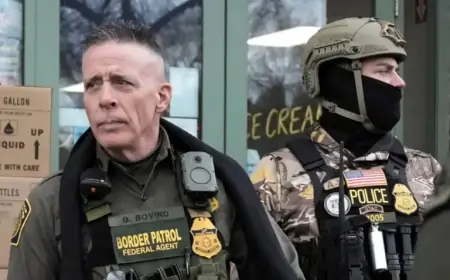

























Tom Homan takes over Minnesota immigration response as Greg Bovino exits Minneapolis role

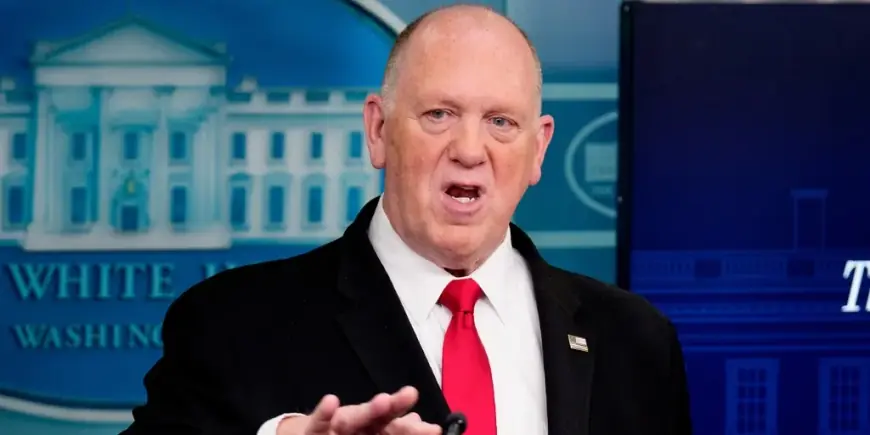
Tom Homan is moving into the center of a fast-developing Minnesota political storm after President Trump said the White House “border czar” will lead federal immigration operations in the state following two fatal shootings by federal agents in Minneapolis this month. The leadership shift comes as Gregory Bovino, the Border Patrol commander who had become the public face of the enforcement push, is being moved out of Minnesota and returned to his prior post in El Centro, California.
Some specifics have not been publicly clarified, including the exact chain-of-command terms for Homan’s Minnesota assignment and how long the new structure will remain in place.
Who is Tom Homan and why the White House sent him to Minnesota
Homan is a longtime immigration-enforcement official who previously led U.S. Immigration and Customs Enforcement in an acting capacity during the first Trump administration and later became a prominent advocate of hardline interior enforcement. In the current administration, he has served as the White House’s “border czar,” a role designed to coordinate policy and operations across multiple federal components that touch immigration and border security.
His Minnesota assignment is framed as damage control as well as command. Federal leaders are facing intense scrutiny after the killing of Alex Pretti, described by state and local officials as a lawful gun owner with no criminal record. Publicly circulating videos from the scene appear to show Pretti holding a phone and not visibly holding a weapon at the moment he was shot, fueling calls for an impartial investigation and clearer federal use-of-force standards.
The second fatal shooting in Minneapolis earlier this month remains part of the same wider backlash. Further specifics were not immediately available about how the two incidents will be handled together or separately in any federal review.
Greg Bovino fired or demoted: what the shift does and does not mean
Online searches for “greg bovino fired,” “bovino removed,” and “did greg bovino lose his job” accelerated as news spread that Bovino was leaving Minneapolis. The cleanest description is this: Bovino is no longer the national, high-visibility commander driving the Minnesota operation, and he is returning to El Centro, California, where he previously served as Border Patrol sector chief.
That is not the same as a traditional firing announcement. Federal officials have described the commander-at-large position as temporary and have said Bovino has not been relieved of duties, even as others characterize the move as a demotion and removal from the Minnesota mission. Key terms have not been disclosed publicly about whether the change is disciplinary, strategic, or simply a reassignment triggered by political fallout.
Questions such as “greg bovino height” and “gregory bovino wife” have also circulated, but those personal details have not been publicly confirmed in official biographical materials and are not central to the operational questions now facing Minnesota.
How the federal enforcement system works when ICE and Border Patrol overlap
The Minnesota episode has also revived confusion over “bovino ice” searches, because Border Patrol and ICE are different agencies with different mandates. In general, Border Patrol focuses on border and near-border enforcement under Customs and Border Protection, while ICE handles interior immigration enforcement and removals. Both sit within the Department of Homeland Security, and large operations can involve task forces where roles blur on the ground.
That is where the border czar role matters. When an administration wants a single point of operational direction, it can assign a senior figure to coordinate priorities, messaging, and interagency cooperation, even if the formal chain of command still runs through agency leadership. In practice, that means aligning arrest priorities, deciding where resources go, setting rules for public briefings, and managing relationships with governors, mayors, and local law enforcement. The goal is to reduce contradictions: one tactical approach in the field, one set of expectations for agents, and one process for handling incidents that trigger public concern.
A full public timeline has not been released for how responsibilities will be split day to day between federal agencies in Minnesota under Homan’s lead.
Impact on Minnesotans, immigrants, and agents, and what comes next
Two groups are feeling immediate consequences: Minnesota communities, including immigrants and mixed-status families, who report heightened fear around daily routines like commuting, school attendance, and medical appointments; and federal agents, who are operating under intensified scrutiny after deadly-force incidents and conflicting public narratives.
Local leaders are also directly affected because the federal presence can strain city services, prompt protests, and force rapid coordination on public safety. At the same time, the administration faces broader political pressure as it weighs whether highly visible, militarized tactics in major cities are worth the reputational damage when operations go wrong.
In the days ahead, the next verifiable milestone is the expected sequence of formal reviews: completion of incident reporting and investigative steps tied to the Minneapolis shootings, potential congressional oversight activity, and any court proceedings that address compliance and accountability for federal immigration operations. Those developments will determine whether Homan’s assignment becomes a short-term stabilization move or the start of a longer reset in how the administration runs interior enforcement far from the border.