
























Josh Safdie and the Safdie brothers in 2026: From Good Time chaos to separate spotlights

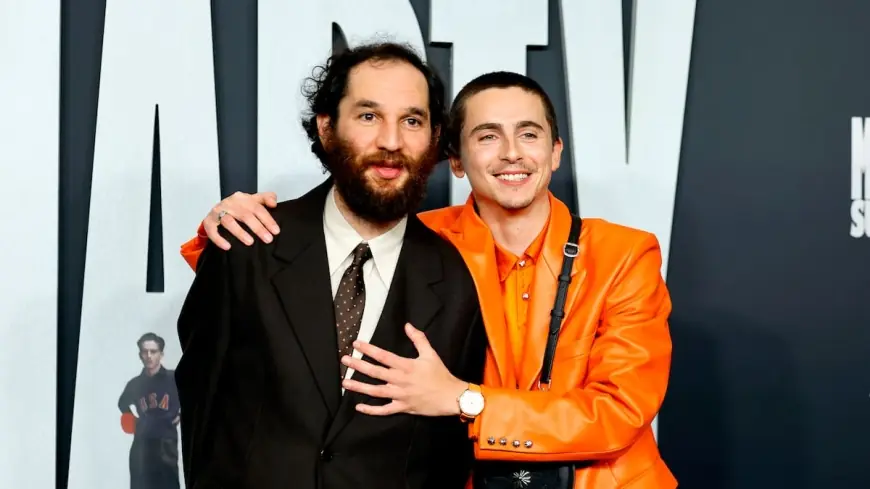
Josh Safdie is back at the center of awards-season conversation, but the bigger story around him now includes a clear shift in how the Safdie brothers are moving through Hollywood. After years of building a shared filmmaking identity, Josh and Benny Safdie have increasingly been defined by parallel careers, with their breakout energy from the Good Time movie still shaping how audiences read everything they do next.
Josh Safdie’s awards-season momentum after going solo
In late January 2026, Josh Safdie’s recent work has landed among the year’s major awards contenders, reinforcing the idea that his trademark intensity can scale to larger, more mainstream stages. His latest feature, Marty Supreme, has been a prominent part of the season’s narrative, not just as a buzzy title but as a film that has translated into top-line nominations.
That matters because the Safdie brand was built on velocity: tight city streets, anxious decision-making, and characters sprinting toward consequences. When a filmmaker with that reputation gets embraced by major awards bodies, it signals that the style has moved from cult fascination to establishment validation, without necessarily sanding off the rough edges.
Benny Safdie’s lane: directing, acting, and a widening profile
Benny Safdie, meanwhile, has continued to broaden his profile in a way that doesn’t depend on co-directing. He has been increasingly visible as both a filmmaker and a performer, stepping into acting roles while also pushing forward behind the camera.
This split-screen trajectory has also changed how fans frame the brothers’ names. For years, “Safdie brothers” functioned like a single credit, shorthand for a specific pace, texture, and moral pressure. Now, it’s easier to see two distinct creative instincts emerging: one built around Josh’s obsessive, high-wire storytelling and another that blends Benny’s filmmaking with his on-screen presence.
The reason for the change has not been stated publicly.
A full public timeline has not been released.
Why Good Time still anchors the Safdie brothers conversation
Even with new work taking the spotlight, Good Time remains the reference point because it crystallized the duo’s identity for a much bigger audience. The film’s structure is simple and cruel: a single night spirals, each “solution” creates a new problem, and the city becomes a pressure cooker. That design became a signature, and it’s why people still use “Good Time energy” as a shorthand for frantic, neon-lit momentum.
Good Time also turned the Safdies into a cultural marker for a certain kind of American indie filmmaking: street-level casting, abrasive realism, and a sense that the camera is chasing characters rather than staging them. When viewers ask what “the Safdie brothers” means today, they’re often really asking whether that shared aesthetic will reappear in the same form or evolve into two related but different styles.
Some specifics have not been publicly clarified.
How creative partnerships shift, who it affects, and what comes next
In filmmaking, a directing duo typically operates like a single unit in public while handling a complex internal division of labor in private: writing passes, shot design, performance shaping, editing decisions, and the day-to-day management of production. When a partnership pauses or ends, it doesn’t just change a credit line. It changes how projects are packaged, how schedules are built, and how collaborators predict the tone and process of a set.
The ripple effects reach multiple groups. Fans and festival-goers are affected first, because the appeal often includes the expectation of a particular rhythm and worldview. Cast and crew feel it differently: working style, on-set communication, and post-production decision-making can shift when a familiar two-person leadership structure becomes a single director with new deputies. Studios, financiers, and distributors also pay attention because the identity of the filmmaker is part of how a project is marketed and how risk is assessed.
The next verifiable milestones are built into the calendar: major awards ceremonies over the coming weeks will clarify how strongly Josh Safdie’s current film performs across categories, while Benny Safdie’s upcoming releases and casting announcements will further define his balance between directing and acting.