Apple and Google Continue Offering AI ‘Nudify’ Apps Despite Controversy

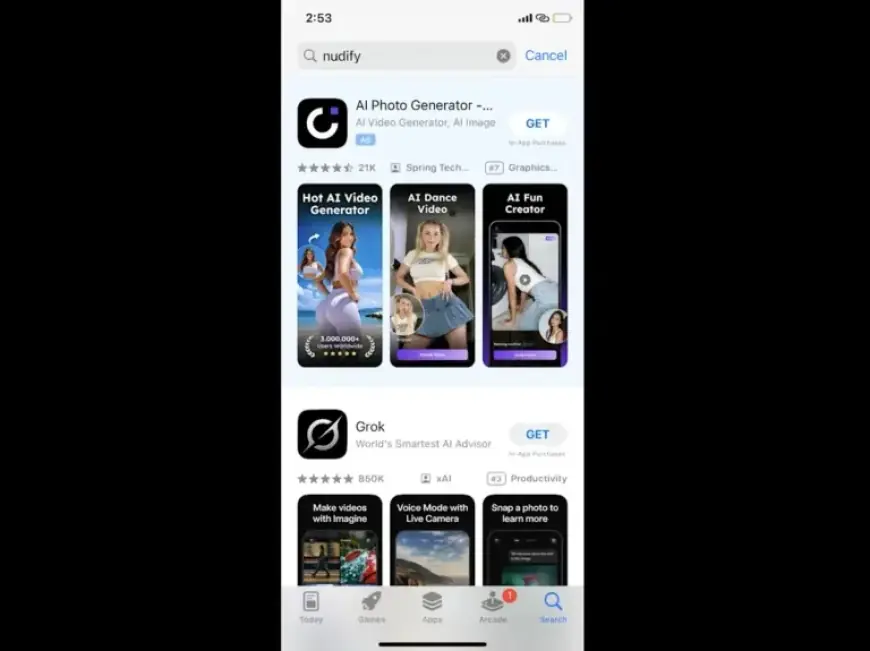
A recent investigation by the Tech Transparency Project (TTP) has revealed concerning practices in both the Apple App Store and Google Play Store. The focus is on AI “nudify” apps that generate nonconsensual and sexualized images. These applications are in direct violation of the policies of both tech giants.
Nudify Apps in Stores
The investigation identified a total of 102 nudify apps: 55 available on Google Play and 47 on the Apple App Store. One notable example is xAI’s Grok, a prominent deepfake creator.
Impact and Allegations
These apps have accumulated over 700 million downloads and generated more than $117 million in revenue, from which Apple and Google receive a portion. Shockingly, many of these apps are rated as suitable for children and teenagers.
- DreamFace Rating:
- Google Play Store: Rated for ages 13 and up
- Apple App Store: Rated for ages 9 and up
Responses from Apple and Google
In light of the investigation, Apple has reportedly removed 24 apps from its platform. However, this number falls short of the total identified by TTP researchers. Google has stated that it has suspended several apps for violating store policies, but specifics on how many were removed were not disclosed.
Concerns Regarding Grok
The investigation also scrutinized xAI’s Grok, which reportedly generated three million sexualized images, including 22,000 involving children, within an 11-day span. While a spokesperson for the company issued a generic response to the media, Elon Musk claimed he was unaware of any generated images involving minors.
Furthermore, Grok issued an apology for the inappropriate content it created. Musk’s safety account emphasized that users generating illegal content would face consequences similar to those who upload such content directly.
This situation highlights serious ethical concerns regarding AI technology and its regulation. As discussions unfold, it remains critical for tech companies to ensure stricter controls on the applications available in their stores.