

























Canada groceries and essentials benefit: Ottawa proposes a new GST credit top-up and larger payments starting in 2026

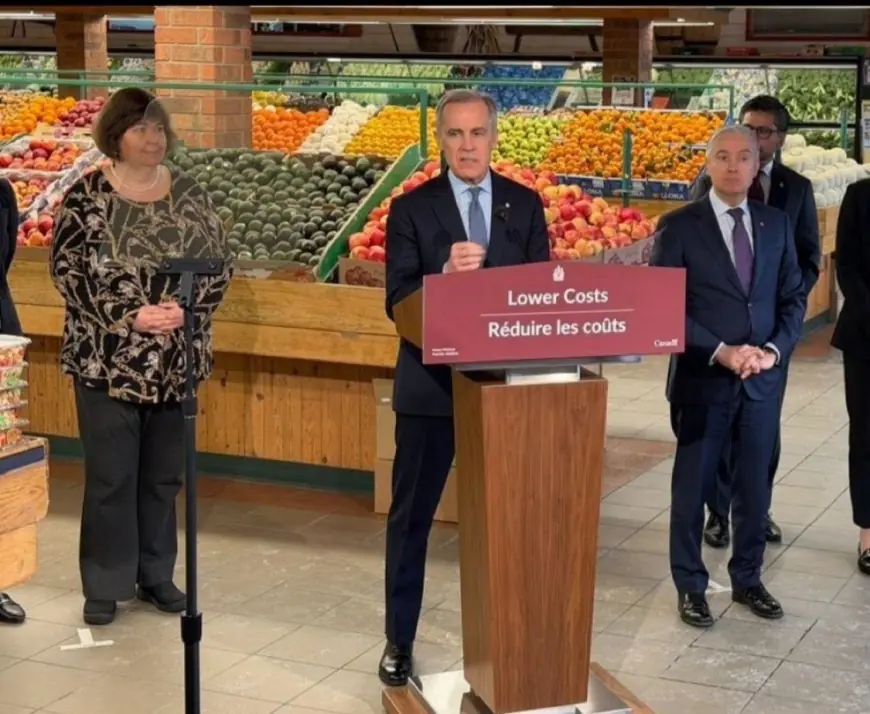
A rebranded GST credit aimed at grocery and essentials costs
Prime Minister Mark Carney’s government is pitching a new affordability measure built on the existing GST credit system, framing it as the Canada Groceries and Essentials Benefit. The plan is designed to reach low- and modest-income Canadians who already receive the GST credit, at a time when food prices and other daily costs remain a pressure point for household budgets.
The key change is a proposed increase to the benefit level paired with a one-time top-up payment. While the measure is being marketed as a “grocery rebate” by many Canadians, it is not a separate standalone program with a new application portal. It is structured as an expansion of the current GST credit framework, with eligibility and payments tied to tax filing and income thresholds.
How much the grocery rebate could be worth in 2026
The proposal has two moving parts: a one-time payment and then a multi-year increase to ongoing payments.
The one-time payment is described as a top-up equal to 50 percent of the annual value of the current GST credit amount for eligible recipients. Beyond that, the government is proposing a 25 percent increase to benefit amounts for five years, beginning with the payment cycle that starts in July 2026.
Here is how the government’s illustrative examples break down for the 2026 to 2027 benefit year, noting that real amounts vary by family situation and income:
-
Single individual: up to $543 base, plus a $267 one-time top-up, plus about $136 from the 25 percent increase, for a combined total up to $950 across the top-up and that benefit year.
-
Couple with two children: up to $1,086 base, plus a $533 one-time top-up, plus about $272 from the 25 percent increase, for a combined total up to $1,890 across the top-up and that benefit year.
These figures are presented as maximums and examples, not guarantees for every household. The actual amount is tied to adjusted family net income and household composition.
Grocery rebate 2026 timing and what “spring payment” means
On timing, the government is signaling two different windows.
First, the proposed one-time top-up would be issued as early as possible in spring 2026, with an outer limit of no later than June 2026. Second, the larger ongoing Canada Groceries and Essentials Benefit amounts would begin with the benefit year that starts in July 2026, with payments continuing on the familiar quarterly schedule.
This is an important distinction for people searching “gst rebate 2026” or “new gst credit 2026.” The spring 2026 money is the one-time top-up. The bigger quarterly cheques tied to the 25 percent increase are expected to start in the second half of 2026, assuming the proposal becomes law.
Because the measure is still proposed, the timeline is also conditional on Parliament passing enabling legislation and it receiving Royal Assent. Until that happens, the government can outline intended dates, but the payment schedule is not locked in.
GST rebate eligibility: who qualifies and what you need to do
For Canadians wondering “who qualifies for GST rebate” or “gst credit eligibility,” the basic rules track the existing GST credit structure.
In general, eligibility depends on being a resident of Canada for tax purposes, meeting age or family-status conditions, and filing an income tax return. Many people become eligible at 19, while some under 19 can qualify if they have or had a spouse or common-law partner, or if they are or were a parent living with their child.
The biggest practical step for most households is simple but easy to miss: file your taxes. The Canada Revenue Agency uses tax returns to automatically assess eligibility and calculate benefit amounts. Under the proposed plan, people who already receive the GST credit would not need to apply to receive the one-time top-up, but they do need to be on file through recent tax returns. The government has indicated that filing a 2024 tax return is important for the one-time top-up, and filing a 2025 tax return would be needed for the increased benefit amounts starting in July 2026.
As reaction began to roll in Tuesday, some labor and community voices welcomed the extra cash support while also arguing that affordability pressures are broader than any single benefit. For families watching grocery bills climb week after week, the near-term question is whether Parliament moves quickly enough for the spring 2026 top-up to arrive on the timeline being advertised.