
























Booger McFarland Criticizes Decisions by Coaches Sean Payton, Sean McVay

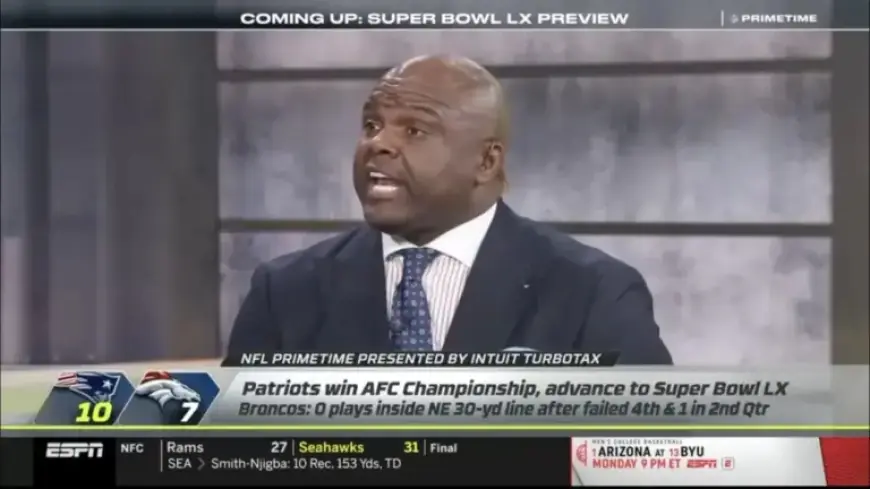
The recent NFL Championship Sunday showcased intense matchups, including the New England Patriots narrowly defeating the Denver Broncos 10-7 in the AFC Championship and the Seattle Seahawks edging past the Los Angeles Rams 31-27 in the NFC Championship. Following these games, ESPN analyst Booger McFarland critiqued crucial decisions made by head coaches Sean Payton and Sean McVay regarding their approaches on fourth down plays.
Booger McFarland Criticizes Sean Payton’s Risky Fourth Down Call
During NFL Primetime, McFarland highlighted a pivotal moment in the Broncos-Pats game. Sean Payton chose to go for it on 4th-and-1 at the New England 14-yard line, despite the Broncos leading 7-0 in the second quarter. McFarland reflected that a field goal attempt could have given Denver a 10-0 lead, which may have been crucial given the game’s weather forecast.
In McFarland’s view, the decision to bypass a 31-yard field goal was flawed. He stated, “You got to understand situational football. Everybody knew the forecast for the game.” He emphasized that such a short field goal attempt should have been a straightforward decision, especially considering that extra points are commonly longer.
Importance of Scoring Points
- Scoring a field goal would have maintained momentum.
- The changing weather conditions were likely to impact gameplay.
- It was unlikely the Broncos would find themselves in such a red-zone opportunity again.
McFarland argued that analytics shouldn’t overshadow the importance of points in crucial moments. He insisted that Payton should have prioritized scoring to leverage Denver’s momentum at that stage.
McVay’s Decision Under Fire
The criticism didn’t stop with Payton. McFarland also scrutinized Sean McVay’s decision to go for it on 4th-and-4 at the Seattle 6-yard line with less than five minutes remaining in the NFC Championship. Trailing 31-27, McFarland suggested that a field goal would have rewritten the game’s dynamics by applying pressure to the Seahawks’ offense.
He noted, “At some point, understand the momentum of the game.” Kicking a field goal would have shifted expectations for Seattle’s offense, requiring the team to avoid a three-and-out and pushing them to drive for a touchdown.
The Case for Field Goals
- Field goals can decisively affect game outcomes.
- McFarland recalled winning a playoff game with five field goals.
- A successful field goal would have altered Seattle’s game strategy.
McFarland emphasized the need for coaches to balance aggressive play with the strategic necessity to score. He stated, “Score more points than the other team,” highlighting that field goals could be crucial in playoff scenarios.
Conclusion: Reevaluating Coaching Decisions
Both Sean Payton and Sean McVay are recognized as leading figures in NFL coaching. Their respective strategies reflect a broader trend in the league where analytics and aggressive play-calling sometimes overshadows fundamental scoring strategies. As teams prepare for future challenges, McFarland’s insights urge a reconsideration of how risk and reward are evaluated in high-stake moments.