

























Chief Justice John Roberts Reveals True Opinions on Donald Trump

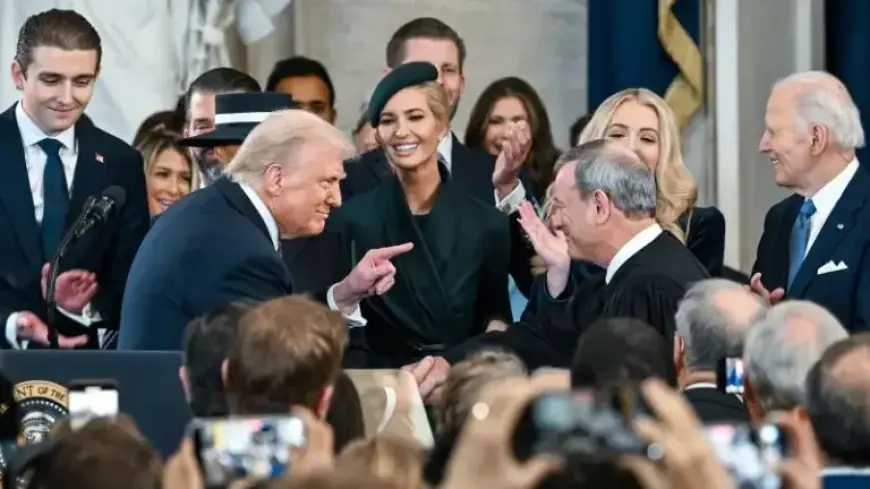
The Supreme Court heard a landmark challenge over birthright citizenship on Wednesday. For the first time in modern history, a sitting president attended an oral argument.
Courtroom atmosphere
The courtroom was full and the session was broadcast live. Extra chairs in the alcoves were occupied.
An area reserved for justices’ spouses and guests included actor Robert De Niro. Spectators noted the ornate ceiling and marble friezes depicting Moses and Solomon.
Donald Trump arrived about ten minutes before the session. He sat in the public section behind the Supreme Court bar with Attorney General Pam Bondi and Commerce Secretary Howard Lutnick.
Roberts’ response to administration arguments
Chief Justice John Roberts expressed clear doubts about the administration’s legal theory. He pushed back against the suggestion that modern immigration pressures justify a new interpretation of the 14th Amendment.
The exchange was widely reported and framed by some observers under the headline Chief Justice John Roberts Reveals True Opinions on Donald Trump. Roberts questioned the expansion of narrow exceptions into a broad rule.
Key legal arguments
The dispute centers on the Citizenship Clause of the 14th Amendment. The clause states that all persons born or naturalized in the United States, and subject to its jurisdiction, are citizens.
U.S. Solicitor General John Sauer urged a narrower reading. He argued that the clause should not cover people present unlawfully or temporarily.
Sauer also raised concerns about what he called a growing birth tourism industry and large numbers of foreigners traveling to give birth in the United States. He warned that global travel has made such births easier than in the past.
Defending longstanding precedent
Lawyer Cecillia Wang for the challengers invoked the 1898 Wong Kim Ark decision. That case involved a man born in the United States to Chinese nationals and has supported broad birthright citizenship.
Wang pointed to English common law principles and the historical purpose of the 14th Amendment. She said the decision acknowledged only a few narrow exceptions.
Justices’ concerns and hypotheticals
Justice Amy Coney Barrett raised difficult hypotheticals. She asked about foundlings and the problem of identifying parents’ status or intent to remain.
Several justices questioned the practicality of tracing parentage or domicile for every child born on U.S. soil. They doubted that historical examples support a broad exclusion of unauthorized or temporary residents.
Trump’s presence and reaction
Trump stayed through Solicitor General Sauer’s presentation, which lasted about an hour. He remained for the early portion of Wang’s argument.
About seven minutes into Wang’s presentation, Trump left the courtroom. The justices continued without visible distraction.
After leaving, Trump posted on Truth Social repeating a prior claim that the United States uniquely allows birthright citizenship. That claim is incorrect. About thirty other countries also grant birthright citizenship, mostly in the Western Hemisphere.
Context and related litigation
The issue ties into broader conflicts between the former president and the Court. Earlier cases included Trump v. Hawaii, Trump v. United States, and Trump v. Casa. He prevailed in several such suits.
He did not attend those earlier oral arguments. He had signaled attendance at other disputes, such as a tariffs case, but decided against going. He lost that tariffs case and publicly criticized some justices afterward.
On his first day back in office in January 2025, he signed an order aiming to limit birthright citizenship. The order underscores how central the issue has become to his agenda.
The Supreme Court’s decision will shape citizenship law for generations. Filmogaz.com will continue to follow developments and report key rulings.