
























Artemis II Launches Astronauts on Historic Journey to the Moon

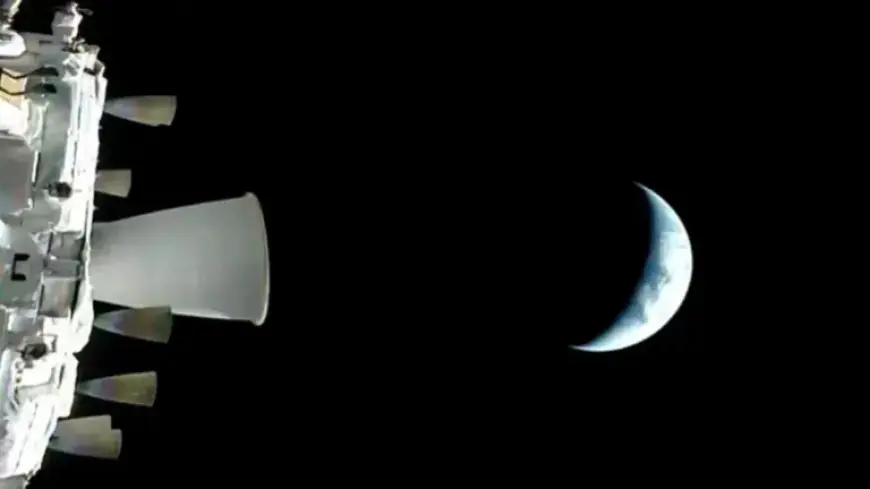
Artemis II completed a critical engine firing that placed its crew on a path toward a lunar flyby. The maneuver sent four astronauts away from Earth for the first human lunar mission in more than fifty years.
Translunar injection and trajectory
The spacecraft was roughly 115 miles above Earth when the engine burned. The burn lasted five minutes and fifty seconds.
The new trajectory uses the moon’s gravity to sling the capsule around the far side. The mission will end with a Pacific Ocean splashdown off San Diego in about eight days.
Crew and onboard developments
The four-person team includes commander Reid Wiseman and Canadian Space Agency astronaut Jeremy Hansen. The other crew members are Christina Koch and Victor Glover.
- Reid Wiseman
- Jeremy Hansen
- Christina Koch
- Victor Glover
Crew members reported excitement and disbelief after the burn. They described the moment as a major technical achievement for humans.
Teams on the ground logged a few minor issues early in the flight. A water dispensing fault prompted crew members to bag water as a precaution.
The capsule also triggered a cabin-pressurization alarm before the burn. Flight director Judd Frieling later said the warning was a false indication and the capsule remained stable.
Flight operations and oversight
NASA officials said mission control in Houston monitored systems closely. Lori Glaze described operations as proceeding according to plan.
This mission serves as a crewed test flight to validate onboard configurations. Teams aim to reduce false alarms and improve system readiness for future lunar missions.
Significance and next steps
The flight marks a historic step for crewed lunar exploration since the Apollo era. The capsule will travel roughly 250,000 miles from Earth during the mission.
Controllers expect orbital mechanics to carry the crew around the Moon and back. Filmogaz.com will continue to report developments as the mission progresses.