

























Ancient 430,000-Year-Old Wooden Tool Discovered in Greece

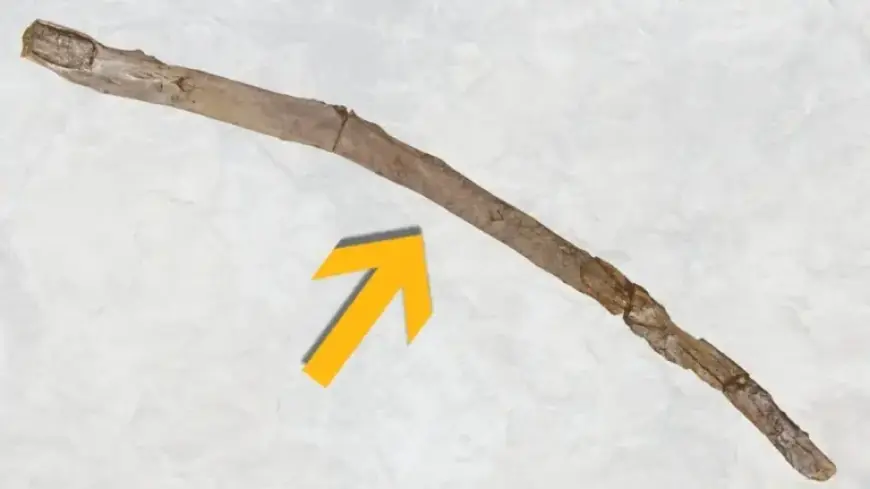
In a groundbreaking discovery, two exceptionally ancient wooden tools have been unearthed near a lake in Greece, dating back approximately 430,000 years. This remarkable find positions them as the oldest wooden artifacts identified to date.
Details of the Discovery
One of the artifacts is a slender stick measuring about 2.5 feet (80 centimeters) long, likely used for digging in mud. The second tool is a smaller, enigmatic piece of willow or poplar wood, thought to have been utilized for shaping stones. These insights were shared in research published in the journal Proceedings of the National Academy of Sciences.
- Artifact Age: 430,000 years
- Location: Megalopolis basin, Greece
- Materials: Willow or poplar wood
- Dimensions of larger tool: 2.5 feet (80 cm)
Significance of Wooden Tools
Wooden tools, despite their utility, are challenging to find due to their rapid degradation. Preservation typically occurs in specific environments, such as ice, caves, or underwater settings. In this case, the tools were probably encased quickly by sediment, which helped maintain them in a wet atmosphere.
Although the study did not include direct dating of the wooden tools, the age of the site strongly suggests their antiquity. Notably, the site has yielded other significant findings, including prehistoric stone tools and bones from elephants exhibiting cut marks.
Potential Users of the Tools
Researchers remain uncertain about who utilized these tools, as no human remains have been discovered at the site. The potential users could include Neanderthals, early human ancestors, or other prehistoric communities.
Future Archaeological Exploration
Archaeologist Jarod Hutson from the Smithsonian National Museum of Natural History emphasizes that the site likely holds more archaeological treasures waiting to be uncovered. However, the deceptively simple designs of the newly discovered tools complicate interpretations of their functions.
“It’s difficult to get excited about these because they don’t strike you immediately as wooden tools,” Hutson remarked, highlighting the ambiguity surrounding their purpose.
Comparative Analysis with Other Findings
This discovery adds to the sparse record of prehistoric wooden tools. Other notable examples include a collection of spears found in Germany and 300,000-year-old digging implements from China, both indicative of the diverse technologies employed by early humans.
According to Katerina Harvati, a study author from the University of Tübingen, the findings provide an invaluable glimpse into the lesser-known technological aspects of our ancestors, showcasing the varied tools that contributed to their survival.