
























Kanye West Issues Public Apology in Full-Page Ad, Citing Bipolar Disorder and Brain Injury — What It Changes (and What It Doesn’t)

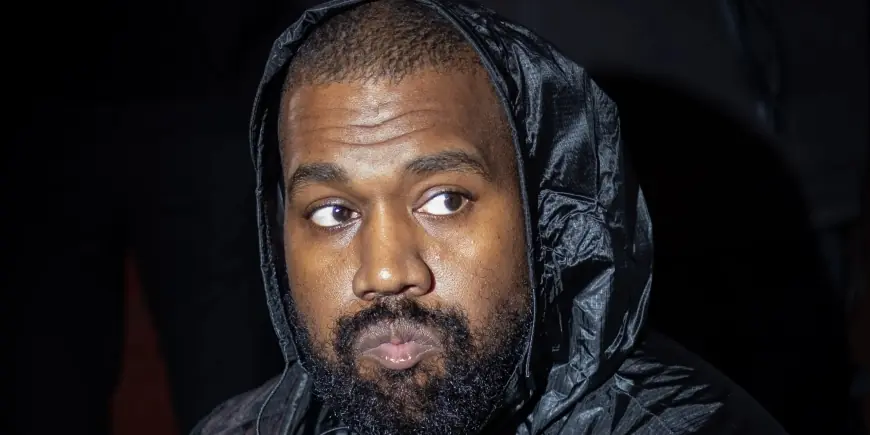
Ye, the artist formerly known as Kanye West, published a full-page public apology on January 26, 2026 (ET), taking responsibility for a long stretch of antisemitic rhetoric and other incendiary behavior that has repeatedly detonated his career and caused real-world harm. In the statement, he says he is “not a Nazi,” expresses remorse to Jewish people and to the Black community, and ties his worst public episodes to a combination of bipolar I disorder and what he describes as an undiagnosed frontal-lobe injury stemming from a 2002 car crash.
It is one of the most direct attempts yet to reframe years of controversy as both wrongdoing and illness: accountability on the surface, explanation underneath, and a clear request for patience rather than instant absolution.
What happened: a rare, formal apology after years of escalation
The apology is structured like an open letter: personal, confessional, and designed to feel definitive. Ye describes periods of paranoia, delusion, and impaired judgment, including a severe manic phase in 2025, and acknowledges that his actions and words hurt communities far beyond the internet.
He also points to concrete consequences—broken relationships, lost professional standing, and the wider damage that comes from amplifying antisemitic ideas during a period when antisemitism remains a live social threat, not a historical footnote.
What’s new and why now: a controlled reset, not a spontaneous change of heart
What’s new isn’t that Ye is controversial; it’s the format and timing.
A paid, high-visibility print apology is a choice built for legitimacy. It sidesteps the chaos of social media posts and positions the message as “official,” edited, and intentional. That matters because the audience he needs to persuade is not just fans—it’s business partners, gatekeepers, and risk managers who require documentation of “changed behavior,” not just vibes.
The timing also reads as strategic: Ye has music and fashion ambitions that require distribution, collaborators, and platforms. A public mea culpa is a common first move in rebuilding those pipelines, even if the rest of the repair work is far harder than buying a page.
Behind the headline: the incentives, the stakeholders, and the credibility problem
Incentives driving this apology
-
Re-entry to mainstream commerce: The apology can function as a prerequisite for partnerships, venues, and collaborators who want cover before engaging.
-
Narrative stabilization: By anchoring the story to mental health and injury, Ye attempts to turn a chaotic multi-year arc into a single, explainable through-line.
-
Brand rehabilitation: Even partial softening of public hostility can reduce friction for future releases, licensing, and retail.
Stakeholders who actually matter here
-
Jewish communities and organizations: The apology’s value is measured against harm done, not the eloquence of the text.
-
The Black community: Ye explicitly addresses the whiplash of being supported while also causing harm that rebounds onto broader communities.
-
Industry decision-makers: Labels, promoters, insurers, and brand executives weigh reputational risk in cold terms: boycott potential, sponsor anxiety, employee backlash.
-
Fans and the general public: A segment will accept any apology. Another will view it as tactical. Most will wait for consistent behavior.
The credibility problem
Apologies after extremist or hateful rhetoric are rarely judged by words alone. They’re judged by:
-
whether the behavior stops,
-
whether harm is acknowledged without self-pity,
-
whether restitution follows (private and public),
-
whether accountability is sustained when attention fades.
Explaining the role of mental illness can be true and still insufficient. People can hold two ideas at once: illness can influence behavior, and harm still requires responsibility.
What we still don’t know: what changes beyond the page
The statement creates new questions it doesn’t answer:
-
What accountability looks like in practice: Will there be direct engagement with harmed communities, education efforts, or meaningful reparative actions?
-
Whether the rhetoric is truly over: The real test is not the next week, but the next year—especially under stress.
-
What treatment and support structure exists: Medication and therapy are mentioned, but long-term adherence and stability are private realities that can’t be proven by a letter.
-
Whether this is tied to a rollout: If new projects arrive immediately, skepticism will rise that the apology is a marketing lever rather than a moral pivot.
What happens next: the most realistic paths from here
-
Short-term media cycle, then silence
The apology dominates headlines for days, then fades unless followed by actions that either validate or contradict it. -
A cautious industry thaw
Some collaborators may quietly re-engage if the next few months stay calm and the outrage temperature cools. -
A backlash-to-the-backlash dynamic
If Ye or his circle frames criticism as persecution, it could reignite conflict and undermine the apology instantly. -
A sustained, quieter rebuild
The hardest route—and the only one that tends to work long-term—is consistent behavior change without demanding public forgiveness on a schedule.
Why it matters: because apologies shape norms, not just careers
This isn’t only about one celebrity’s redemption arc. High-profile apologies can normalize the idea that hate is a phase you “outgrow” with the right statement—unless the follow-through is real. At the same time, candid discussions of bipolar disorder can reduce stigma—unless they become a shield that blurs responsibility.
Ye’s letter is a pivot point: it may mark the start of a genuine change, or it may be a calculated reset. The difference will be determined not by what he wrote on January 26, 2026 (ET), but by what he does when there’s nothing left to gain from being sorry.