






















Did Alex Honnold make it? The Taipei 101 free-solo ends in success—and reopens the debate over live high-risk stunts

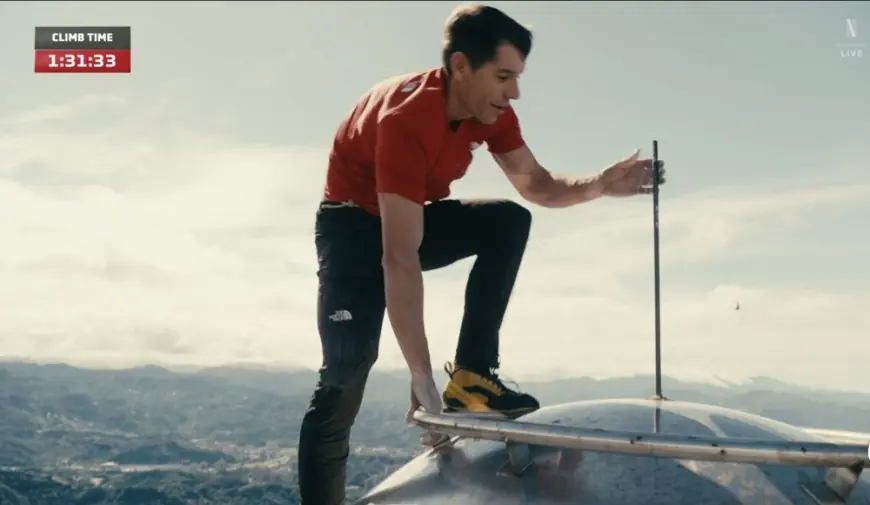
Alex Honnold did make it. The climber reached the top of Taipei 101 without ropes or a harness, finishing a high-wire-on-stone style ascent that turned a modern skyscraper into a public arena for one of climbing’s most dangerous disciplines. The result is more than a personal milestone: it’s a cultural flashpoint. A live broadcast of an all-or-nothing climb raises questions that don’t go away just because the outcome was a safe one—about what audiences are being asked to normalize, and what “acceptable risk” looks like when the stakes are fatal.
A successful ascent doesn’t erase the risk—it sharpens the ethical line
Free soloing is usually private by design: remote walls, quiet approaches, minimal spectacle. This was the opposite—an urban climb with crowds below and cameras everywhere. That shift matters because it changes the incentives around an activity where a single mistake is often unrecoverable. Even with careful planning, rehearsal, and a controlled route, a tall building adds variables that rock sometimes doesn’t: gusting wind along open faces, slick metal and glass interfaces, and long stretches where fatigue becomes a compounding hazard rather than a passing phase.
The public nature of the climb also magnifies the “copycat” worry. Most viewers won’t attempt anything like it, but visibility lowers the psychological barrier for a small number of people who might try something adjacent—shorter buildings, local landmarks, poor conditions, no skill base. That’s the real downstream risk: not the one expert on one day, but the ripple effects after the footage circulates and the achievement becomes a template.
There’s also a quieter reality: the same success that thrills audiences can make future stunts harder to resist. When a feat lands cleanly, it can be framed as proof that the format is safe enough—until it isn’t.
How Honnold got up Taipei 101, and what made it difficult
The climb took roughly an hour and a half—about 90 minutes—over a 508-meter (1,667-foot) route on the 101-story tower in Taipei. Honnold used the building’s exterior features—small ledges, structural seams, protrusions, and balconies—progressing section by section. The most technical stretch came through the tower’s distinctive tiered segments often described as “bamboo boxes,” where the geometry becomes less forgiving and the exposure more punishing.
The attempt was delayed about a day due to weather, underscoring an obvious but important point: on a skyscraper, a little rain or mist isn’t just discomfort—it can turn usable holds into slick hazards. Wind was another factor. At height, gusts can arrive suddenly, pushing a climber off balance during moves that already demand precision.
Crowds gathered at the base as he climbed—an unusual backdrop for someone whose most famous ascents happened far from city centers. The spectacle element was built into the event itself, including safeguards on the broadcast side such as a short delay intended to manage what viewers might see if things went wrong.
Mini timeline
-
Before the attempt: Plans for a live, rope-free climb circulated for weeks, drawing both excitement and unease inside the climbing world.
-
Weather delay: The ascent was pushed back roughly 24 hours after poor conditions made the route riskier.
-
Saturday/Sunday (Jan 24–25, 2026): Honnold began the climb, worked through the hardest mid-tower sections, and reached the top.
-
Afterward: The footage and the format will shape how future “live risk” events are pitched—and how strongly the backlash lands.
The key next signal isn’t another announcement; it’s whether organizers treat this as a one-off, or the first in a repeatable series.
Honnold’s history gives the moment extra weight. He’s long been associated with sober, methodical decision-making within an extreme sport, including his famed 2017 ropeless ascent of El Capitan. That reputation is part of why this climb landed with such force: it wasn’t a daredevil improvisation, but a planned, televised, urban extension of a style that many believe should remain outside the logic of mass entertainment.
He made it—cleanly. Now the argument shifts from “Will he survive?” to “What should we be turning into a show?”