





















Sanni McCandless steps into the live-risk spotlight—what a “support role” really looks like

Sanni McCandless is suddenly more than a familiar face from an Oscar-winning climbing documentary: she’s become the visible human edge of a public, high-stakes stunt where the margin for error is essentially zero. When a climb turns into a live global spectacle, the partner at home—or waiting at the finish—gets drafted into the story whether they want it or not. The impact lands in real time: on family privacy, on how risk is “normalized” for audiences, and on what it costs to keep everyday life steady while millions watch.
When extreme sport goes public, partners become part of the performance
McCandless has long been adjacent to climbing fame, but the current moment pulls her front-and-center in a different way. A live, highly publicized ascent doesn’t just test the athlete; it tests the household. The public sees a smiling reunion, a quick on-camera check-in, a calm expression at the top. The private reality is usually messier: childcare logistics, travel, security, and the emotional strain of being the one who can’t “do” anything except wait.
That’s why this week’s attention around McCandless matters. She’s become a stand-in for a group that rarely gets discussed without clichés—the spouses and partners of people whose jobs or passions include catastrophic risk. The most honest version of that role isn’t inspirational; it’s practical. It’s learning how to function on a day that feels like a coin flip, then getting dinner on the table anyway.
Who she is beyond the headline moment
McCandless is an outdoor-minded coach and entrepreneur who has built her own identity alongside—rather than purely behind—elite climbing culture. She’s also a mother of two young daughters with Alex Honnold, and that detail changes the framing entirely. Risk looks different when it’s not just your partner on the wall, but your kids’ parent.
In recent days, she has shared everyday snapshots of “kid chaos” and low-key climbing outings—scenes that underline the contrast between family-scale adventure and world-stage exposure. That contrast is the thread connecting her public persona to the current surge of attention: a life that’s usually about ordinary movement in wild places suddenly intersecting with a single, extraordinary, high-visibility moment.
The Taipei tower climb and the new kind of visibility it creates
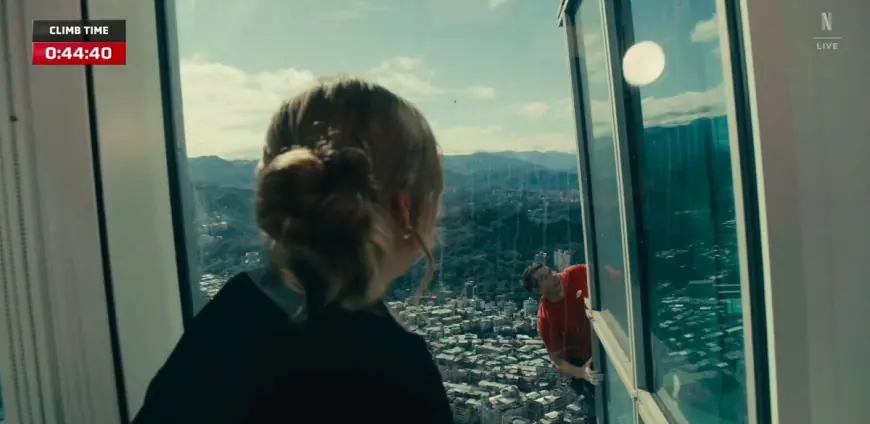
Honnold’s recent free-solo-style ascent of Taipei 101—one of the world’s most recognizable skyscrapers—was presented as a live event with cameras trained not only on the climber, but on the people closest to him. McCandless appeared as the grounded counterweight: calm when the audience wanted panic, steady when the situation invited melodrama.
That dynamic is not accidental. Live-event storytelling needs a “proxy nervous system,” someone the audience can read for emotional cues. When the athlete looks focused, the partner becomes the face that says, “Yes, this is terrifying,” or, “No, this is normal.” McCandless effectively carried that narrative burden, whether she intended to or not.
There’s a second effect that follows: the more composed the partner appears, the more the risk can feel domesticated to viewers—less like a dangerous outlier, more like a bold but manageable challenge. That perception shift is powerful. It’s also one reason partners sometimes resist being on camera during high-risk feats: their expression can become part of the marketing of danger.
Micro Q&A: the questions people are really asking
Is she “okay with it,” or just practiced at enduring it?
Endurance often looks like approval from the outside. For many partners, the coping skill is learning to stay functional, not learning to love the risk.
Does a live broadcast change the emotional cost?
Yes. It expands the circle of pressure—family, strangers, commentary, and instant reactions—so the private experience becomes a public performance.
What does this moment do to her own work and identity?
It can cut both ways. Attention can amplify her projects and public profile, while also flattening her into a single label: “the climber’s wife.” The tension between those outcomes is hard to control once a story goes global.
McCandless’s week in the spotlight is less about celebrity and more about a modern tradeoff: when extraordinary risk is packaged for mass viewing, the people closest to it become part of the product. She’s showing—quietly, almost accidentally—what it takes to keep a real life intact when the world decides your family’s most intense moments are public entertainment.