
























Bannon Reveals Why Australia Holds Key to Trump’s Favorability

Former White House strategist Steve Bannon recently emphasized the critical role Australia plays in enhancing Donald Trump’s favorability among U.S. conservatives. In an interview, Bannon reflected on the evolution of U.S.-Australia relations, particularly during and after the COVID-19 pandemic.
Australia’s Shift in Perception
Bannon stated that Australia’s image among U.S. conservatives plummeted during the pandemic. He noted, “You went from beloved to kind of shot,” citing strict lockdown measures, border closures, and vaccination mandates as significant factors.
Despite these challenges, Bannon acknowledged a revival in ties as Trump reaffirmed support through the AUKUS agreement in October, which includes plans for Australia to acquire nuclear-powered submarines from the United States.
Importance of the AUKUS Agreement
The AUKUS pact is viewed as crucial for U.S.-Australia cooperation amid rising tensions in the Indo-Pacific region. Bannon expressed confidence that the deal would proceed as planned. According to him, “Australia is absolutely strategically central to what happens in East Asia and the Indo-Pacific.”
Meeting Between Trump and Albanese
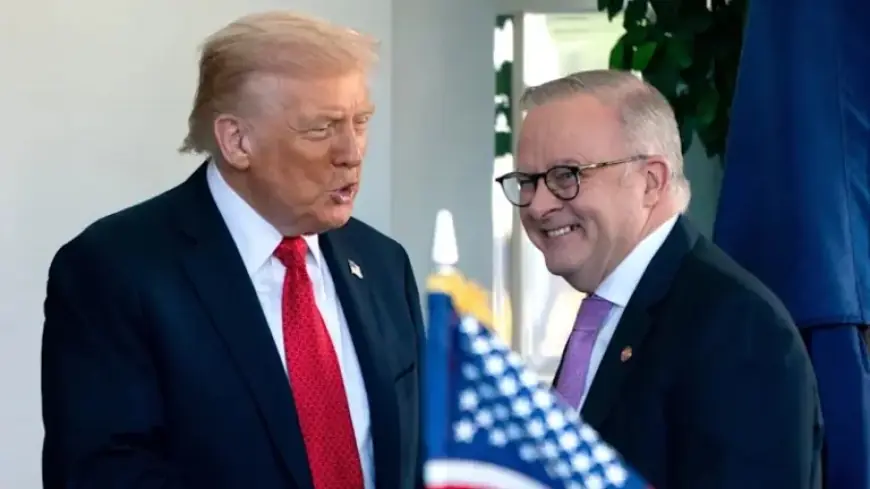
In a meeting held in October, Trump and Australian Prime Minister Anthony Albanese discussed collaboration on critical minerals and reinforced their commitment to AUKUS. Bannon was supportive of this proximity, likening Albanese’s political position to that of Canadian Prime Minister Mark Carney, who has faced criticism for his China engagement.
Political Attitudes and Global Perceptions
Bannon remarked that the response to the pandemic altered perceptions, echoing sentiments from U.S. conservatives who view Australia’s strict measures unfavorably. He noted that although there are concerns about Australia’s stance towards China, the AUKUS agreement solidifies a partnership among the U.S., U.K., and Australia.
Strategic Importance of Australia
Bannon concluded that Australia is essential to the global strategy against the Chinese Communist Party, stating, “You have to have a robust Australia.” His remarks suggest a broad acknowledgment of Australia’s geostrategic position in U.S. foreign policy under the Trump administration.
Conclusion
As the political landscape evolves, Australia’s relationship with the United States under Donald Trump remains pivotal. The engagement through AUKUS and other cooperative efforts signifies a renewed bond that may influence future geopolitical dynamics in the Indo-Pacific region.