

























Northwest Europe Accelerates Offshore Wind Development Amid Trump’s Criticism

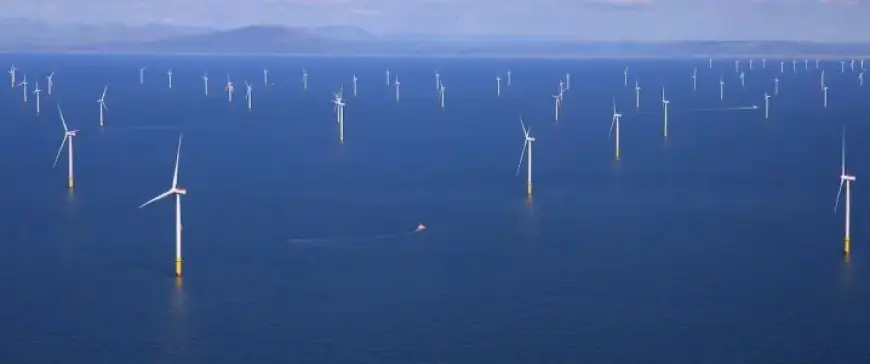
Nine countries in Northwest Europe are poised to enhance their offshore wind development. This initiative comes shortly after U.S. President Donald Trump’s disparaging remarks about wind energy. The participating nations are the UK, Ireland, Germany, France, Belgium, Luxembourg, the Netherlands, Denmark, and Norway.
Commitment to Offshore Wind Power
These countries will make a formal pledge at the North Sea Summit in Hamburg, Germany. Their goal is to accelerate offshore wind power through extensive cross-border projects. According to a leaked draft of the summit’s declaration, they aim to generate up to 300 gigawatts (GW) of offshore wind capacity by 2050. Notably, around 100 GW is projected to come from collaborative, cross-border efforts.
Response to Trump’s Criticism
The commitment from these nations arrives in the wake of President Trump’s critical comments made in Davos. He stated that his victory prevented the energy crises seen in European countries pursuing renewable energy, branding it the “Green New Scam.” His remarks suggested that increased wind energy usage correlates with economic decline in Europe.
Recent Developments in Offshore Wind Capacity
- The UK recently achieved a historic milestone by awarding 8.4 GW in offshore wind capacity during its latest auction.
- This capacity is projected to supply clean electricity to approximately 12 million homes in the UK.
- Germany is currently working to revive its offshore wind auctions, following a previous auction that received no bids.
To address this situation, the German Parliament has passed legislation that reduces the capacity for the 2026 tender. It now ranges from 2.5 GW to 5 GW, down from an earlier proposal of 6 GW, and a maximum of 10 GW was offered in the previous auction in August.
Looking Ahead
The collaborative efforts among these Northwest European countries signify a strong commitment to renewable energy. These nations are not only targeting substantial offshore wind capacity but also demonstrating resilience against external criticisms. Their actions point towards a shared vision for a sustainable energy future.