




















Teoscar Hernández’s Move to Left Field Signals a Dodgers Outfield Reset—and a Clearer Role in 2026

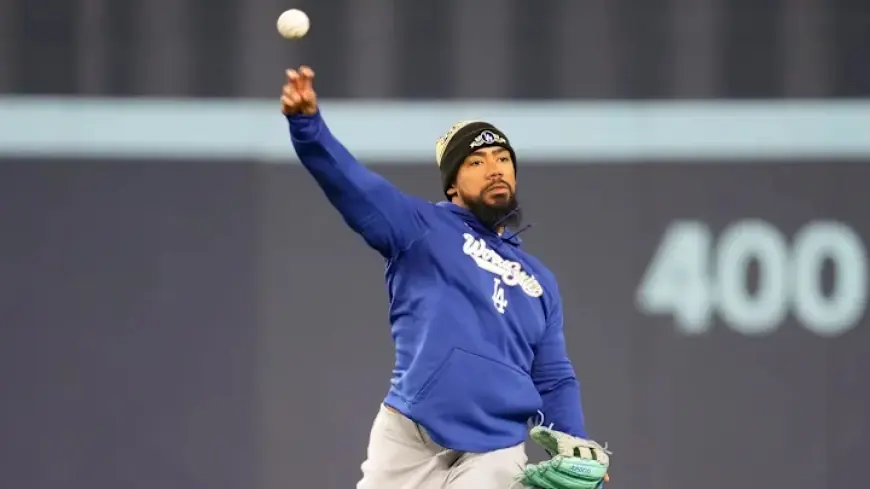
Teoscar Hernández isn’t just changing where he stands on defense; he’s stepping into a reshaped Dodgers blueprint that alters lineup balance, playing-time math, and even the trade chatter that tends to follow a corner outfielder in a star-studded roster. In recent days, Los Angeles has aligned its outfield around a new right-field centerpiece, sliding Hernández to left as the club prioritizes both run production and cleaner defensive fit. For Hernández, the change is less about demotion and more about definition: a narrower job description that could help stabilize his value going into 2026.
A position change can be a message about trust, not just logistics
Left field is often treated like the “easy” corner, but in a packed roster it can function like a vote of confidence: the team is making space rather than making calls. By moving Hernández across, the Dodgers are effectively saying he remains a core bat they want in the everyday lineup, even after adding another marquee outfielder.
That matters because Hernández has lived in the gray area before—productive enough to anchor the middle of an order, yet streaky enough to invite questions about whether he’s the piece you flip when you want to rebalance the roster. A declared spot in left field simplifies that conversation. It reduces the “where does he play?” debate and shifts it to “how do we optimize his offense?” which is where his upside has always been.
It also helps the club’s internal planning:
-
Defensive consistency: Fewer moving parts across the corners generally improves positioning and communication.
-
Lineup continuity: If the team expects Hernández in the lineup most nights, it can build platoon decisions around him instead of against him.
-
Trade temperature: Teams don’t usually broadcast a clear everyday role for a player they’re actively trying to move.
The Dodgers’ latest alignment—and where Hernández fits
The adjustment follows the club’s decision to install its new outfield star in right field, with Hernández shifting to left. That single move cascades across the depth chart: it clarifies the corners, reduces the need for constant late-game shuffles, and gives the roster’s remaining outfield candidates a simpler route to playing time (often via bench roles, injuries, or matchups rather than a daily competition).
Hernández is still best described as a run-creation piece: power, damage on mistakes, and the ability to turn a quiet game into a two-swing night. The question for 2026 isn’t whether he can impact games—it’s whether the Dodgers can smooth out the cold stretches by keeping his usage, protection in the order, and defensive burden more predictable.
A quick roster snapshot of what this reset suggests:
-
Right field: Locked in for the new star acquisition.
-
Left field: Hernández as the primary option.
-
Center-field mix: Dependent on the rest of the roster, health, and matchup preferences.
That doesn’t mean Hernández becomes untouchable. It does mean Los Angeles appears more interested in continuity than churn.
Contract context adds weight to the decision
Hernández is in the middle of a three-year deal that runs through 2027, valued at $66 million. The structure includes significant deferrals, a hallmark of how the Dodgers have managed payroll flexibility in recent seasons. Practically, that makes him easier to keep than people assume: moving a player isn’t only about talent, it’s about timing, cash flow, and whether a trade actually improves the roster more than it complicates it.
Just as important: a club option for 2028 (with a buyout) sits beyond the core term, which can influence how front offices think about long-range depth. Keeping Hernández in a stable role now preserves optionality later—especially if the team expects to cycle younger players into larger jobs over time.
Mini timeline of the recent shift
-
Early offseason: Hernández’s name floats in the background of “could they move him?” speculation.
-
Recent days: Los Angeles finalizes its outfield pecking order after adding a new right-field anchor.
-
Now: Hernández is positioned as the primary left fielder, cooling trade talk and sharpening his 2026 role.
-
Next signal to track: Whether spring usage shows Hernández as a near-everyday option versus a heavier matchup-based rotation (the first real clue about how locked-in this plan is).
For Hernández, the best version of this story is straightforward: fewer questions about where he plays, more chances to do what he’s paid to do—hit in the middle of a lineup built to overwhelm opponents. If he delivers consistent production, the “trade rumor” cycle gets replaced by something rarer in Los Angeles: a settled, repeatable job.