




















Kevin Stefanski News: Falcons Hire the Two-Time Coach of the Year, Add Tommy Rees, Retain Jeff Ulbrich, and Inherit the Kirk Cousins Question

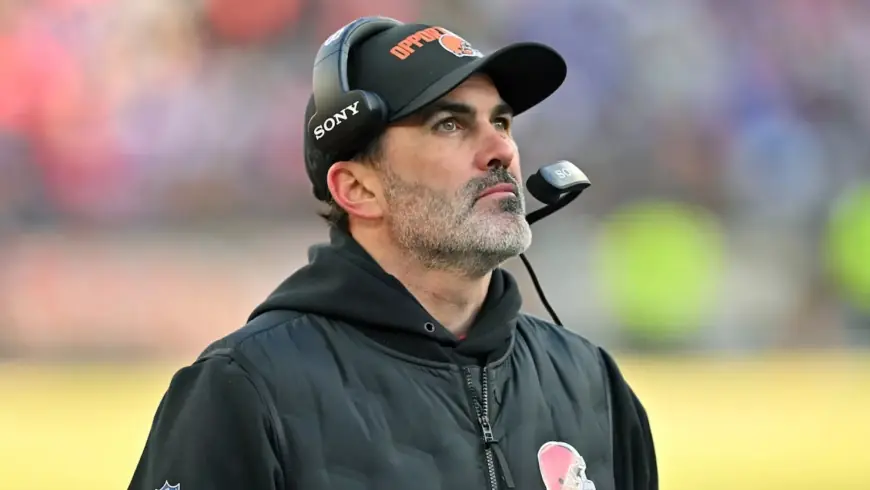
Kevin Stefanski is the new Atlanta Falcons head coach, a franchise-defining move that immediately reshapes the team’s offensive identity, its staff structure, and its biggest roster storyline: what comes next at quarterback with Kirk Cousins and Michael Penix Jr. in the same room. Within days of the hiring, Atlanta’s early staff blueprint has started to take form—most notably with Tommy Rees tracking to Stefanski as offensive coordinator and Jeff Ulbrich staying on as defensive coordinator.
The early signal is clear: Atlanta is leaning into a modern, quarterback-friendly system built around play-action, sequencing, and matchups—while aiming for defensive continuity rather than a full teardown.
Kevin Stefanski coach of the year: why Atlanta made this hire now
Stefanski arrives with one of the strongest résumés among recent NFL head coaches on the market: two Coach of the Year awards and a reputation as an offense-first organizer who can win with different quarterback profiles. Atlanta’s bet is that his process—structure, adaptability, and week-to-week game planning—travels better than any single scheme.
That matters because the Falcons are not starting from zero. They have skill talent, a line that can be built around, and a quarterback decision that can be framed as “high upside” or “high volatility,” depending on who wins the job and how the contract math looks.
Tommy Rees to Atlanta: what the offensive coordinator move suggests
Tommy Rees is expected to join Stefanski in Atlanta as the Falcons’ offensive coordinator, continuing a working relationship that already includes NFL collaboration. Rees has quickly become one of the league’s younger offensive architects, moving from high-profile college roles into an NFL track that has emphasized quarterback development, red-zone design, and weekly game-plan customization.
If this pairing holds, it’s an important hint about how Stefanski wants the operation to run:
-
A tight coach–OC alignment on play design and weekly installs
-
A system that can flex between run-first control and pass-heavy pace
-
A strong emphasis on quarterback mechanics, reads, and situational decision-making
For Falcons fans, it’s not just “who calls plays.” It’s whether the offense can finally look coherent across four quarters—especially in late-game situations where Atlanta has often needed cleaner answers.
Jeff Ulbrich stays: continuity on defense, clarity on roles
Jeff Ulbrich remaining as defensive coordinator gives Atlanta something many teams lose after a head-coaching change: continuity in language, responsibilities, and player usage. That’s especially valuable for young defenders and for a locker room that can’t afford another full-system reset.
Keeping Ulbrich also lets Stefanski focus his early attention where the pressure is highest—quarterback, offensive line cohesion, and the decision-making ecosystem around game management.
Kirk Cousins, Michael Penix Jr., and the quarterback dominoes
The Falcons’ quarterback room is the headline because Stefanski’s reputation intersects directly with it. His offenses have historically leaned on:
-
Play-action and under-center efficiency
-
Defined reads that help quarterbacks play faster
-
Run-game geometry that opens intermediate throwing lanes
That creates two plausible paths for Atlanta:
-
A Cousins-led bridge with immediate contention goals
If Cousins is healthy and the staff believes the processing and timing will click quickly, Stefanski can build an efficient, structured offense that wins early in the season—especially if the run game and defense hold up. -
A faster turn toward Penix as the long-term ceiling play
If the organization prioritizes long-range roster building (and cap flexibility), Stefanski’s system can be tailored to a younger quarterback—especially if the staff thinks Penix can handle NFL speed with a simplified early menu that expands month by month.
The most likely outcome isn’t a dramatic declaration in January. It’s a spring and summer competition shaped by health, practice consistency, and how the front office wants to manage contracts and timelines.
Klint Kubiak and the wider NFL head coach carousel
Klint Kubiak’s name continues to circulate in NFL head coach conversations, reflecting a league-wide hunger for coaches tied to quarterback development and modern offensive structure. While Atlanta went with a proven head coach in Stefanski, other teams are evaluating candidates like Kubiak as part of a broader trend: hire the person who can stabilize the most important position first, then build everything else around it.
That context matters for Atlanta because Stefanski was, in many ways, the “best of both worlds” profile—an offensive leader with a head-coaching track record who doesn’t need a long runway to install an identity.
Skip Bayless reacts: the skepticism that comes with Stefanski’s record
Any Stefanski discussion eventually runs into the same debate: results versus context. Some high-profile commentators—including Skip Bayless—have criticized the hire by pointing to win–loss stretches and quarterback turbulence in Stefanski’s recent years.
Atlanta’s counterargument (implicitly, with the hire itself) is that the résumé shows both peak performance and the ability to operate amid instability. The Falcons are betting that a different roster build, a different organizational timeline, and a cleaner quarterback plan can unlock the version of Stefanski that won league-wide acclaim.
Kevin Stefanski coaching history: the path from Minnesota to Cleveland to Atlanta
Stefanski’s coaching history is a steady climb that shaped him into a systems builder:
-
Minnesota assistant years that included tight ends, running backs, quarterbacks, and coordinator responsibilities
-
A reputation for collaborative game planning and sequencing
-
Head coaching success that earned top league recognition
-
Experience navigating quarterback change, injuries, and shifting roster eras
That background is exactly why Atlanta’s hire is so consequential: it’s not just a new “falcons head coach.” It’s an organizational statement about how the Falcons want to win—through structure, quarterback clarity, and an offense that can carry games when chaos hits.
For the next few months, “Kevin Stefanski news” will revolve around two things: finalizing the staff and defining the quarterback plan. If Atlanta gets those right, the rest of the roster suddenly makes a lot more sense.