Russia snow 2026: Kamchatka’s “snow apocalypse” buries towns, strains transport, and raises new winter-risk alarms

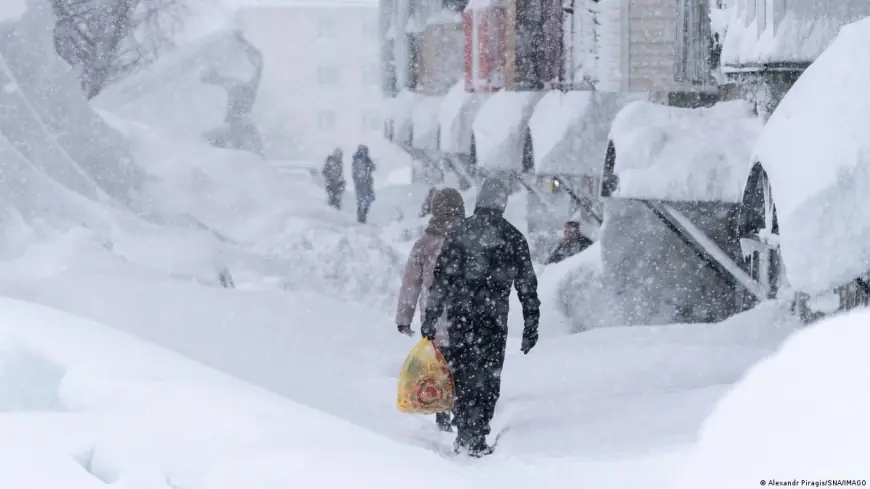
Russia’s winter of 2026 has delivered some of the most disruptive snowfall in decades, with the Far East—especially the Kamchatka Peninsula—taking the hardest hit. Successive storms have piled snow high enough to swallow vehicles, narrow streets into canyons, and force emergency services into round-the-clock clearing operations. While conditions vary by region, the pattern has already triggered travel stoppages, safety warnings, and renewed concern over how cities cope when snow loads exceed design expectations.
The most immediate story is in Kamchatka, where the accumulation has been described locally as near-paralyzing—less a single storm than a relentless sequence that left little time to recover between systems.
Russia snow 2026 in Kamchatka: what happened and why it’s different this time
Kamchatka’s capital area, Petropavlovsk-Kamchatsky, has faced extraordinary totals through late December and early January. In parts of the peninsula, snowfall in early January exceeded two meters after an already exceptional December that saw totals measured in multiple meters. The result has been deep drifts pressing against buildings, blocked entrances, and streets that require heavy machinery just to keep a single lane open.
Public transport in the regional capital has been intermittently suspended or altered when standard buses couldn’t safely operate; in some periods, larger all-terrain vehicles were used to move people along main routes. Clearing crews have focused on arterial roads first, but neighborhood access has remained uneven, especially where wind-driven drifting refills freshly plowed areas within hours.
-
Snow accumulation in parts of Kamchatka reached multi-meter levels across late December and early January, leaving vehicles buried and streets repeatedly blocked.
-
Urban transport has been disrupted, including periods when regular bus service couldn’t operate and specialized vehicles were used instead.
-
Hazard conditions have persisted after the heaviest snowfall, with narrow passages, reduced visibility in blowing snow, and ongoing risk from roof and drift collapse.
-
The disruption has not been limited to one day; repeated systems have compounded impacts and stretched snow-removal capacity.
The knock-on effects: roads, roofs, and emergency response under pressure
Extreme snowfall isn’t just an inconvenience—it reshapes daily risk. When snow stacks up faster than it can be removed, cities face a chain reaction:
Road safety and access: Even after plows pass, lanes stay tight, turn radii shrink, and visibility at intersections drops. Emergency vehicles lose time navigating narrowed streets and unplowed side roads.
Structural danger: Heavy, wet snow can load roofs and awnings quickly. Where temperatures fluctuate, snow turns denser, and the danger shifts from drifting to weight. That’s when warnings about clearing rooftops become urgent—and when accidents can happen if removal is rushed or done without proper equipment.
Public health and logistics: Deliveries slow, clinic visits get missed, and commuting becomes physically demanding. In places with steep streets, packed snow and ice increase fall injuries and vehicle collisions.
In Kamchatka, the persistence of deep drifts has kept the focus on basic mobility: keeping key roads open, preventing roof-related incidents, and restoring normal transit reliability.
Beyond Kamchatka: why “Russia snow 2026” became a wider regional headline
While Kamchatka has been the most visually dramatic example, heavy snow and winter disruption have also been noted in other parts of Russia during this season, including major urban areas that saw unusually intense snowfall episodes earlier in January. The broader regional cold pattern has also coincided with major winter disruptions across nearby parts of East Asia, underscoring how a single large-scale atmospheric setup can drive simultaneous extremes across a wide geography.
Meteorologists often describe these events in terms of jet-stream behavior: when the polar vortex weakens or becomes distorted, surges of Arctic air can spill southward in pulses, helping storms intensify and increasing the odds of prolonged cold and snow in places that can normally “reset” between systems.
What history tells us: big snow years rarely fail the same way twice
Russia has faced memorable snow events before—some defined by one blockbuster storm, others by weeks of accumulation that slowly overwhelms removal systems. The key lesson from past heavy-snow winters is that the highest-risk period can come after the headline snowfall: when temperatures hover near freezing, snow becomes heavier; when clearing lags, roof loads build; and when melt-refreeze cycles kick in, traction problems spike even if snow depth declines.
This is why city services often shift from “plow and clear” to “haul and remove” during extreme seasons—physically transporting snow out of dense neighborhoods once there’s nowhere left to push it.
What happens next: the signals to watch as Russia’s winter continues
For Kamchatka and other heavily affected regions, the next phase depends on two factors: whether additional storm systems arrive before cleanup catches up, and whether temperatures swing enough to convert powder into heavy, compacted snow. Continued snowfall keeps mobility and roof safety in the danger zone; a sudden warm-up can create slush, flooding, and then severe ice if temperatures drop again.
In the coming days, the most practical indicators to track are operational rather than meteorological: restoration of normal public transport schedules, reopening of secondary roads, and expanded snow removal from roofs and building perimeters. Even if the skies clear, a multi-meter winter leaves a long tail—and Russia snow 2026 is already showing how quickly “weather” becomes infrastructure stress when storms arrive in clusters rather than in isolation.